History and archaeology / Archaeological site
Arsameia Archaeological Site (Eski Kâhta)
Kâhta, Adıyaman
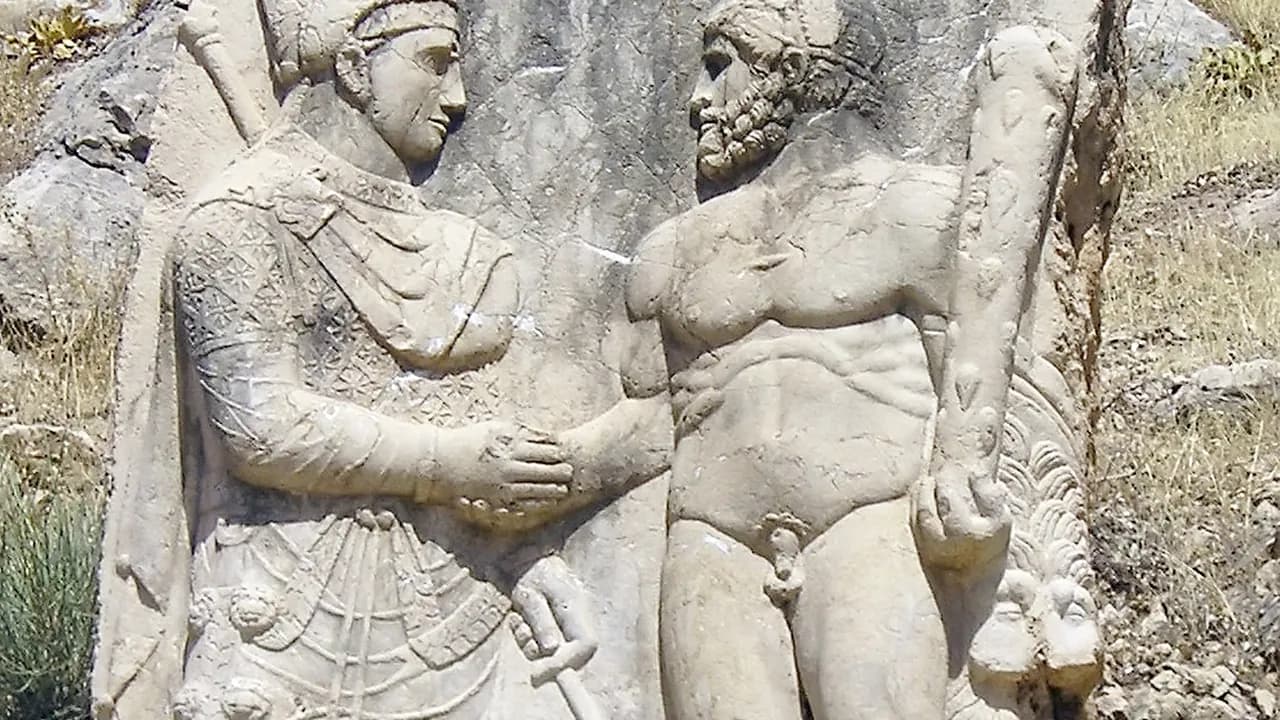
The summer capital of the Kingdom of Commagene; a sanctuary famous for the relief of Antiochus shaking hands with Heracles and the longest Greek inscription in Anatolia.
Safety warning
Its story
The city, founded on a hill on the banks of the Kâhta Stream (the ancient Nymphaios), was renamed by Arsames in the 3rd century BC and became the summer capital of the Commagene kings. Antiochus I built a hierothesion (sacred burial site) here for his father, Mithridates I Callinicus. Along the ceremonial way are reliefs of gods shaking hands with kings; the most famous is the relief of Antiochus shaking hands with Heracles. The long Greek cult inscription beneath it describes the founding of the city, the royal lineage and the rules of the rites; just below it, a 158-meter stepped tunnel of uncertain purpose is carved into the rock. It is on the hill opposite Yeni Kale.
Key facts
- Period
- Hellenistic – Commagene (1st century BC)
- Admission
- Free
- Getting there
- Near Kocahisar (Eski Kâhta), Nemrut road
- Visit duration
- 1 hour
Trip purpose
- Free
- Photography
- Hiking
Location
37.94322, 38.65469
Reviews
No approved reviews yet. Reviews are written in the app after a visit.
Source: Web derlemesi (doğrulanmalı): https://tr.wikipedia.org/wiki/Arsemia | https://en.wikipedia.org/wiki/Arsameia | https://muze.gov.tr/muze-detay?SectionId=ARS01&DistId=MRK | https://www.openstreetmap.org/node/2428195154