History and archaeology / Han and caravanserai
Sarıhan Caravanserai
Ürgüp, Nevşehir
A tuff-stone caravanserai on the Aksaray–Kayseri caravan route, built in 1249 and counted among the last examples of Seljuk sultan's hans.
Its story
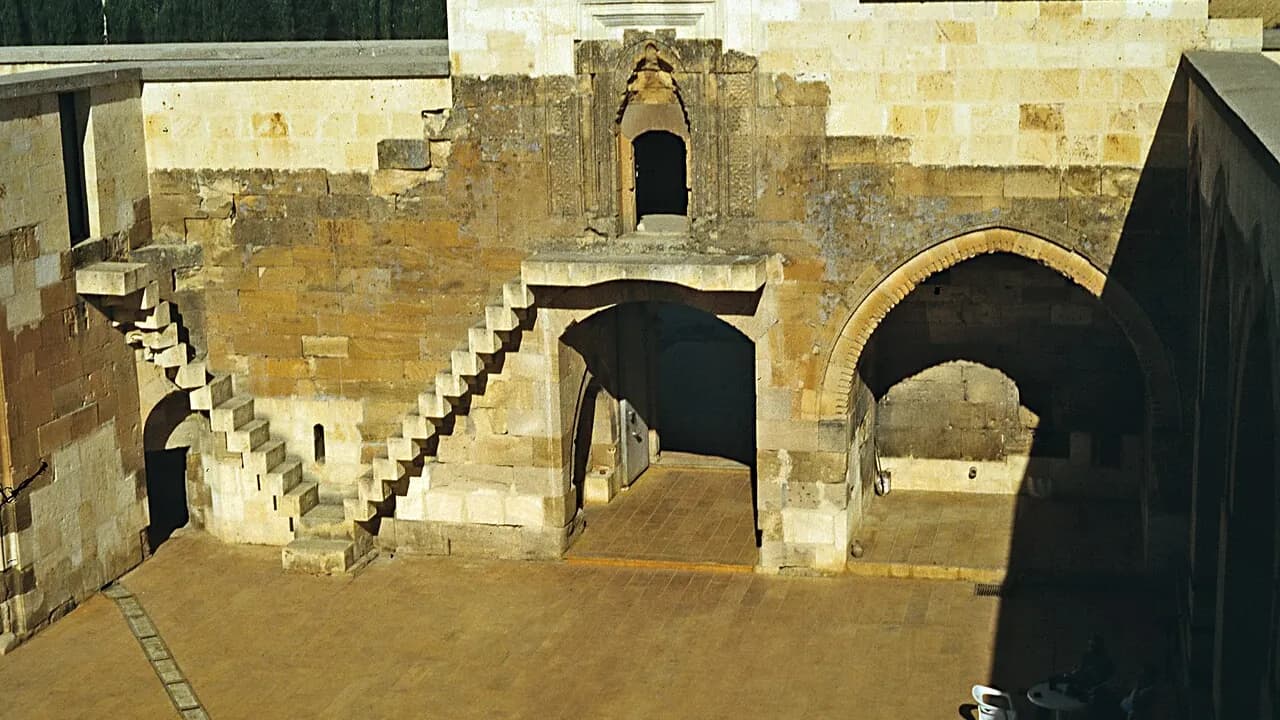
Sarıhan is on the Aksaray–Kayseri route, which provided the east–west link of the Silk Road, in the Damsa valley about 5 km southeast of Avanos. It was built in 1249, in the reign of İzzeddin Keykavus II, and covers an area of about 2,000 m². Yellowish tuff stone, abundant in the region, was used in its construction; the han's name (sarı means yellow) comes from this color. The han, whose upper parts had collapsed in places, regained its original appearance with a restoration completed in 1991. It is said that the Anatolian Seljuk sultans did not build another sultan's han after this one.
Key facts
- Area
- About 2,000 m²
- Note
- May host sema (whirling dervish) performances in the evenings; visiting conditions should be confirmed on site
- Built
- 1249
- Period
- Anatolian Seljuk
- Visit duration
- 30 minutes
Trip purpose
- Photography
Location
38.71180, 34.90919
Reviews
No approved reviews yet. Reviews are written in the app after a visit.
Source: Web derlemesi (doğrulanmalı): https://tr.wikipedia.org/wiki/Sarıhan_Kervansarayı