History and archaeology / Mound (höyük)
Köşk Höyük
Bor, Niğde
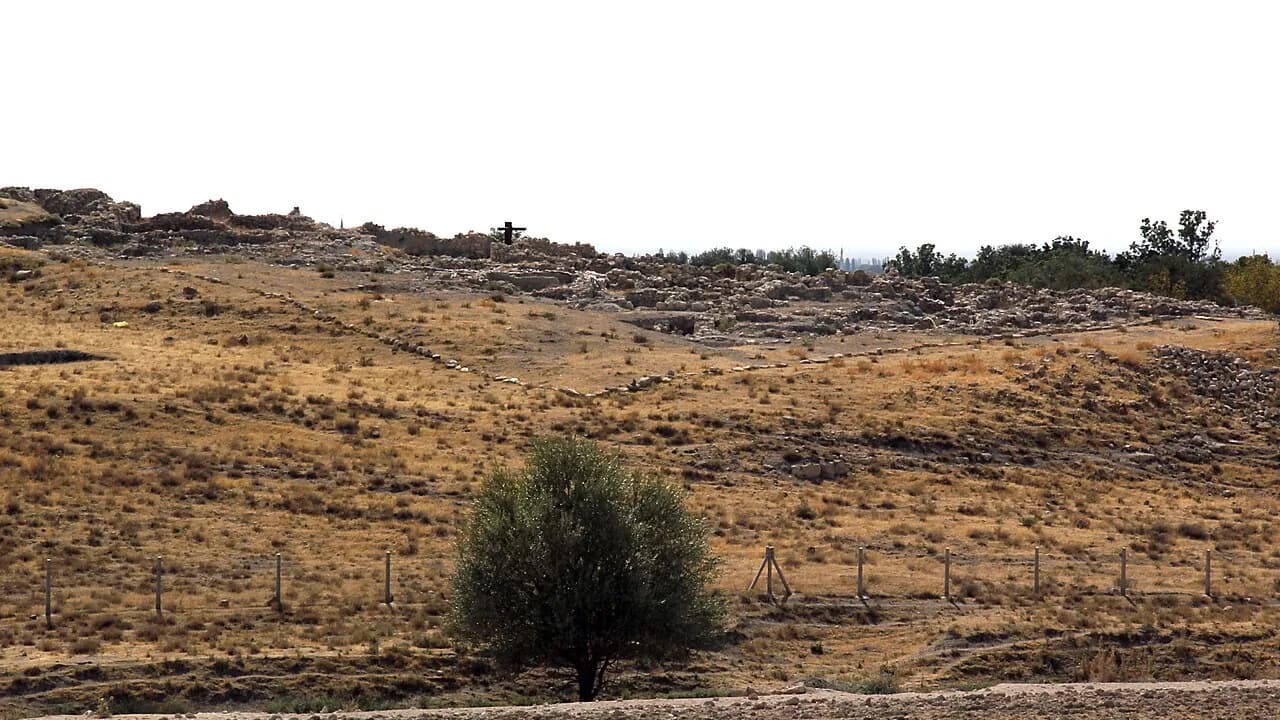
A mound at Bahçeli, just east of the Roman Pool, known for its Neolithic and Chalcolithic skull burials with clay-modeled faces.
Safety warning
Its story
Köşk Höyük is on a limestone hill northeast of Bahçeli, attached to the Bor district, close to ancient Tyana. On the mound, identified in 1961, excavations were begun by Ankara University in 1981 and resumed from 1996. It has been understood that the settlement was used in the Early and Late Neolithic and Early Chalcolithic ages; a unique burial tradition in which the skulls of the dead were buried after being given a face shape with clay has been documented here. On the southern slope of the mound is the marble-clad Roman Pool, built in the 2nd century AD, which carried water to Tyana through aqueducts. The excavation finds and a full-size replica of a house dated to 4883 BC are in the Niğde Museum collection.
Key facts
- Visit
- The mound is an excavation site; it can be seen from around the Roman Pool
- Period
- Neolithic–Early Chalcolithic; Roman Pool nearby (2nd century AD)
- Excavations
- Since 1981, intermittently
Trip purpose
- Photography
- Quiet
Location
37.84763, 34.61210
Reviews
No approved reviews yet. Reviews are written in the app after a visit.
Source: Web derlemesi (doğrulanmalı): https://tr.wikipedia.org/wiki/Köşk_Höyük | https://en.wikipedia.org/wiki/Köşk_Höyük | https://nigde.ktb.gov.tr/TR-74408/oren-yerleri.html | https://www.ktb.gov.tr/Eklenti/48871,tyanapdf.pdf