History and archaeology / Castle
Şanlıurfa Castle
Eyyübiye, Şanlıurfa
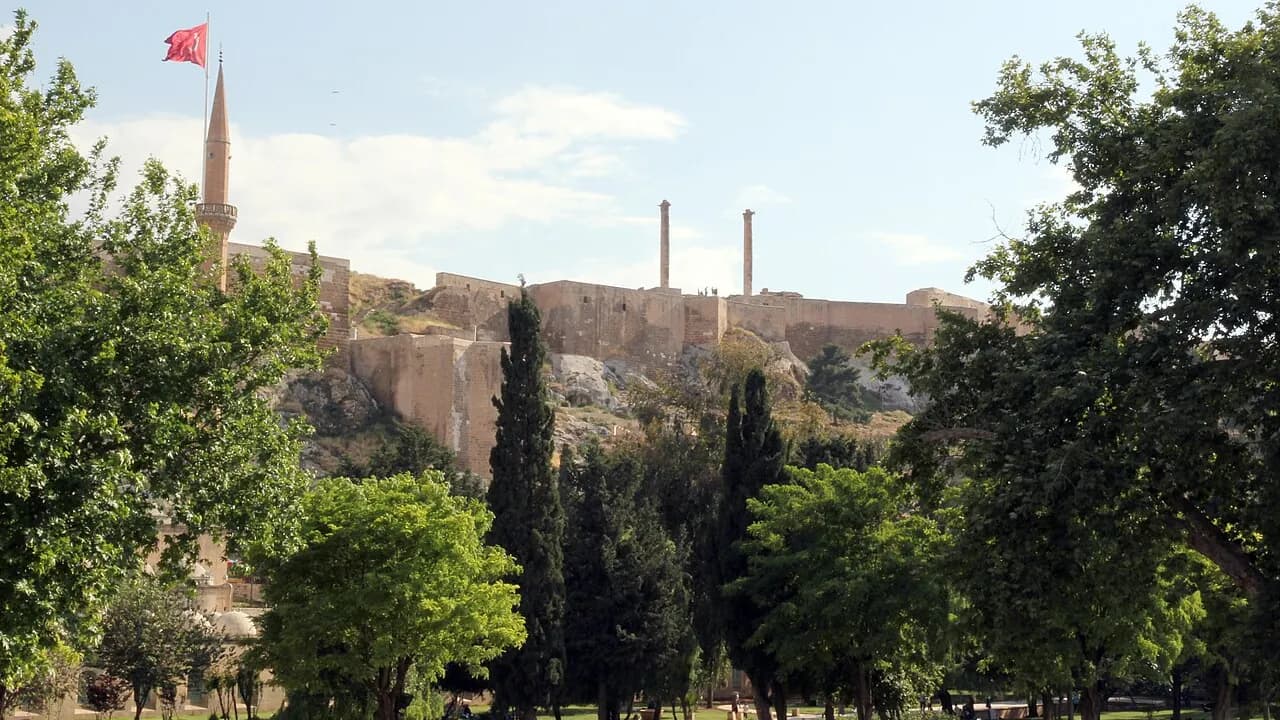
A castle on Damlacık Hill just south of Balıklıgöl, a symbol of the city with its two columns called 'Nimrod's catapult'.
Safety warning
Its story
The castle is on Damlacık (Dambak) Hill, overlooking the city formerly called Edessa; its first structure goes back to the ancient Kingdom of Osroene, and its present walls were largely built in 814 by the Abbasids. It played an important role during the Crusades and was repaired in the Ottoman period; it is separated from the city by a deep moat carved into the rock. The two columns with Corinthian capitals on the castle are popularly known as the catapult of Nimrod, who hurled the Prophet Abraham into the fire. Excavations found a mosaic floor with a Greek inscription dated to the 5th century, and graves. The columns and walls can be viewed from Balıklıgöl and the surrounding viewpoints.
Key facts
- Period
- Antiquity; Abbasid walls (814)
- Admission
- Castle interior closed (according to the Müzekart page)
- Getting there
- South of Balıklıgöl
- Visit duration
- 20 minutes (from outside)
Trip purpose
- Photography
Location
37.14555, 38.78378
Reviews
No approved reviews yet. Reviews are written in the app after a visit.
Source: Web derlemesi (doğrulanmalı): https://tr.wikipedia.org/wiki/Şanlıurfa_Kalesi | https://en.wikipedia.org/wiki/Şanlıurfa_Castle | https://muze.gov.tr/muze-detay?SectionId=SUK01&DistId=MRK | https://www.openstreetmap.org/way/188882056