63 · City guide
Şanlıurfa
City of Prophets and Göbeklitepe, the zero point of history
Şanlıurfa, known in antiquity as Edessa, is called the 'City of Prophets' because of narratives associating it with the prophets Abraham (İbrahim), Job (Eyyüp) and Jethro (Şuayb). In the city center, the sacred fish pools of Balıklıgöl, the cave where the Prophet Abraham is believed to have been born, the Halil-ür Rahman and Rızvaniye mosques, the two columns of the castle, the Gümrük Han and the covered bazaars stand side by side. The Archaeology and Mosaic Museum in Haleplibahçe, which tells the story of the Neolithic age with the standing stones of Göbeklitepe, is one of Turkey's largest museums. Göbeklitepe, 18 km northeast of the city, was inscribed on the UNESCO World Heritage List in 2018; Karahantepe, Soğmatar and Şuayb Şehri lie in the Tek Tek Mountains, and to the south is Harran with its beehive houses and Umayyad mosque. Halfeti on the Euphrates, partly submerged by the waters of the Birecik Dam, is the gateway to Rumkale by boat tour. Urfa cuisine, known for çiğ köfte (spiced bulgur balls) and mırra (bitter coffee) at sıra gecesi (traditional music night) gatherings, is also an important part of the trip.
Machine translated — This content was machine-translated and may differ from the original Turkish text.34
Places
0
Routes
0
Badges
Where shall we explore?
 Machine translated — This content was machine-translated and may differ from the original Turkish text.
Reservoir and pond
Atatürk Dam and Viewing Terrace
Bozova, Şanlıurfa
A viewing terrace overlooking the body of the Atatürk Dam, GAP's largest structure, and Türkiye's third-largest lake.
 Machine translated — This content was machine-translated and may differ from the original Turkish text.
Lake
Balıklıgöl (Halil-ür Rahman and Ayn-ı Zeliha Lakes)
Eyyübiye, Şanlıurfa
Two pools famous for carp considered sacred, where it is believed that the fire into which the Prophet Abraham was thrown turned into water and the logs into fish.
 Machine translated — This content was machine-translated and may differ from the original Turkish text.
Cave
Bazda Caves
Harran, Şanlıurfa
Wide rock galleries with pillars and arches east of Harran, used as a stone quarry in ancient times.
 Machine translated — This content was machine-translated and may differ from the original Turkish text.
Castle
Birecik Castle
Birecik, Şanlıurfa
A historic castle on a white limestone hill on the bank of the Euphrates, also called the 'White Castle', bearing Mamluk repair inscriptions.
 Machine translated — This content was machine-translated and may differ from the original Turkish text.
Mosque
Birecik Ulu Mosque (Grand Mosque)
Birecik, Şanlıurfa
Birecik's oldest mosque, commissioned in 1365 by the Mamluk Sultan Melik Eşref Şaban according to its damaged inscription.
- Machine translated — This content was machine-translated and may differ from the original Turkish text.
Tomb (türbe)
Tomb of Prophet Eyyüp (Viranşehir)
Viranşehir, Şanlıurfa
A faith center in the village of Eyyüp Nebi in Viranşehir, attributed to the Prophet Job, the symbol of patience; nearby are graves held to belong to his wife Rahime Hatun and the Prophet Elisha.
 Machine translated — This content was machine-translated and may differ from the original Turkish text.
Mosque
Fırfırlı Mosque (Church of the Twelve Apostles)
Eyyübiye, Şanlıurfa
A building that was formerly the Church of the Twelve Apostles, notable for its three-aisled basilical plan, converted into a mosque in 1956.
 Machine translated — This content was machine-translated and may differ from the original Turkish text.
Church
Germuş Church
Haliliye, Şanlıurfa
A two-story historic Armenian church still standing in Dağeteği at the foot of Germuş Dağı, with a facade of three pointed arches.
 Machine translated — This content was machine-translated and may differ from the original Turkish text.
Mound (höyük)
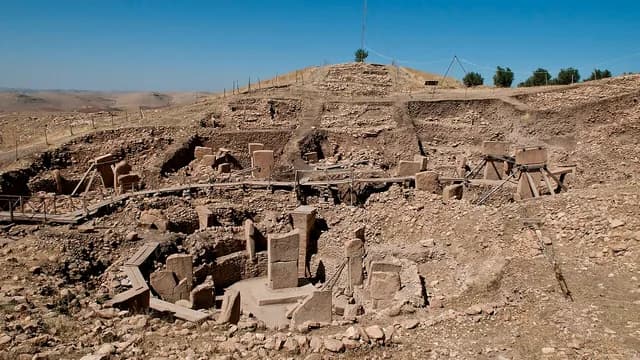
Göbeklitepe
Haliliye, Şanlıurfa
One of the world's oldest monumental structures, dated to around 9600 BC and known for its T-shaped pillars with reliefs; a UNESCO World Heritage Site since 2018.
- Machine translated — This content was machine-translated and may differ from the original Turkish text.
Nature park
Gölpınar Nature Park
Karaköprü, Şanlıurfa
A day-use nature and picnic area around Gölpınar Lake north of Şanlıurfa, declared a nature park by DKMP in 2011.
 Machine translated — This content was machine-translated and may differ from the original Turkish text.
Han and caravanserai
Gümrük Hanı and the Historic Covered Bazaar
Eyyübiye, Şanlıurfa
The city's liveliest meeting place, with its arcaded courtyard commissioned by Behram Paşa in the 16th century; together with the surrounding Kazzaz Pazarı and bedesten, the heart of the historic bazaar.
 Machine translated — This content was machine-translated and may differ from the original Turkish text.
Museum
Haleplibahçe Mosaic Museum
Eyyübiye, Şanlıurfa
A museum displaying in situ, under a protective structure, the 'Hunting Amazons' and 'Life of Achilles' mosaics on the floor of a Roman villa.
 Machine translated — This content was machine-translated and may differ from the original Turkish text.
Historic street and neighborhood
Old Halfeti (Sunken Town)
Halfeti, Şanlıurfa
The most famous town on the Euphrates, partly submerged by the waters of the Birecik Dam, with its stone houses and boat tours.
 Machine translated — This content was machine-translated and may differ from the original Turkish text.
Mosque
Halil-ür Rahman Mosque and Madrasa
Eyyübiye, Şanlıurfa
A historic mosque and madrasa on the south shore of Balıklıgöl, whose square-shafted minaret from the Ayyubid period is reflected in the lake.
 Machine translated — This content was machine-translated and may differ from the original Turkish text.
Han and caravanserai
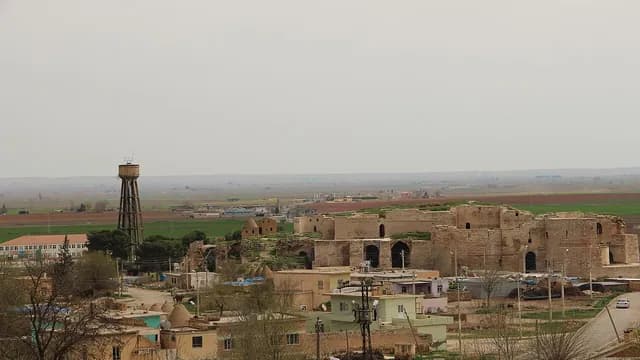
Han el-Ba'rur Caravanserai
Harran, Şanlıurfa
The remains of an Ayyubid-period caravanserai built in 1228–1229 on the old caravan road linking the Harran Plain to the Tektek Mountains.
 Machine translated — This content was machine-translated and may differ from the original Turkish text.
Castle
Harran Castle
Harran, Şanlıurfa
The citadel connected to the walls at the southeast corner of the ancient city, its present structure largely from the Ayyubid period of around 1200.
 Machine translated — This content was machine-translated and may differ from the original Turkish text.
Architecture
Harran Beehive Houses (Kümbet Evleri)
Harran, Şanlıurfa
Traditional houses unique to Harran, made of fired-clay brick, adapted to the hot, arid climate with their conical domes.
 Machine translated — This content was machine-translated and may differ from the original Turkish text.
Archaeological site
Harran Archaeological Site and Harran Ulu Mosque
Harran, Şanlıurfa
The mound of ancient Harran, center of the cult of the Moon god Sin, and the remains of the Ulu Mosque commissioned by the Umayyad caliph Marwan II in 744–750, considered the oldest mosque in Anatolia.
 Machine translated — This content was machine-translated and may differ from the original Turkish text.
Mosque
Hasan Padişah Mosque
Eyyübiye, Şanlıurfa
A historic mosque attributed to the Akkoyunlu ruler Uzun Hasan, dated to the second half of the 15th century and reopened in 2025 after the earthquake.
 Machine translated — This content was machine-translated and may differ from the original Turkish text.
Faith
Shrine of Patience of the Prophet Eyyüp (Hz. Eyyüp Peygamber Sabır Makamı)
Eyyübiye, Şanlıurfa
A shrine with the cave where the Prophet Job is believed to have endured his suffering patiently throughout his illness, and a well considered to have healing water.
 Machine translated — This content was machine-translated and may differ from the original Turkish text.
Mound (höyük)
Karahantepe
Haliliye, Şanlıurfa
A Neolithic settlement in the Tek Tek Mountains contemporary with Göbeklitepe, with a ritual structure with a human head carved into the bedrock and hundreds of pillars.
 Machine translated — This content was machine-translated and may differ from the original Turkish text.
Rock tomb
Kızılkoyun Necropolis
Eyyübiye, Şanlıurfa
An ancient cemetery of numerous rock tombs from the Roman and Byzantine periods on the rocky slope between Balıklıgöl and the museum.
 Machine translated — This content was machine-translated and may differ from the original Turkish text.
Faith
Mevlid-i Halil Mosque and the Cave Where Abraham Was Born
Eyyübiye, Şanlıurfa
The cave where the Prophet Abraham is believed to have been born, and the mosque and dergâh buildings that grew up around it; Şanlıurfa's main place of pilgrimage.
- Machine translated — This content was machine-translated and may differ from the original Turkish text.
Bridge
Nissibi Bridge
Siverek, Şanlıurfa
A 610-meter cable-stayed bridge joining the two shores of the Atatürk Dam Lake; its surroundings are known for sunsets and lake views.
 Machine translated — This content was machine-translated and may differ from the original Turkish text.
Church
Reji Church (Church of St. Peter and St. Paul)
Eyyübiye, Şanlıurfa
A church built in 1861 for the Syriac community, named 'Reji' because it was later used as a tobacco depot, and converted into a cultural center.
 Machine translated — This content was machine-translated and may differ from the original Turkish text.
Mosque
Rızvaniye Mosque
Eyyübiye, Şanlıurfa
An Ottoman-period mosque and madrasa whose long arcaded courtyard covers the entire north shore of Balıklıgöl.
 Machine translated — This content was machine-translated and may differ from the original Turkish text.
Museum
Şanlıurfa Archaeology and Mosaic Museum
Eyyübiye, Şanlıurfa
One of Türkiye's largest museums, with finds from Göbeklitepe and Karahantepe, the 'Balıklıgöl Statue', considered the world's oldest life-size human statue, and re-creations.
 Machine translated — This content was machine-translated and may differ from the original Turkish text.
Castle
Şanlıurfa Castle
Eyyübiye, Şanlıurfa
A castle on Damlacık Hill just south of Balıklıgöl, a symbol of the city with its two columns called 'Nimrod's catapult'.
 Machine translated — This content was machine-translated and may differ from the original Turkish text.
Mosque
Şanlıurfa Ulu Mosque (Grand Mosque)
Eyyübiye, Şanlıurfa
The city's grand mosque, thought to have been built in the 12th century in place of an old church called the 'Red Church', with a clock later added to its minaret.
 Machine translated — This content was machine-translated and may differ from the original Turkish text.
Mosque
Selahaddin Eyyubi Mosque
Eyyübiye, Şanlıurfa
A large stone building on the site of the Church of St. John commissioned by Bishop Nona in the 5th century, repaired and converted into a mosque in 1993.
- Machine translated — This content was machine-translated and may differ from the original Turkish text.
Mosque
Siverek Ulu Mosque (Grand Mosque)
Siverek, Şanlıurfa
Siverek's historic mosque, considered one of the oldest mosques in the region thanks to the 1190 repair inscription on its minaret.
 Machine translated — This content was machine-translated and may differ from the original Turkish text.
Archaeological site
Soğmatar Ancient City
Eyyübiye, Şanlıurfa
An ancient cult center in the Tektek Mountains with the sacred hill where the people of Harran worshipped the Moon god Sin and the planetary gods, a cave with reliefs and monumental tombs.
 Machine translated — This content was machine-translated and may differ from the original Turkish text.
Ancient city
Şuayb City (Şuayb Şehri)
Harran, Şanlıurfa
An ancient settlement from the Roman period with rock-cut houses and tombs, where the Prophet Shuaib is believed to have lived.
 Machine translated — This content was machine-translated and may differ from the original Turkish text.
National park
Tek Tek Mountains National Park
Harran, Şanlıurfa
A 19,335-hectare steppe plateau declared in 2007, containing ancient settlements such as Şuayb City, Soğmatar and Karahantepe.
Practical information
Machine translated — This content was machine-translated and may differ from the original Turkish text.- Note
- Some historic buildings affected by the February 6, 2023 earthquakes may be under repair; check the current status of museums and archaeological sites at muze.gov.tr; the Harran archaeological site and parts of Şanlıurfa Castle may be closed. Follow the dress codes at places of worship
- Climate
- Very hot, dry summers and mild winters; there is little shade at archaeological sites, so carry a hat and water
- Best time
- March–May and October–November; daytime temperatures in summer can exceed 40 °C
- Getting there
- Şanlıurfa GAP Airport is northeast of the city; motorway/road connections toward Gaziantep and Diyarbakır
- Getting around
- Balıklıgöl, the bazaars and the museums are within walking distance; a car or tour is needed for Göbeklitepe, Harran, Halfeti and the Tek Tek Mountains