26 · City guide
Eskişehir
Odunpazarı, meerschaum and Phrygia
Eskişehir lies at the northwestern tip of the Central Anatolian plateau, where the Sakarya and Porsuk basins meet. The city's old core, Odunpazarı, with its restored Ottoman houses, the Kurşunlu Complex and many small museums within walking distance of each other, is on the UNESCO World Heritage Tentative List. Large parks along the Porsuk Stream such as Sazova and Kentpark, together with two major universities, give the city a lively, youthful air. The world's most important meerschaum deposits are found here; in Atlıhan you can watch craftsmen carving pipes. In the south of the province, the districts of Seyitgazi and Han form the heart of the Phrygian Valley with the Midas Monument, Doğanlı Castle and rock-cut tombs. To the east, Sivrihisar offers a day trip with its Ulu Mosque (Grand Mosque), Armenian church, the ancient city of Pessinus and an aviation museum.
Machine translated — This content was machine-translated and may differ from the original Turkish text.43
Places
0
Routes
0
Badges
Where shall we explore?
 Machine translated — This content was machine-translated and may differ from the original Turkish text.
Mosque
Alaaddin Mosque (Eskişehir)
Odunpazarı, Eskişehir
A mosque in the park bearing its name, with origins going back to 1236, in the time of the Anatolian Seljuk Sultan Alâeddin Keykubad I.
 Machine translated — This content was machine-translated and may differ from the original Turkish text.
Tomb (türbe)
Alemşah Kümbet
Sivrihisar, Eskişehir
A two-story kümbet north of the Ulu Mosque, commissioned in 1327 by Melikşah Bey for his brother Sultan Şah.
 Machine translated — This content was machine-translated and may differ from the original Turkish text.
Museum
Anadolu University Museum of Republican History
Odunpazarı, Eskişehir
A museum of the National Struggle and Republican era in the building designed by Mimar Kemalettin in 1915–1916 as the Turan Numune Mektebi.
 Machine translated — This content was machine-translated and may differ from the original Turkish text.
Bazaar and arasta
Atlıhan Handicrafts Bazaar
Odunpazarı, Eskişehir
A han bazaar with a courtyard in Odunpazarı, where meerschaum craftsmen and jewelry and handicraft shops are gathered.
 Machine translated — This content was machine-translated and may differ from the original Turkish text.
Museum
Museum of Contemporary Glass Art
Odunpazarı, Eskişehir
Türkiye's first glass art museum; works by Turkish and foreign artists in a building created by joining three Odunpazarı houses.
- Machine translated — This content was machine-translated and may differ from the original Turkish text.
Mosque
Çarşı Mosque (Mahmudiye)
Mahmudiye, Eskişehir
A mosque of the Abdülhamid period in the Mahmudiye district center, designed with its 1905 inscription as a small complex with a madrasa and sebil.
 Machine translated — This content was machine-translated and may differ from the original Turkish text.
Castle
Doğanlı Kale (Doğanlı Castle)
Seyitgazi, Eskişehir
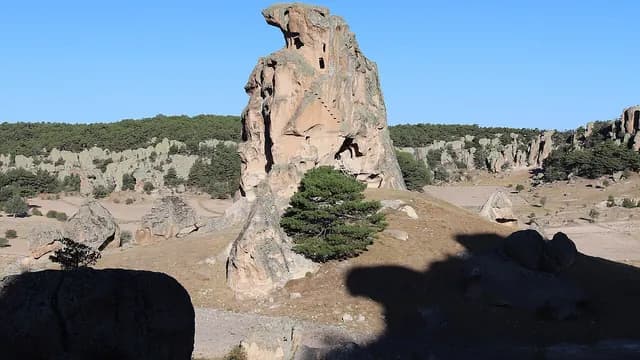
A rock castle in the north of the Phrygian Valley, with rock-cut rooms and passages bearing traces of the Phrygian, Roman and Byzantine periods.
 Machine translated — This content was machine-translated and may differ from the original Turkish text.
Museum
Eskişehir Eti Archaeology Museum
Odunpazarı, Eskişehir
A museum displaying Prehistoric, Phrygian, Roman and Byzantine works from the province's excavations, from Demircihöyük to Pessinus.
 Machine translated — This content was machine-translated and may differ from the original Turkish text.
Family activity
Eskişehir Zoo and Underwater World
Tepebaşı, Eskişehir
A zoo within Sazova Park housing about 240 species together with its aquarium and tropical center.
 Machine translated — This content was machine-translated and may differ from the original Turkish text.
Hiking trail
Phrygian Way (Yazılıkaya section)
Han, Eskişehir
The section passing through Midas City of the long-distance hiking route linking the Phrygian Valley in Eskişehir, Kütahya and Afyonkarahisar.
 Machine translated — This content was machine-translated and may differ from the original Turkish text.
Rock tomb
Gerdekkaya Rock Tomb
Seyitgazi, Eskişehir
A Hellenistic-period monumental tomb carved into the rock near the village of Çukurca, with a facade with a pediment and two columns.
- Machine translated — This content was machine-translated and may differ from the original Turkish text.
Ancient city
Ruins of Germia and the Church of the Archangel Michael
Günyüzü, Eskişehir
The ruined remains of the great basilica dedicated to the Archangel Michael at Germia, an Early Byzantine pilgrimage town, in the village of Gümüşkonak.
 Machine translated — This content was machine-translated and may differ from the original Turkish text.
Waterfall
Gürleyik Waterfall (Gürleyik Çağlayanı)
Mihalıççık, Eskişehir
A 4–5-meter waterfall near the village of Gürleyik north of Mihalıççık, and the picnic area around the pool it forms.
 Machine translated — This content was machine-translated and may differ from the original Turkish text.
Cultural center
Haller Youth Center (Haller Gençlik Merkezi)
Tepebaşı, Eskişehir
A culture and arts center dominated by wood and wrought iron, created by restoring the historic Fresh Fruit and Vegetable Market building.
- Machine translated — This content was machine-translated and may differ from the original Turkish text.
Archaeological site
Han Underground City
Han, Eskişehir
Underground galleries in the Han district center, consisting of multi-level rooms, corridors and water channels carved into the rock.
- Machine translated — This content was machine-translated and may differ from the original Turkish text.
Mosque
Hara Mosque (Mahmudiye)
Mahmudiye, Eskişehir
A mosque beside the historic stud farm in Mahmudiye, commissioned by Sultan Abdülhamid II in 1897 according to its inscription.
- Machine translated — This content was machine-translated and may differ from the original Turkish text.
Museum
İmren Erşen Oya Museum
Odunpazarı, Eskişehir
A museum in the historic Sivrioğulları Mansion displaying nearly six thousand oya (needle lace) pieces collected across Anatolia by painter İmren Erşen.
- Machine translated — This content was machine-translated and may differ from the original Turkish text.
Museum
İnönü Battles Headquarters Museum
İnönü, Eskişehir
A museum in the house used as headquarters during the Battles of İnönü by İsmet Paşa, Commander of the Western Front.
- Machine translated — This content was machine-translated and may differ from the original Turkish text.
Castle
Karacahisar Castle
Odunpazarı, Eskişehir
The remains of a Byzantine castle taken by Osman Bey in 1288, considered a turning point in the founding of the Ottoman Principality.
 Machine translated — This content was machine-translated and may differ from the original Turkish text.
Family activity
Kentpark
Tepebaşı, Eskişehir
A city park of about 270 thousand square meters along the Porsuk Çayı, with a pond with an artificial beach and an island.
 Machine translated — This content was machine-translated and may differ from the original Turkish text.
Mound (höyük)
Küllüoba Mound (Höyük)
Seyitgazi, Eskişehir
A key mound of Western Anatolian prehistory with a palace and walls, continuously settled from the Late Chalcolithic to the end of the Early Bronze Age.
 Machine translated — This content was machine-translated and may differ from the original Turkish text.
Madrasa and külliye (complex)
Kurşunlu Mosque and Complex
Odunpazarı, Eskişehir
An Ottoman complex in Odunpazarı completed by Çoban Mustafa Paşa in 1525, consisting of a mosque, imaret, tekke and caravanserais.
 Machine translated — This content was machine-translated and may differ from the original Turkish text.
Museum
Liberation Museum (Kurtuluş Müzesi)
Odunpazarı, Eskişehir
A museum telling the story of the War of Independence interactively, in the Mestanoğlu Halil Mansion where İsmet İnönü stayed during the First Battle of İnönü.
 Machine translated — This content was machine-translated and may differ from the original Turkish text.
Museum
Meerschaum Museum (Lületaşı Müzesi)
Odunpazarı, Eskişehir
A museum within the Kurşunlu Complex displaying pipes and artworks made of meerschaum, the symbol of Eskişehir.
 Machine translated — This content was machine-translated and may differ from the original Turkish text.
Museum
M.S.Ö. Air and Space Museum
Sivrihisar, Eskişehir
An aviation museum at the Sivrihisar Aviation Center, known as the 'Flying Museum' for its airworthy historic aircraft.
 Machine translated — This content was machine-translated and may differ from the original Turkish text.
Ancient city
Midas City and the Midas Monument (Yazılıkaya)
Han, Eskişehir
A Phrygian settlement consisting of the Midas Monument, a 17-meter Phrygian cult facade carved into the rock, and the acropolis, cisterns and rock steps.
 Machine translated — This content was machine-translated and may differ from the original Turkish text.
Nature park
Musaözü Nature Park
Tepebaşı, Eskişehir
A 50-hectare nature park with black pine and oak forest around the Musaözü Pond on the Eskişehir–Kütahya road.
 Machine translated — This content was machine-translated and may differ from the original Turkish text.
Museum
Odunpazarı Modern Museum (OMM)
Odunpazarı, Eskişehir
A contemporary art museum opened in 2019, designed with wooden beams by the Japanese architect Kengo Kuma.
 Machine translated — This content was machine-translated and may differ from the original Turkish text.
Historic street and neighborhood
Historic Houses of Odunpazarı
Odunpazarı, Eskişehir
Eskişehir's old town core with its Ottoman houses with bay windows and colorful facades and narrow streets; on the UNESCO World Heritage Tentative List.
 Machine translated — This content was machine-translated and may differ from the original Turkish text.
Ancient city
Pessinus Ancient City
Sivrihisar, Eskişehir
A Phrygian and Roman city in the village of Ballıhisar, one of the most important centers of the cult of the Mother Goddess Cybele.
- Machine translated — This content was machine-translated and may differ from the original Turkish text.
Hot spring
Sakarıılıca Hot Springs
Mihalgazi, Eskişehir
Hot springs operated with municipal and private facilities at Sakarıılıca in the Sakarya valley, attached to Mihalgazi.
- Machine translated — This content was machine-translated and may differ from the original Turkish text.
River and spring-fed stream (azmak)
Sakaryabaşı
Çifteler, Eskişehir
A recreation area where the springs of the Sakarya River emerge, known for its trout restaurants and picnic areas.
 Machine translated — This content was machine-translated and may differ from the original Turkish text.
Mound (höyük)
Şarhöyük (Dorylaion)
Tepebaşı, Eskişehir
Eskişehir's oldest settlement; the mound of the ancient city of Dorylaion, now within the city.
 Machine translated — This content was machine-translated and may differ from the original Turkish text.
Family activity
Sazova Science, Culture and Art Park
Tepebaşı, Eskişehir
A large city park of 400 thousand square meters with the Fairy Tale Castle, a pirate ship, a Japanese garden and a pond.
 Machine translated — This content was machine-translated and may differ from the original Turkish text.
Madrasa and külliye (complex)
Seyyid Battal Gazi Complex
Seyitgazi, Eskişehir
A complex that grew around the tomb and mosque commissioned in 1207–1208 by Ümmühan Hatun in the name of the epic hero Battal Gazi.
 Machine translated — This content was machine-translated and may differ from the original Turkish text.
Clock tower
Sivrihisar Clock Tower
Sivrihisar, Eskişehir
A 12-meter stone clock tower built in 1900; the symbol of the Sivrihisar bazaar.
 Machine translated — This content was machine-translated and may differ from the original Turkish text.
Mosque
Sivrihisar Ulu Mosque (Grand Mosque)
Sivrihisar, Eskişehir
One of Anatolia's largest wooden-columned mosques, whose roof is supported by 67 wooden columns; on the UNESCO Tentative List.
 Machine translated — This content was machine-translated and may differ from the original Turkish text.
Church
Surp Yerrortutyun Armenian Church
Sivrihisar, Eskişehir
A three-aisled basilica rebuilt in 1881, referred to as one of the large Armenian churches of Anatolia.
 Machine translated — This content was machine-translated and may differ from the original Turkish text.
Museum
Tayfun Talipoğlu Typewriter Museum
Odunpazarı, Eskişehir
Türkiye's first typewriter museum, displaying typewriters belonging to famous names in the restored Şamlıoğlu Mansion.
 Machine translated — This content was machine-translated and may differ from the original Turkish text.
Museum
TÜRASAŞ Devrim Cars Museum
Odunpazarı, Eskişehir
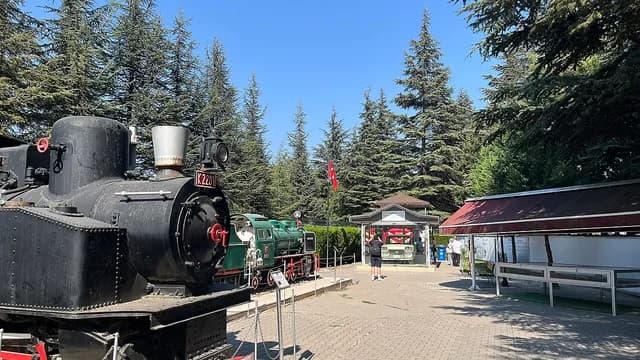
A museum within the railway factory displaying Devrim, the first domestic car, and Karakurt, the first domestic locomotive.
 Machine translated — This content was machine-translated and may differ from the original Turkish text.
Monument and statue
Ulus Monument
Tepebaşı, Eskişehir
A monument at the İstasyon Junction carrying a statue of Atatürk with tiered reliefs stretching from the War of Independence to modern Türkiye.
 Machine translated — This content was machine-translated and may differ from the original Turkish text.
Museum
Yılmaz Büyükerşen Wax Museum
Odunpazarı, Eskişehir
Türkiye's first wax museum; statues of historic and contemporary figures made by the former mayor Yılmaz Büyükerşen.
- Machine translated — This content was machine-translated and may differ from the original Turkish text.
Tomb (türbe)
Tomb of Yunus Emre (Mihalıççık)
Mihalıççık, Eskişehir
The tomb and grave of the great folk poet Yunus Emre in the Yunusemre neighborhood of Mihalıççık.
Practical information
Machine translated — This content was machine-translated and may differ from the original Turkish text.- Note
- For current hours and fees of museums and archaeological sites, check muze.gov.tr and the announcements of the municipal museums
- Climate
- Continental; hot, dry summers and cold winters with occasional snow
- Best season
- April–June and September–October; spring and autumn for Phrygian Valley hikes
- Getting there
- High-speed train (YHT) connections to İstanbul, Ankara and Konya; Hasan Polatkan Airport; tram network in the city
- Getting around
- Odunpazarı and the Porsuk riverside can be explored on foot; a private vehicle is recommended for the Phrygian Valley and Sivrihisar