42 · City guide
Konya
City of Mevlânâ (Rumi) and the Seljuk capital
Konya is Türkiye's largest province by area and was the capital of the Anatolian Seljuk State in the 12th–13th centuries. At the heart of the city are the tomb of Mevlânâ Celâleddîn-i Rûmî, the Seljuk mosque on Alâeddin Hill and the Karatay and İnce Minareli madrasas, famous for their tile decoration; every December, the Şeb-i Arûs ceremonies draw visitors from all over the world. Çatalhöyük and Boncuklu Höyük, southeast of the plain, tell of humanity's first experiences of village and urban life. To the west, Beyşehir, Türkiye's largest freshwater lake, forms a separate touring area with the wooden-columned Eşrefoğlu Mosque, Kubadabad Palace and the Hittite water monument of Eflatunpınar. The crater lakes of Karapınar, the Kızören sinkhole (obruk), the rock-carved fabric of Sille and the traces of Nasreddin Hoca in Akşehir round out the province's variety. Etli ekmek, fırın kebabı and bamya çorbası (okra soup) are essentials of Konya cuisine.
Machine translated — This content was machine-translated and may differ from the original Turkish text.80
Places
0
Routes
0
Badges
Where shall we explore?
- Machine translated — This content was machine-translated and may differ from the original Turkish text.
Mosque
Acem Nasuh Mosque
Hüyük, Konya
A 14th-century building in the Köşk neighborhood belonging to the Konya region's tradition of mosques with wooden posts.
 Machine translated — This content was machine-translated and may differ from the original Turkish text.
Lake
Acıgöl Crater Lake
Karapınar, Konya
A maar lake with bitter, salty water in a steep-shored volcanic hollow northeast of Meke.
- Machine translated — This content was machine-translated and may differ from the original Turkish text.
Monumental tree
Ağıl Ardıç Natural Monument
Taşkent, Konya
A giant stinking juniper near Balcılar, said to be about 2,000 years old, declared a natural monument in 2002.
- Machine translated — This content was machine-translated and may differ from the original Turkish text.
Tomb (türbe)
Ak Türbe (White Tomb, Gürağaç)
Güneysınır, Konya
A tomb standing in the old cemetery south of Gürağaç, dated to the late 14th–early 15th century.
- Machine translated — This content was machine-translated and may differ from the original Turkish text.
Mosque
Akkise Mosque
Ahırlı, Konya
A three-aisled village mosque in the Akkise neighborhood, built in 1859, with wooden posts and wooden decoration.
- Machine translated — This content was machine-translated and may differ from the original Turkish text.
Bridge
Akören Bridge
Akören, Konya
A four-span stone bridge in Orhaniye, built at the end of the 19th century.
 Machine translated — This content was machine-translated and may differ from the original Turkish text.
Museum
Akşehir Nasreddin Hoca Archaeology and Ethnography Museum
Akşehir, Konya
A museum dedicated to Nasreddin Hoca, displaying archaeological and ethnographic works of the Akşehir area from the Neolithic to the Ottoman period.
 Machine translated — This content was machine-translated and may differ from the original Turkish text.
Mosque
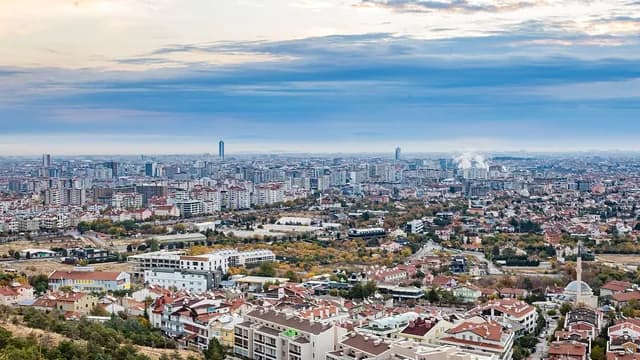
Akşehir Ulu Mosque (Grand Mosque)
Akşehir, Konya
Akşehir's historic grand mosque, dated 1213 according to its minaret inscription, going back to the Seljuk period and notable for its tiled mihrab.
 Machine translated — This content was machine-translated and may differ from the original Turkish text.
Nature park
Akyokuş Nature Park
Meram, Konya
A walking and picnic area on the hills west of the city, offering a wide panorama over the Konya Plain; declared a nature park in 2011.
 Machine translated — This content was machine-translated and may differ from the original Turkish text.
Mosque
Alâeddin Mosque and Alâeddin Hill
Selçuklu, Konya
Konya's largest and oldest mosque, on Alâeddin Hill in the middle of the city, containing the kümbet of the Seljuk sultans.
- Machine translated — This content was machine-translated and may differ from the original Turkish text.
Castle
Arısama Castle
Emirgazi, Konya
Castle remains dominating the region on the summit of Arısama Dağı north of Emirgazi, an area famous for its Hittite-period inscribed altars.
 Machine translated — This content was machine-translated and may differ from the original Turkish text.
House museum
Atatürk House Museum
Meram, Konya
A two-story historic building from 1912 where Atatürk stayed on his visits to Konya; a house museum displaying his personal belongings.
 Machine translated — This content was machine-translated and may differ from the original Turkish text.
Church
Aya Elenia Church
Selçuklu, Konya
The symbol of Sille; the Church of the Archangel Michael, attributed by tradition to Empress Helena, whose present structure bears 19th-century repairs.
 Machine translated — This content was machine-translated and may differ from the original Turkish text.
Church
Church of St. Paul
Meram, Konya
The Catholic Church of St. Paul, southeast of Alâeddin Hill, built in 1910 and the only church still standing in Konya.
 Machine translated — This content was machine-translated and may differ from the original Turkish text.
Mosque
Aziziye Mosque
Karatay, Konya
Konya's last great Ottoman mosque, in the middle of the Bedesten bazaar, with its Baroque- and Empire-influenced facade and balconied minaret balconies.
 Machine translated — This content was machine-translated and may differ from the original Turkish text.
House museum
Western Front Headquarters Museum
Akşehir, Konya
A historic building used as the Western Front Headquarters between November 1921 and August 1922, where the plans for the Great Offensive were prepared.
- Machine translated — This content was machine-translated and may differ from the original Turkish text.
Han and caravanserai
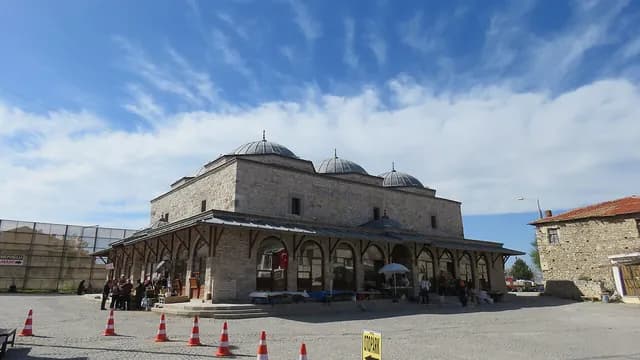
Belbaşı Han
Ahırlı, Konya
A ruined Seljuk han on the Konya–Seydişehir caravan road, still standing together with the stone cistern beside it.
 Machine translated — This content was machine-translated and may differ from the original Turkish text.
Bazaar and arasta
Beyşehir Bedesten
Beyşehir, Konya
A domed historic market building with shops opposite the Eşrefoğlu Mosque, commissioned at the end of the 13th century by Eşrefoğlu Süleyman Bey.
 Machine translated — This content was machine-translated and may differ from the original Turkish text.
National park
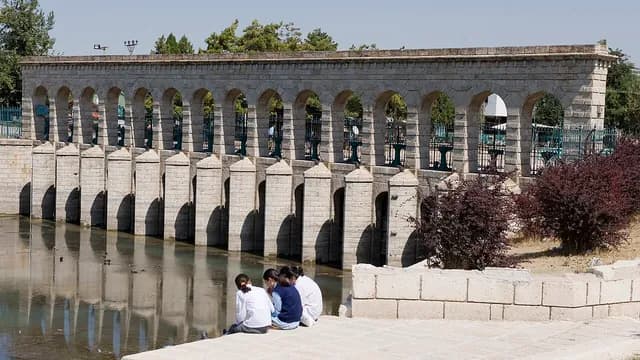
Beyşehir Lake National Park
Beyşehir, Konya
The country's largest national park, around Türkiye's largest freshwater lake, with its islands, coves, wooded slopes and historic buildings.
 Machine translated — This content was machine-translated and may differ from the original Turkish text.
Bridge
Beyşehir Taşköprü (Stone Bridge)
Beyşehir, Konya
A stone-arched regulator bridge built between 1908 and 1914 that releases the water of Lake Beyşehir to the Konya Plain; famous for its sunset views.
 Machine translated — This content was machine-translated and may differ from the original Turkish text.
Birdwatching site
Bolluk Lake
Cihanbeyli, Konya
A salt lake west of the Salt Lake where flamingos and shorebirds gather; a Key Biodiversity Area.
 Machine translated — This content was machine-translated and may differ from the original Turkish text.
Mound (höyük)
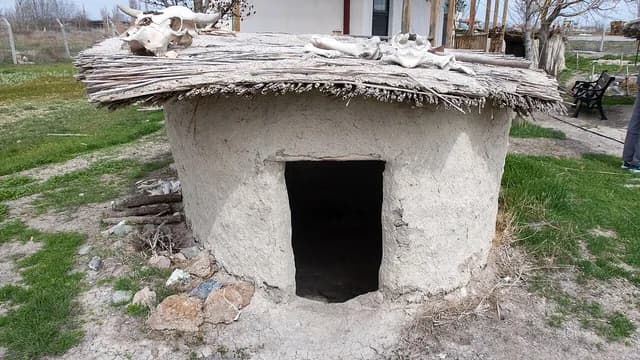
Boncuklu Höyük
Karatay, Konya
One of the world's oldest village settlements, dated to 8300–7800 BC and considered the forerunner of Çatalhöyük; open-air reconstructed houses.
 Machine translated — This content was machine-translated and may differ from the original Turkish text.
Mound (höyük)
Çatalhöyük Neolithic Town
Çumra, Konya
A Neolithic town where thousands of people lived between 7400 and 6000 BC; a UNESCO World Heritage Site with its wall paintings and houses entered from the roof.
- Machine translated — This content was machine-translated and may differ from the original Turkish text.
Cave
Derebucak Çamlık Caves
Derebucak, Konya
A karst area of 13 caves near the town of Çamlık, declared a natural monument in 2013 and Türkiye's 47th national park in 2022.
- Machine translated — This content was machine-translated and may differ from the original Turkish text.
Mosque
Deştiğin Ulu Mosque (Grand Mosque)
Doğanhisar, Konya
A 19th-century wooden mosque in Deştiğin whose decoration was renewed in a comprehensive repair.
 Machine translated — This content was machine-translated and may differ from the original Turkish text.
Mosque
Doğanhisar Ulu Mosque (Grand Mosque)
Doğanhisar, Konya
Doğanhisar's most valuable building, with its inscription dated 1548 and its painted wooden ceiling related to classical-period mosques in Istanbul.
 Machine translated — This content was machine-translated and may differ from the original Turkish text.
Birdwatching site
Düden Lake (Kulu Bird Paradise)
Kulu, Konya
A shallow bird lake just east of the Kulu district center, where white-headed ducks and flamingos breed on its islets.
 Machine translated — This content was machine-translated and may differ from the original Turkish text.
Aqueduct and cistern
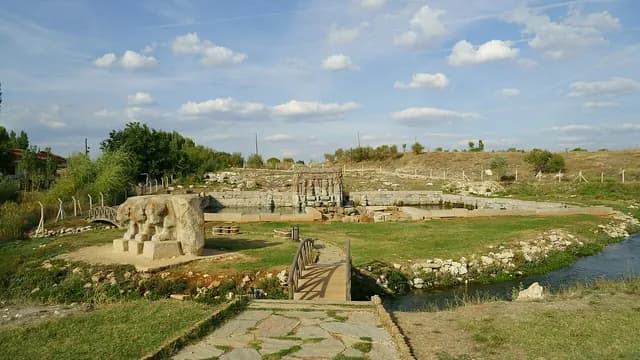
Eflatunpınar Hittite Water Monument
Beyşehir, Konya
A sacred water monument of the Hittite Imperial Age on the edge of the pool where spring water is collected, with reliefs of gods and winged suns.
- Machine translated — This content was machine-translated and may differ from the original Turkish text.
Tomb (türbe)
Tomb of Emirgazi (Emrullah Gazi)
Emirgazi, Konya
A Karamanid-period tomb with a circular plan and conical cap, attributed to Emrullah Gazi, who gave the district its name.
 Machine translated — This content was machine-translated and may differ from the original Turkish text.
Mosque
Eşrefoğlu Mosque
Beyşehir, Konya
Anatolia's largest and most original mosque with wooden columns, commissioned in 1296–1299 by Eşrefoğlu Süleyman Bey; a UNESCO World Heritage Site since 2023.
 Machine translated — This content was machine-translated and may differ from the original Turkish text.
Monument and statue
Fasıllar Monument
Beyşehir, Konya
An unfinished Hittite Storm God monument, about 8 meters tall and weighing 70 tons, lying on a slope near the village of Fasıllar.
- Machine translated — This content was machine-translated and may differ from the original Turkish text.
Yayla (highland pasture)
Gölcük Highland (Yayla)
Ahırlı, Konya
A picnic highland belonging to the Kuruçay neighborhood, known for its pine forests and cold spring waters, overlooking Suğla Lake.
- Machine translated — This content was machine-translated and may differ from the original Turkish text.
Castle
Harunlar (Asar) Castle
Yunak, Konya
A two-part Byzantine castle with inner and outer walls south of the Harunlar neighborhood, surrounded by rock-cut houses.
 Machine translated — This content was machine-translated and may differ from the original Turkish text.
Han and caravanserai
Horozlu Han
Selçuklu, Konya
The Seljuk caravanserai closest to the city on the old Konya–Akşehir road; commissioned in the mid-13th century by Emir Esedüddin Ruzbe.
 Machine translated — This content was machine-translated and may differ from the original Turkish text.
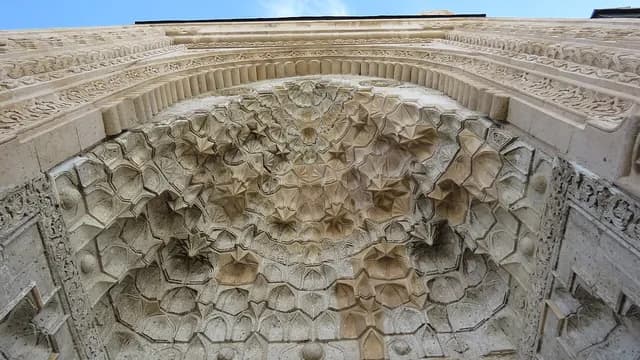
Madrasa and külliye (complex)
İnce Minareli Medrese Museum of Stone and Wood Works
Selçuklu, Konya
A madrasa commissioned by Sahip Ata in 1264, famous for its carved portal and tiled minaret; the Museum of Stone and Wood Works.
 Machine translated — This content was machine-translated and may differ from the original Turkish text.
Monument and statue
İvriz Rock Monument
Halkapınar, Konya
An 8th-century BC Late Hittite rock relief depicting King Warpalawas of Tuwana praying to the Storm God Tarhunza.
 Machine translated — This content was machine-translated and may differ from the original Turkish text.
Museum
İzzet Koyunoğlu City Museum
Karatay, Konya
A city museum and old Konya house displaying the archaeological, ethnographic and natural history objects collected by a Konya resident over his lifetime.
 Machine translated — This content was machine-translated and may differ from the original Turkish text.
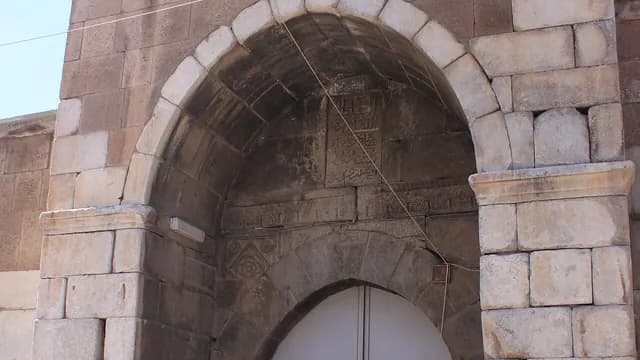
Han and caravanserai
Kadınhanı (Raziye Sultan Hanı)
Kadınhanı, Konya
A Seljuk caravanserai commissioned by Raziye Hatun in 1223, which gave the Kadınhanı district its name; today an exhibition hall.
 Machine translated — This content was machine-translated and may differ from the original Turkish text.
Madrasa and külliye (complex)
Karatay Madrasa Museum of Tile Works
Karatay, Konya
A Seljuk madrasa dated 1251 at the foot of Alâeddin Hill, famous for the starry tile decoration of its dome; today the Museum of Tile Works.
 Machine translated — This content was machine-translated and may differ from the original Turkish text.
Ancient city
Kilistra Ancient City
Meram, Konya
An ancient settlement near Hatunsaray resembling Cappadocia, with rock-cut churches, chapels, cisterns and dwellings.
 Machine translated — This content was machine-translated and may differ from the original Turkish text.
Lake
Kızören Sinkhole (Obruk)
Karatay, Konya
A giant water-filled sinkhole about 145 meters deep beside the Konya–Aksaray road; right beside it, the Seljuk-period Obruk Hanı.
 Machine translated — This content was machine-translated and may differ from the original Turkish text.
Nature park
Kocakoru Forest Nature Park
Seydişehir, Konya
A day-use picnic and walking area within a steppe forest near Taraşçı, on the northern foothills of the Taurus.
 Machine translated — This content was machine-translated and may differ from the original Turkish text.
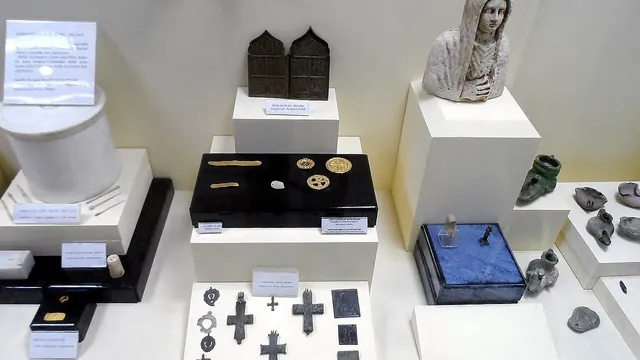
Museum
Konya Archaeology Museum
Meram, Konya
One of Anatolia's first archaeology museums, founded in 1899; known for its Roman-period sarcophagi and Çatalhöyük finds.
- Machine translated — This content was machine-translated and may differ from the original Turkish text.
Family activity
Konya Science Center
Selçuklu, Konya
Türkiye's first large science center, established with TÜBİTAK support, with a planetarium, an observation tower and interactive exhibits.
 Machine translated — This content was machine-translated and may differ from the original Turkish text.
Museum
Konya Ereğli Museum
Ereğli, Konya
A museum displaying finds from Ereğli and its surroundings from the Neolithic to the Ottoman period, and the Late Hittite stele from İvriz.
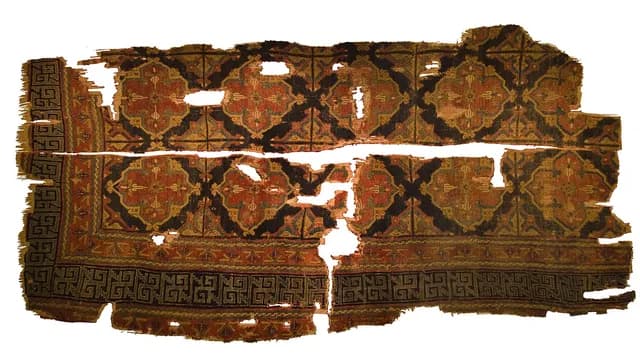 Machine translated — This content was machine-translated and may differ from the original Turkish text.
Museum
Konya Ethnography Museum
Meram, Konya
An ethnography museum dating from 1975, displaying the carpets and kilims, clothing, jewelry and everyday items of Konya and its surroundings.
 Machine translated — This content was machine-translated and may differ from the original Turkish text.
Family activity
Konya Tropical Butterfly Garden
Selçuklu, Konya
A habitat in the Butterfly Valley Park where thousands of tropical butterflies fly in a glass-domed garden kept at constant temperature and humidity.
 Machine translated — This content was machine-translated and may differ from the original Turkish text.
Archaeological site
Kubadabad Palace
Beyşehir, Konya
The summer palace of Alâeddin Keykubad I on the southwest shore of Lake Beyşehir; the only surviving palace remains of the Anatolian Seljuks.
 Machine translated — This content was machine-translated and may differ from the original Turkish text.
Nature park
Kuğulu Nature Park
Seydişehir, Konya
A nature park declared in 2018 right at the edge of Seydişehir, with a pond, waterfall, cave and forest walking paths.
- Machine translated — This content was machine-translated and may differ from the original Turkish text.
Tomb (türbe)
Tomb of Kuzucu Sultan
Doğanhisar, Konya
A 13th-century Seljuk tomb adjoining the Kuzucu Sultan Mosque, with an octagonal body and pyramidal cap.
- Machine translated — This content was machine-translated and may differ from the original Turkish text.
Mosque
Ladik Kaşı Mosque
Sarayönü, Konya
A mosque in Ladik built in 1887, notable for its wooden mihrab, minbar and preaching chair decorated with the nailed-on (çakma) technique.
- Machine translated — This content was machine-translated and may differ from the original Turkish text.
Mosque
Ladik Ulu Mosque (Grand Mosque)
Sarayönü, Konya
A five-aisled mosque with wooden posts in Ladik, built over ancient Laodicea Katakekaumene, with painted decoration and an openwork wooden mihrab and minbar.
- Machine translated — This content was machine-translated and may differ from the original Turkish text.
Madrasa and külliye (complex)
Lala Mustafa Paşa Complex
Ilgın, Konya
An Ottoman staging-post complex in the middle of the Ilgın bazaar, consisting of a mosque, han, imaret and arasta dated 1576.
- Machine translated — This content was machine-translated and may differ from the original Turkish text.
Nature park
Mavi Boğaz Nature Park
Bozkır, Konya
A canyon carved by the Çarşamba Çayı, declared a nature park in 2021, with water that turns from blue to green with the seasons and sheer slopes.
 Machine translated — This content was machine-translated and may differ from the original Turkish text.
Natural monument
Meke Lake
Karapınar, Konya
A maar lake called 'the world's evil-eye bead' with a volcanic cone rising in the middle and two nested lakes; a natural monument and Ramsar site.
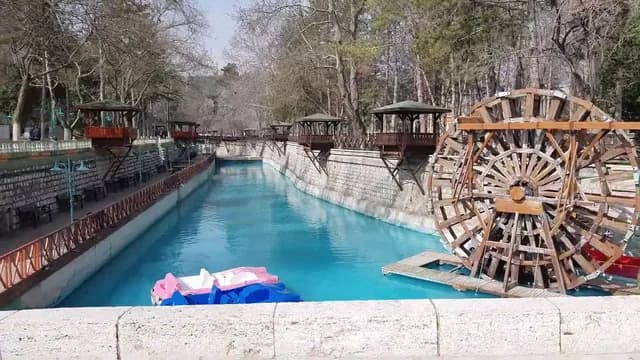 Machine translated — This content was machine-translated and may differ from the original Turkish text.
Picnic area
Meram Vineyards and Meram Bridge
Meram, Konya
A historic valley of vineyards and gardens along the Meram Çayı, praised by Evliya Çelebi; the Seljuk-period Meram Bridge and the Tavus Baba Tomb.
 Machine translated — This content was machine-translated and may differ from the original Turkish text.
Cultural center
Mevlâna Cultural Center
Karatay, Konya
A large culture and performance center where a sema ceremony is held every Saturday evening, hosting the Şeb-i Arûs ceremonies.
 Machine translated — This content was machine-translated and may differ from the original Turkish text.
Museum
Mevlâna Museum
Karatay, Konya
The former Mevlevi lodge containing the tomb of Mevlânâ Celâleddîn-i Rûmî (Rumi); a free museum that is the symbol of Konya with its green dome.
 Machine translated — This content was machine-translated and may differ from the original Turkish text.
Tomb (türbe)
Tomb of Nasreddin Hoca
Akşehir, Konya
The tomb in Akşehir of Nasreddin Hoca, the symbol of humor; although it is open on all four sides, a huge lock hangs on its door.
 Machine translated — This content was machine-translated and may differ from the original Turkish text.
Museum
Panorama Konya Museum
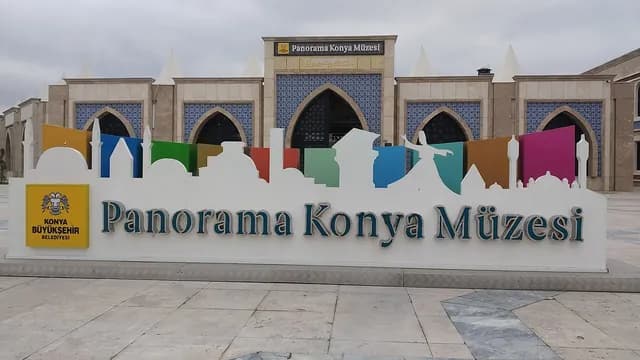
Karatay, Konya
A municipal museum telling the story of 13th-century Konya and the turning points in Rumi's life with a 360-degree dome panorama.
- Machine translated — This content was machine-translated and may differ from the original Turkish text.
Mosque
Pir Hüseyin Bey Mosque
Sarayönü, Konya
The Great Mosque in central Sarayönü, commissioned in 1408, remaining from the Turgutoğulları period with its prayer hall with wooden columns.
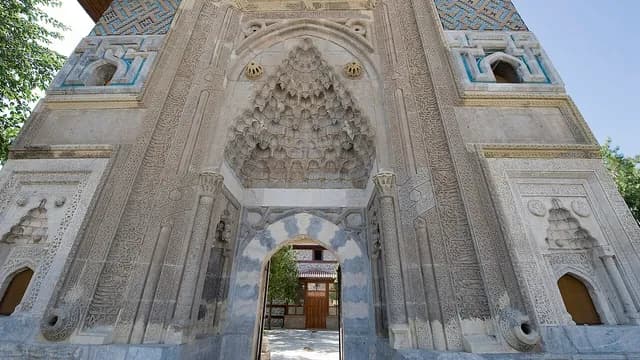 Machine translated — This content was machine-translated and may differ from the original Turkish text.
Madrasa and külliye (complex)
Sahip Ata Complex and Foundation Museum
Meram, Konya
A complex consisting of a mosque, tomb, hanikah and hamam commissioned by the vizier Sahip Ata in the 13th century; the hanikah section is now the Foundation Museum.
- Machine translated — This content was machine-translated and may differ from the original Turkish text.
Bridge
Sazak Bridge
Taşkent, Konya
An Ottoman-period stone bridge 62 meters long with three round arches over the Balcılar Çayı, a tributary of the Göksu.
 Machine translated — This content was machine-translated and may differ from the original Turkish text.
Mosque
Selimiye Mosque
Karatay, Konya
A classical Ottoman mosque with twin minarets right next to the Mevlânâ Museum, commissioned by Selim II when he was a prince.
 Machine translated — This content was machine-translated and may differ from the original Turkish text.
Tomb (türbe)
Tomb and Mosque of Shams-i Tabrizi (Şems-i Tebrizi)
Karatay, Konya
A shrine-tomb named after Shams-i Tabrizi, Rumi's spiritual companion, and the adjoining historic mosque.
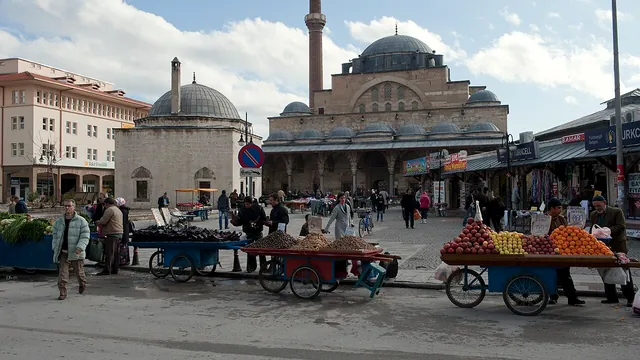 Machine translated — This content was machine-translated and may differ from the original Turkish text.
Mosque
Şerafettin Mosque
Karatay, Konya
A 17th-century Ottoman mosque at the entrance to the Bedesten bazaar, with its large dome resting on ten massive piers and its painted decoration.
 Machine translated — This content was machine-translated and may differ from the original Turkish text.
Tomb (türbe)
Tomb of Seyyid Mahmud Hayrânî
Akşehir, Konya
The 13th-century tomb of the Sufi Seyyid Mahmud Hayrânî, a contemporary of Rumi, at the foot of the Sultan Mountains, and the masjid in its garden.
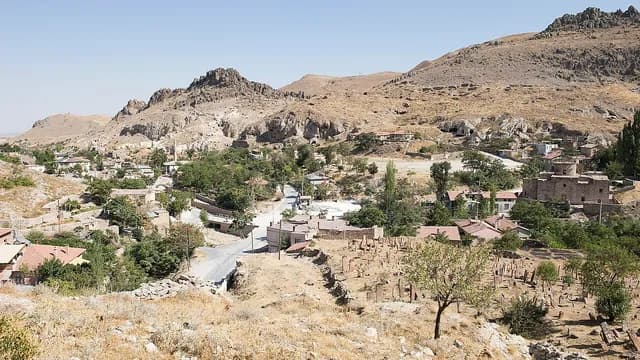 Machine translated — This content was machine-translated and may differ from the original Turkish text.
Village and rural life
Sille
Selçuklu, Konya
A valley settlement thousands of years old, 8 km northwest of Konya, with rock-cut chapels, stone houses and the Aya Elenia Church.
 Machine translated — This content was machine-translated and may differ from the original Turkish text.
Madrasa and külliye (complex)
Sırçalı Madrasa
Meram, Konya
A two-story Seljuk madrasa with an open courtyard built in 1242, named after the glazed tiles inside; a display of gravestones.
 Machine translated — This content was machine-translated and may differ from the original Turkish text.
Mosque
Sultan Selim Mosque and Complex
Karapınar, Konya
The surviving twin-minaret mosque of the complex commissioned by Prince Selim during his governorship of Konya and completed in 1563.
 Machine translated — This content was machine-translated and may differ from the original Turkish text.
Bazaar and arasta
Historic Bedesten Bazaar
Karatay, Konya
Konya's historic bazaar area between Mevlânâ Square and the Kapı Mosque, with coppersmiths', yemeni makers' and spice shops.
 Machine translated — This content was machine-translated and may differ from the original Turkish text.
Madrasa and külliye (complex)
Taş Medrese (Akşehir Museum of Stone Works)
Akşehir, Konya
A Seljuk madrasa commissioned by Sahip Ata in 1250; after restoration it has served as the Museum of Stone Works since 2020.
 Machine translated — This content was machine-translated and may differ from the original Turkish text.
Cave
Tınaztepe Cave
Seydişehir, Konya
A large karstic cave with a total length of about 22 km, 1,580 meters of which can be toured along an illuminated walkway.
- Machine translated — This content was machine-translated and may differ from the original Turkish text.
Mosque
Uzun Şeyh Mosque
Taşkent, Konya
A historic mosque in central Taşkent from the first quarter of the 16th century, restored after a fire.
- Machine translated — This content was machine-translated and may differ from the original Turkish text.
Nature park
Yakamanastır Nature Park
Beyşehir, Konya
A forest picnic, camping and bungalow accommodation area overlooking Lake Beyşehir, 6 km southwest of Beyşehir.
 Machine translated — This content was machine-translated and may differ from the original Turkish text.
Waterfall
Yerköprü Waterfall
Hadim, Konya
A waterfall where the Göksu River drops about 20 meters onto travertine rocks, surrounded by a natural bridge and caves.
 Machine translated — This content was machine-translated and may differ from the original Turkish text.
Han and caravanserai
Zazadin Han
Selçuklu, Konya
A monumental Seljuk caravanserai on the Konya–Aksaray road, completed in 1236 according to its inscription, built with spolia stones.
 Machine translated — This content was machine-translated and may differ from the original Turkish text.
Ancient city
Zengibar Castle (Isaura)
Bozkır, Konya
The impressive remains of the walls and buildings of the ancient city of Isaura, on a 1,800-meter hill on Asar Dağı surrounded by cliffs on three sides.
- Machine translated — This content was machine-translated and may differ from the original Turkish text.
Castle
Zengicek Castle
Altınekin, Konya
A 5th-century Byzantine castle rising on a rocky plateau of Bozdağ near Koçyaka (Zengicek).
- Machine translated — This content was machine-translated and may differ from the original Turkish text.
Han and caravanserai
Zıvarık Hanı
Altınekin, Konya
A restored caravanserai with a covered plan in central Altınekin, notable for the spolia stones in its portal.
Practical information
Machine translated — This content was machine-translated and may differ from the original Turkish text.- Note
- Sema ceremonies are acts of worship; there is no applause or flash photography during the ritual.
- Climate
- Continental climate; hot, dry summers and cold winters with occasional snow.
- Best time
- Spring (April–June) and autumn; December 7–17 for the Şeb-i Arûs ceremonies.
- Museum pass
- Müzekart (Museum Pass) is valid at Ministry museums and archaeological sites; check muze.gov.tr for current hours.
- Getting there
- Konya Airport; high-speed train connections to Ankara, İstanbul and Karaman; tram and buses in the city.
- Getting around
- The stretch between Mevlânâ Square, the Bedesten bazaar and Alâeddin Hill is walkable; the tram line follows this axis.