14 · City guide
Bolu
City of lakes, yaylas and cooks
Bolu lies midway along the main road between İstanbul and Ankara, surrounded by the forests of the Köroğlu and Bolu mountains. Known as Bithynion in antiquity and Claudiopolis in Roman times, the city has, within walking distance in its center, the mosque built by Yıldırım Bayezid in the 14th century, stone hans and the provincial museum. The province's real draw is its nature: Abant, Yedigöller, Sülüklügöl and Sünnet lakes, formed by landslides, and the Gölcük and Ayıkayası nature parks offer a different view in every season; in winter, Kartalkaya welcomes skiers. Mudurnu and Göynük keep Ottoman small-town life alive with their wooden houses, the Ahi tradition and buildings such as the Akşemseddin Tomb. The cooks trained in Mengen and its geographically indicated flavors make Bolu a gastronomic stop.
Machine translated — This content was machine-translated and may differ from the original Turkish text.31
Places
0
Routes
0
Badges
Where shall we explore?
 Machine translated — This content was machine-translated and may differ from the original Turkish text.
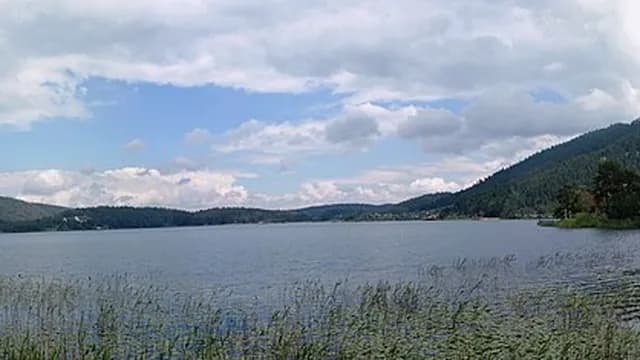
Lake
Abant Lake National Park
Mudurnu, Bolu
A clear lake at 1,328 meters, formed by a landslide and surrounded by forest and hills; Türkiye's 48th national park since 2022.
- Machine translated — This content was machine-translated and may differ from the original Turkish text.
Nature
Akkaya Travertines
Merkez, Bolu
Travertine terraces southwest of Bolu formed by carbonates deposited by hot springs, referred to as 'the Pamukkale of Bolu'.
 Machine translated — This content was machine-translated and may differ from the original Turkish text.
Tomb (türbe)
Tomb of Akşemseddin
Göynük, Bolu
A hexagonal-plan tomb commissioned in 1464 for Akşemseddin, teacher of Sultan Mehmed the Conqueror, famous for its walnut sarcophagus.
- Machine translated — This content was machine-translated and may differ from the original Turkish text.
Yayla (highland pasture)
At Yaylası (At Highland)
Merkez, Bolu
A group of seven highland pastures 10 km north of Bolu, famous for its cherries, where cherry festivals are held every year.
 Machine translated — This content was machine-translated and may differ from the original Turkish text.
Nature park
Ayıkayası Nature Park
Merkez, Bolu
A nature park of beech, Scots pine and fir forests on the Bolu–Yedigöller road, integrated with the Yedigöller National Park.
 Machine translated — This content was machine-translated and may differ from the original Turkish text.
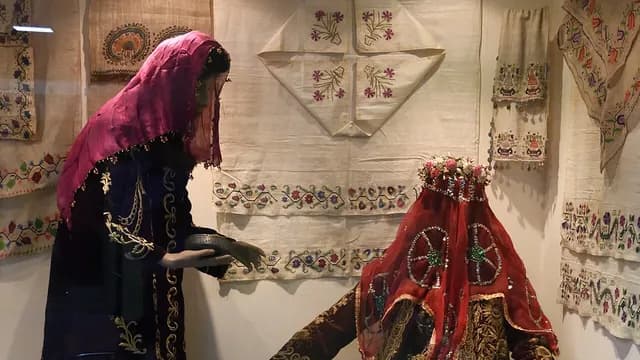
Museum
Bolu Museum
Merkez, Bolu
The provincial museum displaying, in two halls, archaeological works recovered from Bolu and its surroundings and a collection of local ethnography.
 Machine translated — This content was machine-translated and may differ from the original Turkish text.
Lake
Çubuk Lake
Göynük, Bolu
A pine-forest lake beside the village of Çubuk, north of Göynük, formed by a landslide and known for the windmills on its shore.
 Machine translated — This content was machine-translated and may differ from the original Turkish text.
Mosque
Gazi Süleyman Paşa Mosque
Göynük, Bolu
Göynük's historic mosque, commissioned in the 14th century by Gazi Süleyman Paşa, son of Orhan Gazi, with the Tomb of Akşemseddin in its courtyard.
 Machine translated — This content was machine-translated and may differ from the original Turkish text.
Clock tower
Gerede Clock Tower
Gerede, Bolu
A 12-meter historic clock tower made of pine wood in 1882, in Gerede's Cumhuriyet Square.
 Machine translated — This content was machine-translated and may differ from the original Turkish text.
Lake
Gölcük Nature Park
Merkez, Bolu
A small dam lake 13 km south of Bolu, surrounded by fir and beech forests, with a walking and cycling path around it.
 Machine translated — This content was machine-translated and may differ from the original Turkish text.
Historic street and neighborhood
Göynük Historic Town Fabric
Göynük, Bolu
An Ottoman town that is an urban protected site with 137 registered houses, mosques, a hamam and tombs, and a member of the Cittaslow (Slow City) network.
 Machine translated — This content was machine-translated and may differ from the original Turkish text.
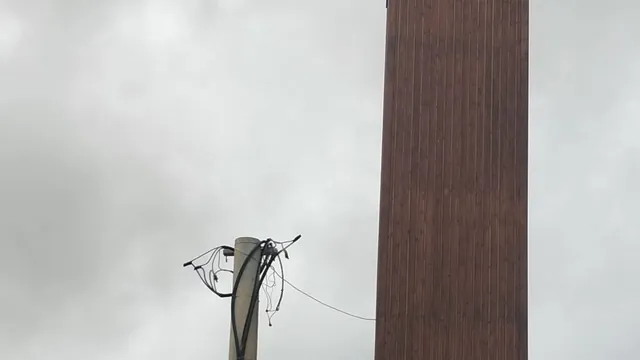
Clock tower
Göynük Victory Tower (Zafer Kulesi)
Göynük, Bolu
A three-story wooden clock tower on a hill overlooking the town, commissioned by District Governor Hurşit Bey in memory of the victories of the War of Independence.
 Machine translated — This content was machine-translated and may differ from the original Turkish text.
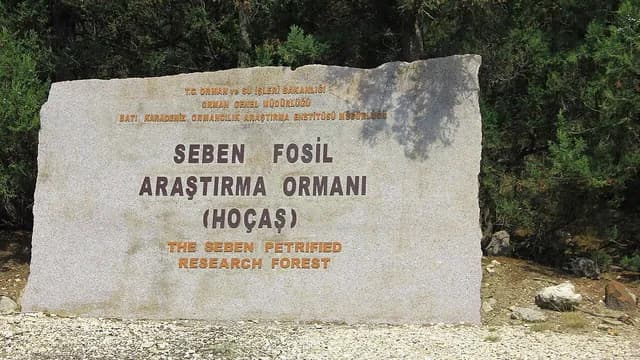
Natural monument
Hoçaş Fossil Forest
Seben, Bolu
A 1st-degree natural protected site declared Türkiye's first fossil forest, with its trees petrified while standing upright.
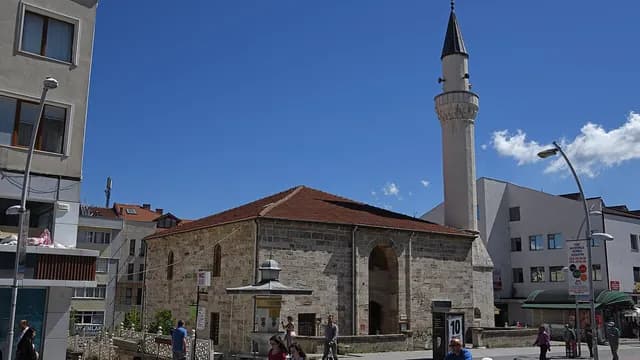 Machine translated — This content was machine-translated and may differ from the original Turkish text.
Mosque
Kadı Mosque
Merkez, Bolu
A mosque commissioned in 1499 by Mehmet Bey, son of Demirtaş Paşa, known for its wooden door in kündekâri work and its projecting pentagonal mihrab section.
 Machine translated — This content was machine-translated and may differ from the original Turkish text.
Nature park
Karagöl Nature Park
Kıbrıscık, Bolu
A nature park laid out around a deep lake surrounded by forest at an altitude of 1,500 meters, south of Kıbrıscık.
 Machine translated — This content was machine-translated and may differ from the original Turkish text.
Ski resort
Kartalkaya Ski Center
Merkez, Bolu
One of Türkiye's long-established ski centers in the Köroğlu Mountains, operating since the 1970s, with a ski season from December to March.
- Machine translated — This content was machine-translated and may differ from the original Turkish text.
Castle
Keçi Kalesi (Goat Castle)
Gerede, Bolu
Wall remains on a plateau on Arkut Dağı just north of Gerede, used in Late Antiquity and the Middle Ages.
- Machine translated — This content was machine-translated and may differ from the original Turkish text.
Yayla (highland pasture)
Kızık Highland (Yayla)
Seben, Bolu
A Seben highland at the foot of Kiraz Dağı, known for its nail-free, interlocking wooden highland houses.
 Machine translated — This content was machine-translated and may differ from the original Turkish text.
Clock tower
Mudurnu Clock Tower
Mudurnu, Bolu
A 12-meter wood-clad clock tower with a tiled roof rising on the slope east of the town; all of Mudurnu can be seen from around it.
 Machine translated — This content was machine-translated and may differ from the original Turkish text.
Historic street and neighborhood
Mudurnu Historic Town Fabric
Mudurnu, Bolu
An Ottoman town that grew on the Silk Road, preserved with more than two hundred registered mansions, its bazaar and the Ahi prayer kept for centuries.
 Machine translated — This content was machine-translated and may differ from the original Turkish text.
Mosque
Mudurnu Yıldırım Bayezid Mosque
Mudurnu, Bolu
A mosque commissioned by Yıldırım Bayezid as a prince, considered one of the early Ottoman experiments with large domes, with its single dome of about 19.5 meters.
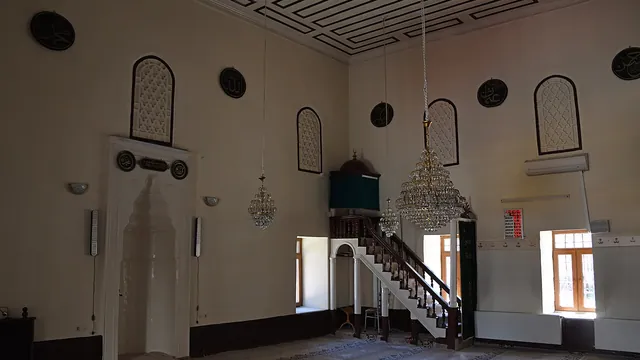 Machine translated — This content was machine-translated and may differ from the original Turkish text.
Mosque
Saraçhane Mosque
Merkez, Bolu
A historic bazaar mosque near Bolu's main square, rebuilt in 1750 according to its inscription, with shops on its lower floor.
- Machine translated — This content was machine-translated and may differ from the original Turkish text.
Yayla (highland pasture)
Sarıalan Highlands (Yaylalar)
Merkez, Bolu
A group of nearby highland pastures with a pond and forests at the foot of the Köroğlu Mountains, on the Kartalkaya road.
- Machine translated — This content was machine-translated and may differ from the original Turkish text.
History and archaeology
Seben Rock Houses (Solaklar)
Seben, Bolu
Multi-story rock houses carved into soft rock beside the village of Solaklar, connected to one another by shafts.
- Machine translated — This content was machine-translated and may differ from the original Turkish text.
Picnic area
Şirinyazı (Bürnük) Pond
Mengen, Bolu
A recreation and camping area around a pond among forests near the village of Bürnük in Mengen.
 Machine translated — This content was machine-translated and may differ from the original Turkish text.
Lake
Sülüklügöl Nature Park
Mudurnu, Bolu
A forest lake formed by a landslide about three hundred years ago, known for the pine trunks that have remained unrotted in its water.
 Machine translated — This content was machine-translated and may differ from the original Turkish text.
Lake
Sünnet Lake Nature Park
Göynük, Bolu
A narrow, long forest lake east of Göynük, formed when two opposing landslides blocked the valley, reaching a depth of 22 meters.
 Machine translated — This content was machine-translated and may differ from the original Turkish text.
National park
Yedigöller (Seven Lakes) National Park
Merkez, Bolu
A national park protected since 1965 with seven connected lakes formed when landslides blocked the valleys, and its mixed forests.
 Machine translated — This content was machine-translated and may differ from the original Turkish text.
Lake
Yeniçağa Lake
Yeniçağa, Bolu
A tectonic lake in a depression formed by the North Anatolian Fault, surrounded by reed beds and peatlands, hosting nearly a hundred bird species.
 Machine translated — This content was machine-translated and may differ from the original Turkish text.
Mosque
Yıldırım Bayezid Mosque (Büyük Cami / Great Mosque)
Merkez, Bolu
The great twin-minaret mosque in the middle of the Bolu bazaar, commissioned by Yıldırım Bayezid in 1382 and rebuilt at the end of the 19th century.
 Machine translated — This content was machine-translated and may differ from the original Turkish text.
Han and caravanserai
Yukarı Taşhan (Upper Stone Han)
Merkez, Bolu
A stone han commissioned in 1804 by Hacı Abdullah Ağa, with a two-story arcaded courtyard, today home to booksellers and tradesmen's shops.
Practical information
Machine translated — This content was machine-translated and may differ from the original Turkish text.- Note
- Admission fees and camping conditions at the national and nature parks may change seasonally.
- Climate
- Transitional between Black Sea and continental climates; winters are snowy and cold, summers are cool.
- Best time
- May–October for the lakes and yaylas (autumn colors in October), December–March for skiing.
- Museum pass
- Bolu Museum is run by the Ministry; check muze.gov.tr for current hours and fees.
- Getting there
- Connected to İstanbul and Ankara by the Anadolu Motorway (O-4/TEM) and the D-100; there is no airport in the province, the nearest being Ankara Esenboğa and İstanbul Sabiha Gökçen.
- Winter travel
- The roads to Yedigöller and Kartalkaya may be closed by snow in winter; carry chains and check road conditions.