48 · City guide
Muğla
Following the coastlines
Muğla is the province with the longest coastline in Türkiye, stretching from Lake Bafa and Milas in the north to Fethiye and Seydikemer in the southeast; the Aegean and the Mediterranean meet along these shores. The Bodrum, Datça and Bozburun peninsulas hold countless coves and islands, while the gulfs of Gökova and Fethiye host the classic routes of the Blue Voyage. The heritage of Caria and Lycia lives on in the Mausoleum at Halicarnassus, Knidos, Kaunos, Labranda, Euromos, Stratonikeia-Lagina, Tlos, Pınara and the UNESCO-listed Letoon. Lake Köyceğiz, the Dalyan channel, the loggerhead turtle (Caretta caretta) beach of İztuzu, the sweetgum (sığla) forests and Saklıkent canyon are its nature stops. Inland, the whitewashed Muğla houses of Menteşe, the Menteşe Beylik buildings of Milas and the yayla (highland pasture) life of the mountain villages reveal a Muğla different from the coast.
Machine translated — This content was machine-translated and may differ from the original Turkish text.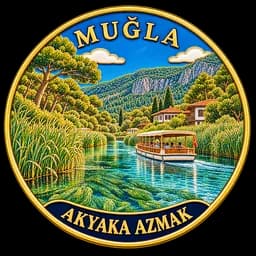
115
Places
3
Routes
11
Badges
Where shall we explore?
 Machine translated — This content was machine-translated and may differ from the original Turkish text.
Madrasa and külliye (complex)
Ahmet Gazi Madrasa (Beçin)
Milas, Muğla
A madrasa with its inscription preserved, commissioned by Ahmet Gazi in 1375 in Beçin, capital of the Menteşe Beylik.
 Sample contentMachine translated — This content was machine-translated and may differ from the original Turkish text.
River and spring-fed stream (azmak)
Akyaka Azmak
Ula, Muğla
A turquoise spring-fed stream (azmak) with clear water flowing into Gökova.
 Machine translated — This content was machine-translated and may differ from the original Turkish text.
Blue Flag beach
Akyaka Beach
Ula, Muğla
A shallow, sandy public beach at the eastern end of the Gulf of Gökova, awarded the Blue Flag every year since 2008.
 Machine translated — This content was machine-translated and may differ from the original Turkish text.
Rock tomb
Tomb of Amyntas (Amintas Kaya Mezarı)
Fethiye, Muğla
A 4th-century BC Lycian tomb carved into the cliff above Fethiye, imitating an Ionic temple facade.
 Machine translated — This content was machine-translated and may differ from the original Turkish text.
Ancient city
Amos Ancient City
Marmaris, Muğla
A small Hellenistic-Roman settlement between Turunç and Kumlubük, with a theater and temple on a hill overlooking the sea.
 Machine translated — This content was machine-translated and may differ from the original Turkish text.
Archaeological site
Araxa Ancient City
Seydikemer, Muğla
A small Lycian city near the village of Ören, in the source area of the Eşen River.
 Machine translated — This content was machine-translated and may differ from the original Turkish text.
Paragliding
Babadağ
Seydikemer, Muğla
A 1,969-meter mountain rising above Ölüdeniz, world-famous for its paragliding take-offs.
 Machine translated — This content was machine-translated and may differ from the original Turkish text.
History and archaeology
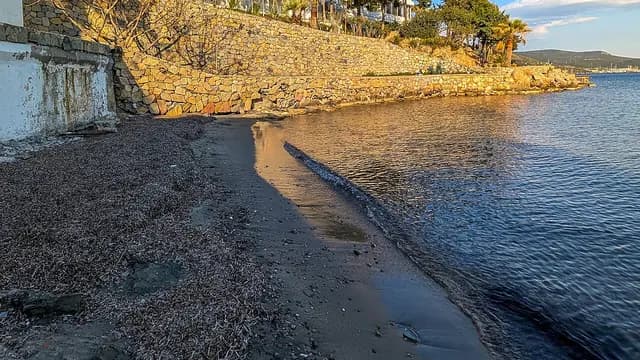
Baltalı Kapı (Gate of the Double Axe)
Milas, Muğla
The northern entrance of ancient Mylasa; a Roman gate known for the double-headed axe relief on its keystone.
 Machine translated — This content was machine-translated and may differ from the original Turkish text.
Beach
Bardakçı Bay
Bodrum, Muğla
A small sandy beach between Kumbahçe and Gümbet, next to the ancient Salmakis spring.
 Machine translated — This content was machine-translated and may differ from the original Turkish text.
Archaeological site
Bargylia Ancient City
Milas, Muğla
An ancient harbor city between Iasos and Myndos, founded on the shore of the Gulf of Güllük near the village of Boğaziçi.
 Machine translated — This content was machine-translated and may differ from the original Turkish text.
Natural monument
Bayır Plane Tree (Bayır Çınarı)
Marmaris, Muğla
A centuries-old plane tree shading the square of Bayır village on the Bozburun Peninsula, registered as a natural monument in 1995.
 Machine translated — This content was machine-translated and may differ from the original Turkish text.
Castle
Beçin Castle and Ancient City
Milas, Muğla
A castle and medieval city on a rocky hill overlooking the Milas plain, once the capital of the Menteşe Beylik.
 Machine translated — This content was machine-translated and may differ from the original Turkish text.
Beach
Bitez Bay
Bodrum, Muğla
A bay stretching among mandarin orchards, also known for sailing and windsurfing on its windy afternoons.
 Machine translated — This content was machine-translated and may differ from the original Turkish text.
History and archaeology
Bodrum Ancient Theater
Bodrum, Muğla
A 4th-century BC theater set into the Göktepe slope, overlooking Bodrum Bay and the castle.
 Sample contentMachine translated — This content was machine-translated and may differ from the original Turkish text.
Castle
Bodrum Castle
Bodrum, Muğla
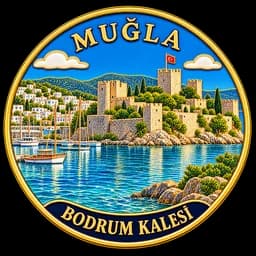
A castle of the Knights of Rhodes, home to the Museum of Underwater Archaeology.
 Machine translated — This content was machine-translated and may differ from the original Turkish text.
Viewpoint
Bodrum Windmills
Bodrum, Muğla
Stone windmills, some restored, lined up on the ridge between Bodrum and Gümbet, with a view over both bays.
 Machine translated — This content was machine-translated and may differ from the original Turkish text.
Bay
Bozburun
Marmaris, Muğla
A quiet fishing and sailing harbor at the tip of the peninsula, known for its tirhandil and gulet builders.
 Machine translated — This content was machine-translated and may differ from the original Turkish text.
Beach
Çalış Beach
Fethiye, Muğla
A long sandy beach and coastal road facing the Gulf of Fethiye, known for its sunset views.
 Machine translated — This content was machine-translated and may differ from the original Turkish text.
Nature park
Çubucak Nature Park
Marmaris, Muğla
A nature park on the Marmaris–Datça road, with a large tent and caravan camp in a bay where the pine forest meets the beach.
 Machine translated — This content was machine-translated and may differ from the original Turkish text.
Rafting
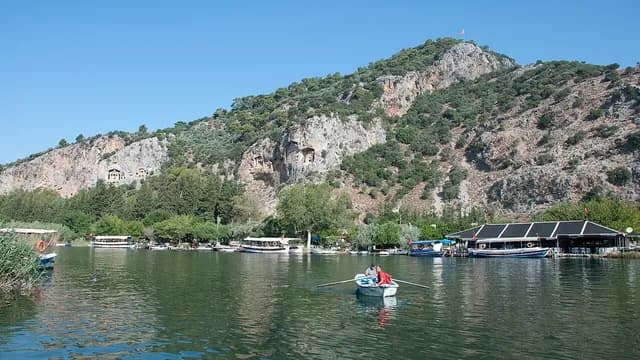
Dalaman River (Dalaman Çayı)
Dalaman, Muğla
A river known for rafting, rising in the mountains of the Lakes Region and passing through deep valleys to reach the sea on the Dalaman plain.
 Machine translated — This content was machine-translated and may differ from the original Turkish text.
River and spring-fed stream (azmak)
Dalyan and the Dalyan Channel
Ortaca, Muğla
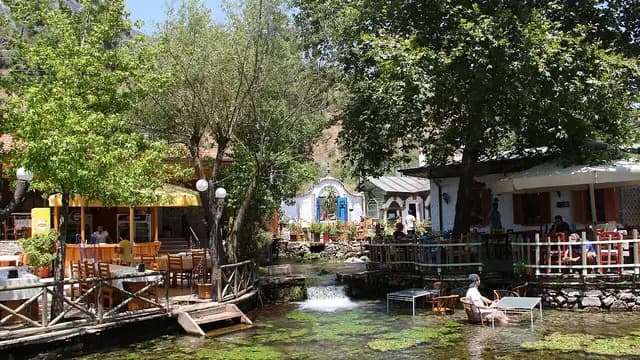
The reed-lined channel connecting Lake Köyceğiz to the sea, and the town on its bank facing the Kaunos rock tombs.
 Machine translated — This content was machine-translated and may differ from the original Turkish text.
Lighthouse
Deveboynu Lighthouse
Datça, Muğla
A lighthouse built in 1931 on Cape Deveboynu, west of Knidos, where the Aegean meets the Mediterranean.
 Machine translated — This content was machine-translated and may differ from the original Turkish text.
Archaeological site
Sanctuary of Apollo at Emecik
Datça, Muğla
The excavated remains of an Archaic-period sanctuary of Apollo near the village of Emecik.
 Machine translated — This content was machine-translated and may differ from the original Turkish text.
River and spring-fed stream (azmak)
Eşen River (Eşen Çayı)
Seydikemer, Muğla
The ancient Xanthos River; it rises in the Akdağlar, irrigates the Seydikemer plain and reaches the sea near Patara.
 Machine translated — This content was machine-translated and may differ from the original Turkish text.
Village and rural life
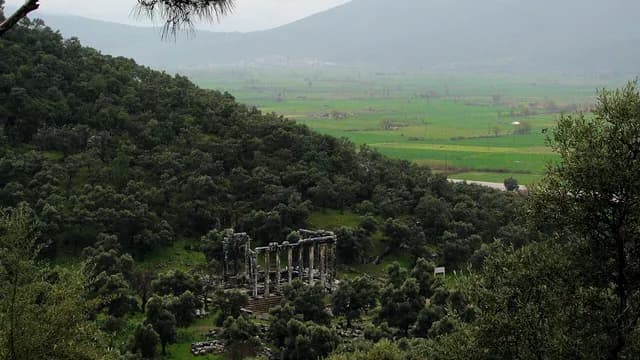
Eski Datça (Old Datça)
Datça, Muğla
The oldest settlement on the Datça Peninsula, with bougainvillea-covered stone houses and narrow streets.
 Machine translated — This content was machine-translated and may differ from the original Turkish text.
Ancient city
Euromos Ancient City and Temple of Zeus
Milas, Muğla
A Temple of Zeus with most of its columns standing among olive groves beside the Milas-Söke road.
 Machine translated — This content was machine-translated and may differ from the original Turkish text.
Viewpoint
Faralya (Uzunyurt)
Fethiye, Muğla
One of the first villages on the Lycian Way, above Butterfly Valley, with its clifftop view.
- Machine translated — This content was machine-translated and may differ from the original Turkish text.
Castle
Fethiye Castle (Castle of the Knights)
Fethiye, Muğla
The remains of a medieval castle on the hill above Fethiye, associated with the Knights of Rhodes.
 Machine translated — This content was machine-translated and may differ from the original Turkish text.
Mosque
Firuz Bey Mosque
Milas, Muğla
An early Ottoman mosque dated 1394, clad in white and colored marble reused from ancient buildings.
 Machine translated — This content was machine-translated and may differ from the original Turkish text.
Island
Gemiler Island
Fethiye, Muğla
A historic island near Ölüdeniz with Byzantine-era churches and a long covered corridor.
- Machine translated — This content was machine-translated and may differ from the original Turkish text.
Waterfall
Gizlikent Waterfall
Seydikemer, Muğla
A waterfall pouring off the rocks at the end of a narrow path in a side valley near Saklıkent.
 Machine translated — This content was machine-translated and may differ from the original Turkish text.
Bay
Göcek
Fethiye, Muğla
One of the main harbors of the Blue Voyage, on the shore of a gulf surrounded by pine-covered islands and coves.
- Machine translated — This content was machine-translated and may differ from the original Turkish text.
Canyon
Gökçeler Canyon
Milas, Muğla
An 8 km canyon between Gökçeler and Karacahisar, with old watermills and caves.
 Machine translated — This content was machine-translated and may differ from the original Turkish text.
Beach
Gümbet Bay
Bodrum, Muğla
The closest wide sandy beach to central Bodrum; a lively bay known for its shallow water and water sports.
 Machine translated — This content was machine-translated and may differ from the original Turkish text.
Ancient city
Gümüşlük and Myndos Ancient City
Bodrum, Muğla
Ancient Myndos, whose remains stretch toward the shore and Tavşan Adası, and the fishing village of Gümüşlük at the western tip of the Bodrum Peninsula.
- Machine translated — This content was machine-translated and may differ from the original Turkish text.
Nature park
Güvercinlik Nature Park
Milas, Muğla
A 2.65-hectare nature park on the Milas–Bodrum road overlooking Güvercinlik Bay, known for its sunset views.
- Machine translated — This content was machine-translated and may differ from the original Turkish text.
Han and caravanserai
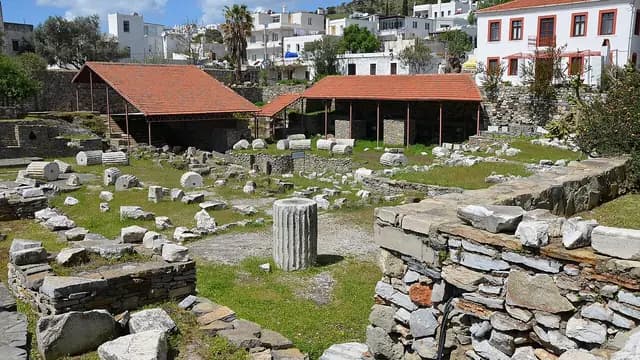
Hafsa Sultan Caravanserai
Marmaris, Muğla
A small 16th-century caravanserai at the foot of Marmaris Castle, now used as a bazaar.
 Machine translated — This content was machine-translated and may differ from the original Turkish text.
Archaeological site
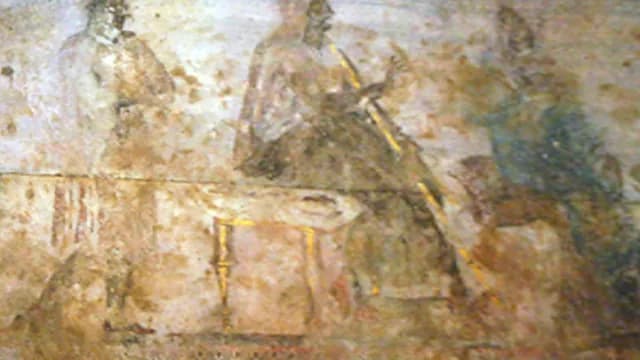
Mausoleum at Halicarnassus (Mausoleion)
Bodrum, Muğla
The remains and open-air exhibition of the monumental tomb of Mausolus, satrap of Caria, counted among the Seven Wonders of the ancient world.
 Machine translated — This content was machine-translated and may differ from the original Turkish text.
History and archaeology
Hekatomnos Mausoleum
Milas, Muğla
The monumental tomb of the Carian satrap Hecatomnus, discovered in 2010 and regarded as a forerunner of the Mausoleum at Halicarnassus.
 Machine translated — This content was machine-translated and may differ from the original Turkish text.
Ancient city
Herakleia (Latmos) Ancient City
Milas, Muğla
An ancient city and the village of Kapıkırı on the eastern shore of Lake Bafa, set among the granite rocks of the Beşparmak Mountains.
- Machine translated — This content was machine-translated and may differ from the original Turkish text.
Lighthouse
Hüseyin Burnu Lighthouse (Akyarlar)
Bodrum, Muğla
A stone lighthouse built in 1931 rising on Hüseyin Burnu in Akyarlar, at the southwestern tip of the Bodrum Peninsula.
- Machine translated — This content was machine-translated and may differ from the original Turkish text.
Archaeological site
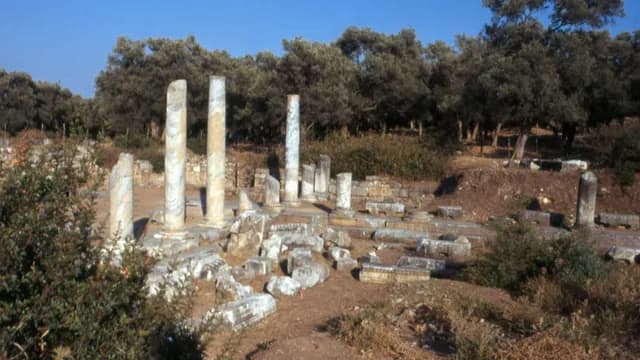
Hyllarima Ancient City
Kavaklıdere, Muğla
An inland Carian city near the village of Derebağ (Mesevle), known for its Carian inscriptions.
 Machine translated — This content was machine-translated and may differ from the original Turkish text.
Ancient city
Iasos Ancient City
Milas, Muğla
An ancient harbor city on a peninsula in the Gulf of Güllük, right beside the fishing village of Kıyıkışlacık.
 Machine translated — This content was machine-translated and may differ from the original Turkish text.
Beach
İçmeler
Marmaris, Muğla
A resort with a long sandy beach at the western end of the Bay of Marmaris, named after its healing spring water.
- Machine translated — This content was machine-translated and may differ from the original Turkish text.
Archaeological site
Idyma Ancient City
Ula, Muğla
A Carian city at the eastern end of the Gulf of Gökova, with temple-fronted tombs carved into the cliff above the village of Gökova.
- Machine translated — This content was machine-translated and may differ from the original Turkish text.
Nature park
İnbükü Nature Park
Marmaris, Muğla
A nature park at km 25 of the Marmaris–Datça road, covering the İnbükü and Çökertme coves, with sweetgum and red pine forest.
 Machine translated — This content was machine-translated and may differ from the original Turkish text.
Cave
İncirliin Cave
Milas, Muğla
The only cave in Gökçeler Canyon open to visitors; a 155-meter walkway adorned with stalactites and stalagmites.
 Machine translated — This content was machine-translated and may differ from the original Turkish text.
Beach
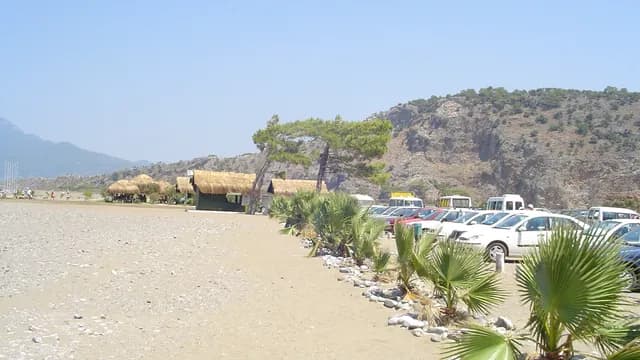
İztuzu Beach
Ortaca, Muğla
A 4.5 km sandy beach between the Dalyan delta and the Mediterranean, an important nesting site for loggerhead turtles (Caretta caretta).
 Machine translated — This content was machine-translated and may differ from the original Turkish text.
Bay
Kabak Bay
Fethiye, Muğla
A hidden bay south of Faralya, where a steep, pine-covered valley meets the sea.
- Machine translated — This content was machine-translated and may differ from the original Turkish text.
Lighthouse
Kadırga Burnu Lighthouse
Marmaris, Muğla
A point on Kadırga Burnu at the western entrance of the Bay of Marmaris, a lighthouse station since 1886.
 Machine translated — This content was machine-translated and may differ from the original Turkish text.
Ancient city
Kadyanda Ancient City
Fethiye, Muğla
A Lycian city on a pine-forested hill above Üzümlü, with a stadium and a bath.
- Machine translated — This content was machine-translated and may differ from the original Turkish text.
Archaeological site
Kalynda Ancient City
Dalaman, Muğla
An ancient city founded on the Caria–Lycia border, in the hills overlooking the Dalaman River valley.
 Machine translated — This content was machine-translated and may differ from the original Turkish text.
Island
Karaada
Bodrum, Muğla
An island at the entrance to Bodrum Bay, a well-known stop for boat tours thanks to its sea cave with a hot spring.
 Machine translated — This content was machine-translated and may differ from the original Turkish text.
Nature park
Katrancı Bay Nature Park
Fethiye, Muğla
A nature park between Fethiye and Göcek, made up of two small coves surrounded by sweetgum and red pine trees, where camping is possible.
 Sample contentMachine translated — This content was machine-translated and may differ from the original Turkish text.
Rock tomb
Kaunos Rock Tombs
Ortaca, Muğla
Tombs with temple facades carved into the rock on the banks of the Dalyan River.
 Sample contentMachine translated — This content was machine-translated and may differ from the original Turkish text.
Archaeological site
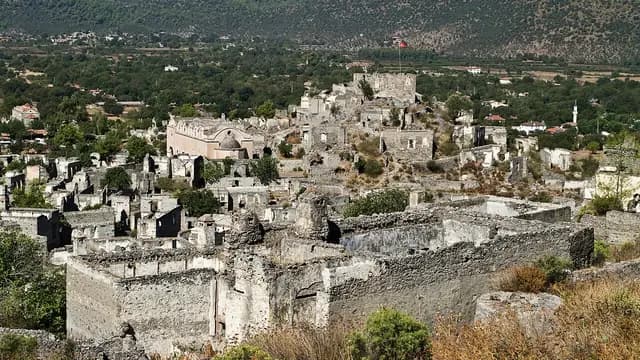
Kayaköy
Fethiye, Muğla
An abandoned historic village with stone houses lined up along the hillside.
 Machine translated — This content was machine-translated and may differ from the original Turkish text.
Nature
Butterfly Valley (Kelebekler Vadisi)
Fethiye, Muğla
A cove and valley at the foot of Babadağ surrounded by 350-meter cliffs, known for its endemic butterfly species.
 Machine translated — This content was machine-translated and may differ from the original Turkish text.
Bridge
Kemer Roman Bridge
Seydikemer, Muğla
A surviving section of a Roman-period arched bridge at the edge of the Eşen River's wide gravel bed.
 Machine translated — This content was machine-translated and may differ from the original Turkish text.
Archaeological site
Keramos Ancient City (Ören)
Milas, Muğla
The ancient Carian city that gave its name to the Gulf of Gökova; its remains are scattered among the houses of Ören.
 Machine translated — This content was machine-translated and may differ from the original Turkish text.
Lighthouse
Kızılada Lighthouse
Fethiye, Muğla
A lighthouse built by the French in 1910 on Kızılada, at the entrance to the Gulf of Fethiye.
 Machine translated — This content was machine-translated and may differ from the original Turkish text.
Beach
Kızkumu
Marmaris, Muğla
A natural sandbar stretching toward the middle of Orhaniye bay, famous for the experience of 'walking on water'.
 Sample contentMachine translated — This content was machine-translated and may differ from the original Turkish text.
Ancient city
Knidos Ancient City
Datça, Muğla
An ancient Carian city with two harbors at the tip of the Datça Peninsula.
 Machine translated — This content was machine-translated and may differ from the original Turkish text.
Cultural center
Konakaltı Han Cultural Center
Menteşe, Muğla
A two-story historic caravan han with galleries in central Muğla, restored and converted into a cultural center.
- Machine translated — This content was machine-translated and may differ from the original Turkish text.
Nature park
Kovanlık Nature Park
Datça, Muğla
A small nature park at km 44 of the Marmaris–Datça road, offering bungalow accommodation among red pine and maquis.
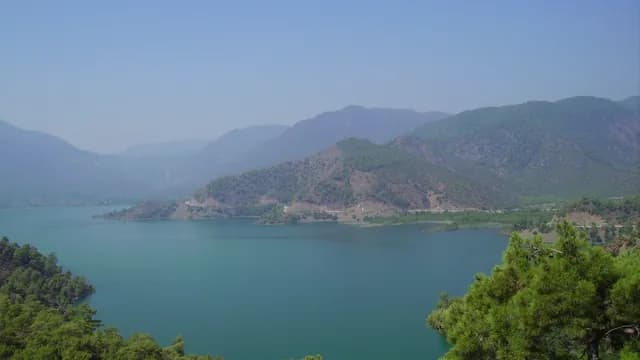 Machine translated — This content was machine-translated and may differ from the original Turkish text.
Lake
Lake Köyceğiz
Köyceğiz, Muğla
A 52 km² lake connected to the sea by the Dalyan channel, surrounded by sweetgum forests and orange groves.
- Machine translated — This content was machine-translated and may differ from the original Turkish text.
Nature park
Küçük Kargı Nature Park
Fethiye, Muğla
A 15-hectare nature park near Fethiye, notable for its endemic Oriental sweetgum forest and dune shore.
 Machine translated — This content was machine-translated and may differ from the original Turkish text.
Blue Flag beach
Kumburnu Beach (Ölüdeniz Lagoon)
Fethiye, Muğla
A shallow, waveless beach on the sand spit at the mouth of the Ölüdeniz lagoon, counted among Türkiye's first Blue Flag beaches.
 Machine translated — This content was machine-translated and may differ from the original Turkish text.
Mosque
Kurşunlu Mosque
Menteşe, Muğla
A 15th-century Ottoman mosque in central Muğla, named after its lead-clad dome.
 Machine translated — This content was machine-translated and may differ from the original Turkish text.
Archaeological site
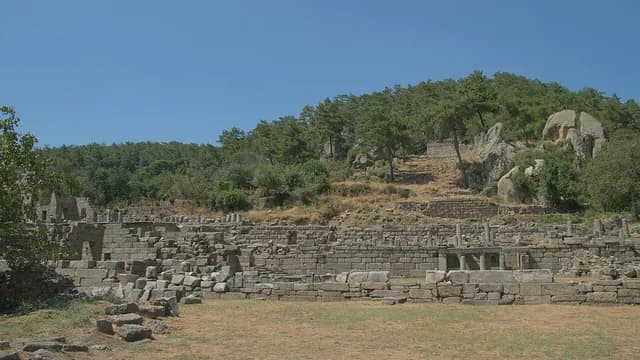
Sanctuary of Labraunda
Milas, Muğla
A Carian sanctuary built on terraces in the mountains above Milas, dedicated to Zeus Labraundos.
 Machine translated — This content was machine-translated and may differ from the original Turkish text.
Archaeological site
Sanctuary of Hecate at Lagina
Yatağan, Muğla
The site of one of Anatolia's most important temples, dedicated to Hecate and linked to Stratonikeia by a sacred road.
 Machine translated — This content was machine-translated and may differ from the original Turkish text.
Ancient city
Letoon (UNESCO)
Seydikemer, Muğla
The sacred center of the Lycian League; with its temples of Leto, Apollo and Artemis, a UNESCO World Heritage Site together with Xanthos.
 Machine translated — This content was machine-translated and may differ from the original Turkish text.
Hiking trail
Start of the Lycian Way (Ovacık)
Fethiye, Muğla
The starting point at Ovacık of the roughly 520 km Lycian Way, which runs from Fethiye to Antalya.
 Machine translated — This content was machine-translated and may differ from the original Turkish text.
Ancient city
Loryma Ancient City
Marmaris, Muğla
Hellenistic fortress remains at the southern tip of the Bozburun Peninsula, overlooking Bozukkale bay.
- Machine translated — This content was machine-translated and may differ from the original Turkish text.
Archaeological site
Lydae Ancient City
Dalaman, Muğla
A Roman-period settlement on the Kapıdağ Peninsula, with a mausoleum and cisterns on a deserted hill overlooking the Gulf of Fethiye.
 Machine translated — This content was machine-translated and may differ from the original Turkish text.
Castle
Marmaris Castle and Museum
Marmaris, Muğla
A harbor castle rebuilt by Süleyman the Magnificent during the Rhodes campaign, now used as a museum.
 Machine translated — This content was machine-translated and may differ from the original Turkish text.
National park
Marmaris National Park
Marmaris, Muğla
A national park between Marmaris and Köyceğiz protecting red pine and sweetgum forests, coves and ancient remains.
 Machine translated — This content was machine-translated and may differ from the original Turkish text.
Bay
Mesudiye and Hayıtbükü
Datça, Muğla
A quiet village known for the bays of Hayıtbükü and Ovabükü, reached through almond and olive orchards.
 Machine translated — This content was machine-translated and may differ from the original Turkish text.
Museum
Milas Museum
Milas, Muğla
A museum displaying finds from Stratonikeia, Iasos, Beçin and Hydai, along with examples of local carpets.
 Machine translated — This content was machine-translated and may differ from the original Turkish text.
Mosque
Milas Ulu Mosque (Ahmed Gazi Mosque)
Milas, Muğla
A beylik-period mosque built with reused ancient stones, commissioned by Ahmed Gazi of the Menteşe dynasty in the 14th century.
 Sample contentMachine translated — This content was machine-translated and may differ from the original Turkish text.
Bazaar and arasta
Muğla Arasta
Menteşe, Muğla
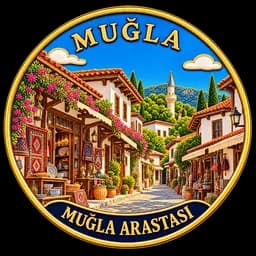
A bazaar of tradespeople and craftspeople among historic Muğla houses.
 Machine translated — This content was machine-translated and may differ from the original Turkish text.
Clock tower
Muğla Clock Tower (Saatli Kule)
Menteşe, Muğla
A historic clock tower in the center of old Muğla, where Saatli Kule Caddesi meets Şeyh Camii Sokağı.
 Machine translated — This content was machine-translated and may differ from the original Turkish text.
Mosque
Muğla Ulu Mosque (Grand Mosque)
Menteşe, Muğla
The city's oldest mosque, built in 1344 by İbrahim Bey of the Menteşe dynasty.
 Machine translated — This content was machine-translated and may differ from the original Turkish text.
History and archaeology
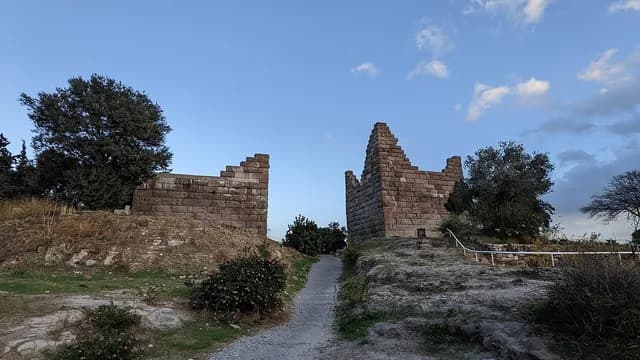
Myndos Gate
Bodrum, Muğla
The western entrance of the walls of ancient Halicarnassus; a monumental gate surviving with its towers and the moat in front of it.
 Machine translated — This content was machine-translated and may differ from the original Turkish text.
Cave
Nimara Cave (Cennet Island)
Marmaris, Muğla
An archaeological cave on Cennet Island in the Bay of Marmaris, known for its stalactites and stalagmites.
 Sample contentMachine translated — This content was machine-translated and may differ from the original Turkish text.
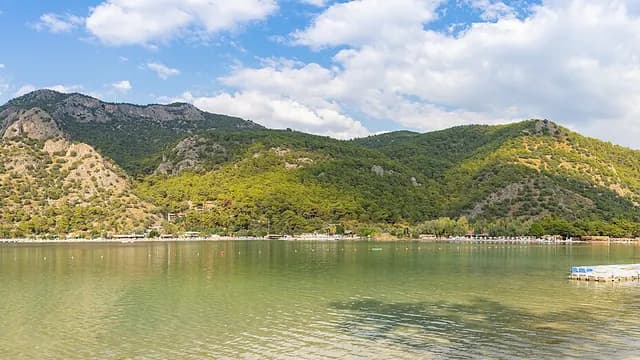
Lagoon
Ölüdeniz Lagoon
Fethiye, Muğla
A turquoise, calm-water lagoon within a nature park.
 Machine translated — This content was machine-translated and may differ from the original Turkish text.
Nature park
Ölüdeniz-Kıdrak Nature Park (Kıdrak Bay)
Fethiye, Muğla
A protected nature park south of Ölüdeniz, in Kıdrak Bay where the pine forest meets the sea, also with a tent and caravan area.
- Machine translated — This content was machine-translated and may differ from the original Turkish text.
Nature park
Ömer Eşen Nature Park
Fethiye, Muğla
A small nature park 16 km east of Fethiye with country cottages, in red pine forest on a dune shore.
 Machine translated — This content was machine-translated and may differ from the original Turkish text.
Island
Orak Island
Bodrum, Muğla
An uninhabited island in the Gulf of Gökova, a regular stop on the Blue Voyage with turquoise waters and dive sites.
 Machine translated — This content was machine-translated and may differ from the original Turkish text.
Bay
Palamutbükü
Datça, Muğla
A long pebble bay and fishing harbor on the peninsula's southern coast, close to Knidos.
 Machine translated — This content was machine-translated and may differ from the original Turkish text.
Historic street and neighborhood
Paspatur Bazaar
Fethiye, Muğla
A bazaar carrying Fethiye's old town fabric, known for its narrow streets, historic hammam and small shops.
 Machine translated — This content was machine-translated and may differ from the original Turkish text.
Archaeological site
Pedasa Ancient City
Bodrum, Muğla
A Carian settlement associated with the Leleges, founded on hills within pine forest near Konacık.
- Machine translated — This content was machine-translated and may differ from the original Turkish text.
Archaeological site
Pisye Ancient City
Menteşe, Muğla
A small Carian settlement near Yeşilyurt (Pissiköy), with an acropolis hill and wall remains.
 Machine translated — This content was machine-translated and may differ from the original Turkish text.
Ancient city
Pınara Ancient City
Seydikemer, Muğla
A large Lycian city at the foot of a huge rock mass carved with hundreds of rock tombs.
 Machine translated — This content was machine-translated and may differ from the original Turkish text.
Castle
Pydnai Fortress
Seydikemer, Muğla
A Hellenistic-period fortress at the western end of Patara beach, built to protect the road to Xanthos.
- Machine translated — This content was machine-translated and may differ from the original Turkish text.
Mosque
Saburhane Mosque
Menteşe, Muğla
A small, masjid-sized mosque built in the 19th century on the site of a former dervish lodge, and the historic Saburhane neighborhood around it.
 Machine translated — This content was machine-translated and may differ from the original Turkish text.
Historic street and neighborhood
Saburhane and Historic Muğla Houses
Menteşe, Muğla
Saburhane, the heart of Muğla's urban conservation area with about 400 registered houses, with its chimneyed houses, narrow streets and old hans.
 Sample contentMachine translated — This content was machine-translated and may differ from the original Turkish text.
Canyon
Saklıkent Canyon
Seydikemer, Muğla
One of Türkiye's longest canyons, famous for its ice-cold water.
 Machine translated — This content was machine-translated and may differ from the original Turkish text.
Beach
Sarıgerme Beach
Ortaca, Muğla
A long sandy beach near Dalaman Airport, sheltered by Baba Island opposite.
 Sample contentMachine translated — This content was machine-translated and may differ from the original Turkish text.
Island
Sedir Island
Marmaris, Muğla
A beach protected for its oolitic sand and the remains of ancient Kedrai.
 Machine translated — This content was machine-translated and may differ from the original Turkish text.
Mosque
Sekibaşı Mosque
Menteşe, Muğla
A 19th-century Muğla mosque in the Muslihittin neighborhood, known for its wooden minaret.
 Machine translated — This content was machine-translated and may differ from the original Turkish text.
Bay
Selimiye
Marmaris, Muğla
A quiet fishing village and yacht anchorage on the Bozburun Peninsula, known for Sığliman bay.
 Machine translated — This content was machine-translated and may differ from the original Turkish text.
Archaeological site
Sidyma Ancient City
Seydikemer, Muğla
A small Lycian city whose sarcophagi and rock tombs are mixed in among the houses of Dodurga village.
- Machine translated — This content was machine-translated and may differ from the original Turkish text.
Archaeological site
Sanctuary of Sinuri
Milas, Muğla
A sanctuary on Tarla Tepe near Çamlıbelen, dedicated to the local god Sinuri and used for more than a thousand years.
 Sample contentMachine translated — This content was machine-translated and may differ from the original Turkish text.
Ancient city
Stratonikeia
Yatağan, Muğla
A city bearing the traces of uninterrupted life from antiquity to the Ottoman period.
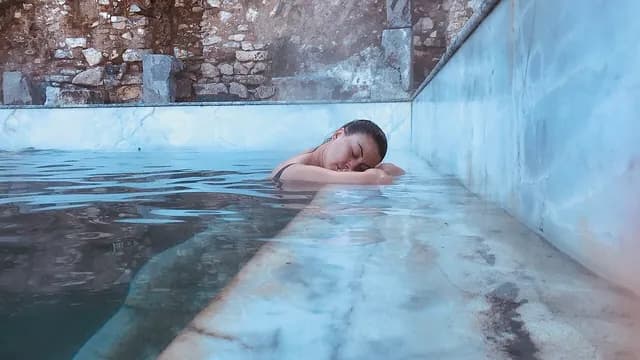 Machine translated — This content was machine-translated and may differ from the original Turkish text.
Hot spring
Sultaniye Hot Springs
Köyceğiz, Muğla
Sulfurous hot water and mud baths on the southwestern shore of Lake Köyceğiz, in use since antiquity.
 Machine translated — This content was machine-translated and may differ from the original Turkish text.
Lake
Lake Sülüngür
Ortaca, Muğla
A shallow lagoon lake in the Dalyan delta, surrounded by reed beds behind İztuzu.
 Machine translated — This content was machine-translated and may differ from the original Turkish text.
History and archaeology
Telmessos Ancient Theater
Fethiye, Muğla
A restored Roman theater from ancient Telmessos, right across from Fethiye harbor.
- Machine translated — This content was machine-translated and may differ from the original Turkish text.
Archaeological site
Theangela Ancient City
Bodrum, Muğla
An ancient Carian city near Etrim, whose sturdy walls spread along the mountain ridge.
 Machine translated — This content was machine-translated and may differ from the original Turkish text.
Ancient city
Tlos Ancient City
Seydikemer, Muğla
One of the oldest cities of Lycia, with a rocky acropolis facing the Akdağlar, rock tombs and a stadium.
 Machine translated — This content was machine-translated and may differ from the original Turkish text.
Waterfall
Toparlar Waterfall
Köyceğiz, Muğla
A waterfall cascading in steps in a forested valley near the Köyceğiz-Muğla road.
 Machine translated — This content was machine-translated and may differ from the original Turkish text.
Beach
Turunç Bay
Marmaris, Muğla
A quiet bay where pine-covered mountains descend to the sea, known for its Blue Flag beach.
 Machine translated — This content was machine-translated and may differ from the original Turkish text.
Nature park
Usuluk Bay Nature Park
Bodrum, Muğla
A small nature park in Usuluk Bay near Torba, on the Bodrum–Milas road.
 Machine translated — This content was machine-translated and may differ from the original Turkish text.
Village and rural life
Yerkesik
Menteşe, Muğla
A historic village southwest of Muğla, known for its stone houses and traditional street fabric.
 Machine translated — This content was machine-translated and may differ from the original Turkish text.
River and spring-fed stream (azmak)
Yuvarlakçay
Köyceğiz, Muğla
A stream with ice-cold water flowing in the shade of plane and sweetgum trees and feeding Lake Köyceğiz.
 Machine translated — This content was machine-translated and may differ from the original Turkish text.
Museum
Zeki Müren Art Museum
Bodrum, Muğla
A memorial museum in the Bodrum house where Zeki Müren, the 'Sun of Art', spent his last years.
Practical information
Machine translated — This content was machine-translated and may differ from the original Turkish text.- Sea
- Blue Voyage boats depart from the harbors of Bodrum, Marmaris, Göcek and Fethiye.
- Climate
- Mediterranean climate on the coast (hot, dry summers; mild, rainy winters); winters are harsher in higher areas such as Menteşe and Kavaklıdere.
- Best season
- April–June and September–October; May–October for the sea. July–August is very crowded and hot on the coast.
- Museum pass
- Müzekart (Museum Pass) is valid at Ministry museums and archaeological sites.
- Getting there
- Dalaman and Milas-Bodrum airports; regular minibus and bus services from the central Muğla bus station to all districts.
- Long-distance hiking
- The Lycian Way starts from Fethiye (Ovacık); the Carian Trail loops around the Bodrum, Datça and Bozburun peninsulas; spring and autumn are recommended.