16 · City guide
Bursa
The first Ottoman capital
Taken by Orhan Gazi in 1326, Bursa became the first capital of the Ottoman state and holds the richest examples of early Ottoman architecture. The Hans district, Ulu Mosque (Grand Mosque), the Yeşil (Green) Complex, Muradiye and the village of Cumalıkızık were inscribed on the UNESCO World Heritage List in 2014 as 'Bursa and Cumalıkızık: The Birth of the Ottoman Empire'. Rising right above the city, Uludağ is the highest mountain in the Marmara region, with skiing in winter and yayla (highland pasture) and hiking routes in summer. To the east, İznik brings Byzantium and the Ottomans together on the same street with its Hagia Sophia, Roman walls and tile kilns. To the west, Gölyazı on the shore of Uluabat Gölü (Lake Uluabat) and the stork village of Eskikaraağaç, and to the north, Mudanya and Tirilye offer quiet lake- and seaside escapes. Çekirge's hot springs, İskender kebab, pideli köfte and kestane şekeri (candied chestnuts) are essentials of a Bursa visit.
Machine translated — This content was machine-translated and may differ from the original Turkish text.63
Places
0
Routes
0
Badges
Where shall we explore?
 Machine translated — This content was machine-translated and may differ from the original Turkish text.
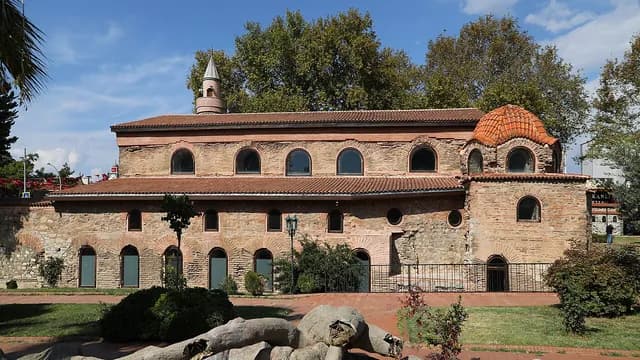
Monumental tree
Ağlayan Çınar (Weeping Plane Tree)
Nilüfer, Bursa
A centuries-old plane tree on the lakeshore in Gölyazı, called 'weeping' because water seeps from its trunk.
 Machine translated — This content was machine-translated and may differ from the original Turkish text.
Mosque
Hagia Sophia Orhan Mosque (İznik)
İznik, Bursa
A Byzantine church that hosted the Seventh Ecumenical Council in 787 and was converted into a mosque under Orhan Gazi.
 Machine translated — This content was machine-translated and may differ from the original Turkish text.
Archaeological site
Beştaş (Dikilitaş) Monument
İznik, Bursa
An obelisk about 12 meters tall, belonging to a Roman funerary monument, on a hill north of İznik.
 Machine translated — This content was machine-translated and may differ from the original Turkish text.
Museum
Bursa Archaeology Museum
Osmangazi, Bursa
A museum in Kültürpark displaying finds from the mounds and ancient cities around Bursa.
 Machine translated — This content was machine-translated and may differ from the original Turkish text.
House museum
Bursa Atatürk Museum
Osmangazi, Bursa
A late 19th-century mansion set in a garden, where Atatürk stayed on his visits to Bursa.
 Machine translated — This content was machine-translated and may differ from the original Turkish text.
Bazaar and arasta
Bursa Bedesten and Kapalıçarşı (Covered Bazaar)
Osmangazi, Bursa
A covered bazaar that grew over the centuries around the bedesten built by Yıldırım Bayezid, full of silk, towel and knife shops.
 Machine translated — This content was machine-translated and may differ from the original Turkish text.
Botanical garden
Bursa Zoo and Botanical Park
Osmangazi, Bursa
A full-day plan for families with children, with a botanical park and zoo side by side in Soğanlı.
 Machine translated — This content was machine-translated and may differ from the original Turkish text.
Museum
Bursa City Museum
Osmangazi, Bursa
A museum in the old courthouse building in Heykel telling the story of Bursa's history, crafts and daily life.
 Machine translated — This content was machine-translated and may differ from the original Turkish text.
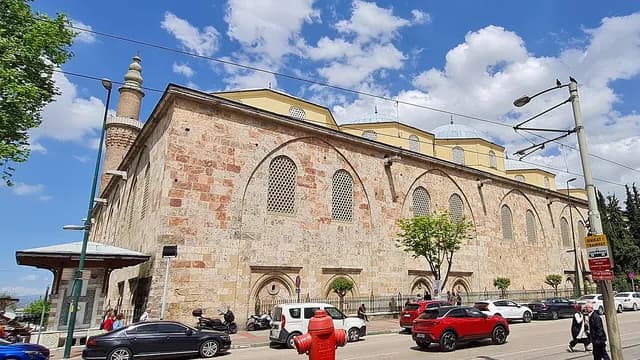
Mosque
Bursa Ulu Mosque (Grand Mosque)
Osmangazi, Bursa
The largest multi-domed mosque of early Ottoman architecture, with twenty domes and an indoor ablution fountain; part of the Bursa and Cumalıkızık UNESCO site.
 Machine translated — This content was machine-translated and may differ from the original Turkish text.
Tomb (türbe)
Celâl Bayar Mausoleum and Museum
Gemlik, Bursa
The mausoleum and birthplace in Umurbey of Celâl Bayar, Türkiye's third President.
 Machine translated — This content was machine-translated and may differ from the original Turkish text.
Village and rural life
Cumalıkızık
Yıldırım, Bursa
A 700-year-old village at the foot of Uludağ preserving the rural settlement pattern of the Ottoman founding period; UNESCO World Heritage.
 Machine translated — This content was machine-translated and may differ from the original Turkish text.
Han and caravanserai
Emir Han
Osmangazi, Bursa
One of Bursa's oldest hans, built as a source of income for the Orhan Gazi Complex, with an ablution fountain in its courtyard.
 Machine translated — This content was machine-translated and may differ from the original Turkish text.
Mosque
Emir Sultan Mosque and Tomb
Yıldırım, Bursa
A complex built in the name of Emir Sultan, son-in-law of Yıldırım Bayezid and a great scholar of his time, famed for its cypress-shaded cemetery.
 Machine translated — This content was machine-translated and may differ from the original Turkish text.
Hot spring
Eski Kaplıca
Osmangazi, Bursa
Çekirge's historic thermal bath, renewed under Murad I on Byzantine-period foundations.
 Machine translated — This content was machine-translated and may differ from the original Turkish text.
Birdwatching site
Eskikaraağaç Stork Village
Karacabey, Bursa
The 'European Stork Village' on the shore of Uluabat Gölü, where dozens of storks nest on the roofs every spring.
 Machine translated — This content was machine-translated and may differ from the original Turkish text.
Mosque
Fatih Mosque (Tirilye)
Mudanya, Bursa
A building in Tirilye constructed in the Byzantine period as the Church of St. Stephen and converted into a mosque.
 Machine translated — This content was machine-translated and may differ from the original Turkish text.
Village and rural life
Gölyazı
Nilüfer, Bursa
A fishing village built on the remains of ancient Apollonia ad Rhyndacum, on a peninsula extending into Uluabat Gölü.
 Machine translated — This content was machine-translated and may differ from the original Turkish text.
Mosque
Hacı Özbek Mosque
İznik, Bursa
One of the oldest Ottoman mosques whose date is known for certain, with an inscription dated 1333.
 Machine translated — This content was machine-translated and may differ from the original Turkish text.
Madrasa and külliye (complex)
Hüdavendigâr (Murad I) Complex
Osmangazi, Bursa
A two-story building in Çekirge, unique in Ottoman architecture, designed with a mosque below and a madrasa above.
 Machine translated — This content was machine-translated and may differ from the original Turkish text.
Monumental tree
İnkaya Historic Plane Tree
Osmangazi, Bursa
A giant plane tree at the start of the Uludağ road, estimated to be over 600 years old, with a tea garden in its shade.
 Machine translated — This content was machine-translated and may differ from the original Turkish text.
Bridge
Irgandı Bridge
Osmangazi, Bursa
A bridge over the Gökdere lined with shops on both sides, one of the few bazaar bridges in the world.
 Machine translated — This content was machine-translated and may differ from the original Turkish text.
Han and caravanserai
Issız Han
Karacabey, Bursa
An early Ottoman caravanserai standing alone in the open countryside near Karacabey.
 Machine translated — This content was machine-translated and may differ from the original Turkish text.
Archaeological site
İznik Tile Kilns Excavation Site
İznik, Bursa
A site where excavations uncovered the workshops and kilns that produced the world-famous İznik tiles in the 15th–17th centuries.
 Machine translated — This content was machine-translated and may differ from the original Turkish text.
Lake
İznik Gölü (Lake İznik)
İznik, Bursa
The largest lake in the Marmara Region; calm waters surrounded by olive groves, with sunset walks on the İznik shore.
 Machine translated — This content was machine-translated and may differ from the original Turkish text.
Archaeological site
İznik Roman Theater
İznik, Bursa
An ancient theater built in the Roman period on vaults raised over flat ground, brought to light by excavations.
 Machine translated — This content was machine-translated and may differ from the original Turkish text.
Archaeological site
İznik Underwater Basilica
İznik, Bursa
The remains of an early Byzantine basilica lying in the shallow waters of İznik Gölü, about 20 meters offshore.
 Machine translated — This content was machine-translated and may differ from the original Turkish text.
Castle
İznik City Walls and Lefke Gate
İznik, Bursa
Walls about 5 km long encircling the city on all sides, with Roman-period gates still standing.
 Machine translated — This content was machine-translated and may differ from the original Turkish text.
Forest
Karacabey Longoz Forest
Karacabey, Bursa
A longoz (floodplain forest) of flooded ash and alder woods in the delta where the Susurluk Çayı flows into the Marmara.
 Machine translated — This content was machine-translated and may differ from the original Turkish text.
Museum
Karagöz Museum
Osmangazi, Bursa
A museum presenting the Karagöz and Hacivat tradition, believed to have been born in Bursa, through figures, screens and performances.
 Machine translated — This content was machine-translated and may differ from the original Turkish text.
Church
Kemerli Church (Tirilye)
Mudanya, Bursa
An old church known for its arched facade, reflecting Tirilye's Byzantine-period history.
 Machine translated — This content was machine-translated and may differ from the original Turkish text.
Hot spring
Keramet Hot Springs
Orhangazi, Bursa
A historic hot spring in Keramet near İznik Gölü, said to have been used since the Roman period, with 30-34 °C soda-rich thermal water.
- Machine translated — This content was machine-translated and may differ from the original Turkish text.
Yayla (highland pasture)
Kocayayla
Keles, Bursa
A broad yayla on the southern slopes of Uludağ, host every summer to the Kocayayla Culture Festival, which traces back to the Ottoman founding period.
 Machine translated — This content was machine-translated and may differ from the original Turkish text.
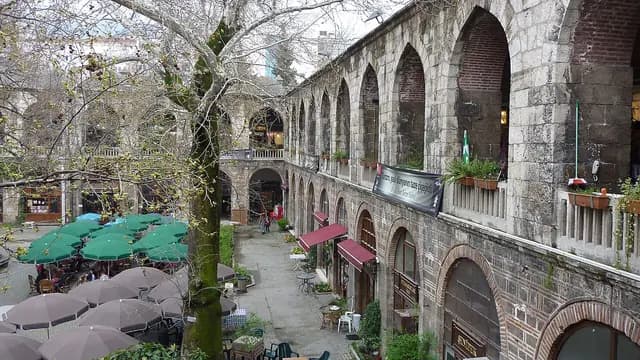
Han and caravanserai
Koza Han
Osmangazi, Bursa
A han with a two-story courtyard and a small masjid at its center; for centuries the heart of the silk cocoon trade.
 Machine translated — This content was machine-translated and may differ from the original Turkish text.
Coast and water
Kurşunlu Coast
Gemlik, Bursa
A seaside village on the southern shore of the Gulf of Gemlik, known for beaches where olive groves run down to the sea.
 Machine translated — This content was machine-translated and may differ from the original Turkish text.
Village and rural life
Misi (Gümüştepe)
Nilüfer, Bursa
Bursa's in-town getaway village on the Nilüfer Çayı, with stone houses and historic bridges.
 Machine translated — This content was machine-translated and may differ from the original Turkish text.
House museum
Mudanya Armistice House Museum
Mudanya, Bursa
The seaside mansion where the 1922 Armistice of Mudanya, which ended the armed phase of the War of Independence, was signed.
 Machine translated — This content was machine-translated and may differ from the original Turkish text.
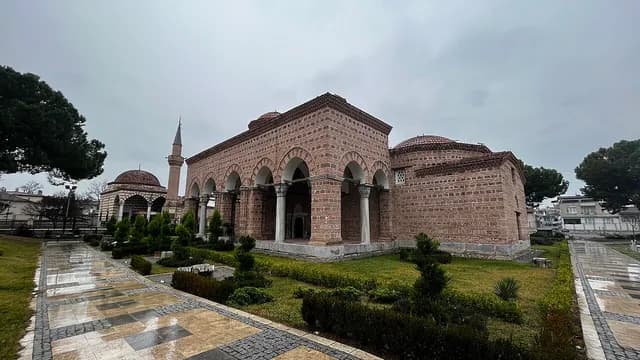
Madrasa and külliye (complex)
Muradiye Complex
Osmangazi, Bursa
A peaceful complex known as the 'Ottoman dynastic cemetery', with Murad II's mosque and twelve tombs in its garden.
 Machine translated — This content was machine-translated and may differ from the original Turkish text.
Museum
Nilüfer Hatun İmaret
İznik, Bursa
A zaviye-imaret built in 1388 in the name of Nilüfer Hatun, mother of Murad I, and used for many years as the İznik Museum.
 Machine translated — This content was machine-translated and may differ from the original Turkish text.
Mosque
Orhan Gazi Mosque and Complex
Osmangazi, Bursa
The mosque of the first major Ottoman complex, founded by Orhan Gazi in 1339 in the hans district, which shaped the city's commercial center.
 Machine translated — This content was machine-translated and may differ from the original Turkish text.
Tomb (türbe)
Tombs of Osman Gazi and Orhan Gazi
Osmangazi, Bursa
The side-by-side tombs on the Tophane ridge of Osman Gazi, founder of the Ottoman state, and his son Orhan Gazi.
- Machine translated — This content was machine-translated and may differ from the original Turkish text.
House museum
Ottoman House Museum
Osmangazi, Bursa
A house museum in the historic streets of Muradiye showing the layout and decoration of a 17th-century Bursa house.
 Machine translated — This content was machine-translated and may differ from the original Turkish text.
Hot spring
Oylat Hot Springs
İnegöl, Bursa
A thermal settlement in the forest on the southern foothills of Uludağ, known for its healing water.
 Machine translated — This content was machine-translated and may differ from the original Turkish text.
Cave
Oylat Cave
İnegöl, Bursa
One of the longest show caves in the Marmara region, with stalactites, stalagmites and travertine pools.
 Machine translated — This content was machine-translated and may differ from the original Turkish text.
Museum
Panorama 1326 Bursa Conquest Museum
Osmangazi, Bursa
A museum that brings to life Orhan Gazi's capture of Bursa in 1326 with a giant 360-degree panoramic painting.
 Machine translated — This content was machine-translated and may differ from the original Turkish text.
Family activity
Reşat Oyal Kültürpark
Osmangazi, Bursa
One of Bursa's largest and oldest city parks, in the city center, with a lake, an open-air theater and an archaeology museum.
 Machine translated — This content was machine-translated and may differ from the original Turkish text.
Nature park
Sadağı Canyon
Orhaneli, Bursa
A deep valley carved by a stream near Orhaneli, protected as a nature park.
 Machine translated — This content was machine-translated and may differ from the original Turkish text.
Waterfall
Saitabat Waterfall
Kestel, Bursa
A waterfall and recreation area on the northern slope of Uludağ, flowing among plane trees and known for its village breakfasts.
 Machine translated — This content was machine-translated and may differ from the original Turkish text.
Picnic area
Sarıalan Recreation Area
Osmangazi, Bursa
A meadow picnic and walking area within pine and beech forest at the intermediate station of the Uludağ cable car.
- Machine translated — This content was machine-translated and may differ from the original Turkish text.
House museum
Şemaki House Museum
Yenişehir, Bursa
A traditional Ottoman house in Yenişehir, famed for its painted decoration dating to the 18th century.
 Machine translated — This content was machine-translated and may differ from the original Turkish text.
Waterfall
Sudüşen Waterfall
Gemlik, Bursa
A waterfall pouring down a high rock wall in a beech forest on the Bursa provincial border, south of Yalova's Termal.
 Machine translated — This content was machine-translated and may differ from the original Turkish text.
Waterfall
Suuçtu Waterfall
Mustafakemalpaşa, Bursa
One of Bursa's highest waterfalls, pouring in a single drop of about 35 meters in a forested valley.
 Machine translated — This content was machine-translated and may differ from the original Turkish text.
Village and rural life
Tirilye (Zeytinbağı)
Mudanya, Bursa
An old Greek town on the Marmara coast, known for its stone houses, Byzantine churches and olive groves.
 Machine translated — This content was machine-translated and may differ from the original Turkish text.
Museum
Tofaş Anatolian Carriages Museum
Yıldırım, Bursa
A museum in a former silk factory displaying horse-drawn carriages, phaetons and traditional Anatolian vehicles.
 Machine translated — This content was machine-translated and may differ from the original Turkish text.
Clock tower
Tophane Clock Tower
Osmangazi, Bursa
A six-story clock tower from the reign of Abdülhamid II, looking down over the Bursa plain and the city center.
 Machine translated — This content was machine-translated and may differ from the original Turkish text.
Museum
Museum of Turkish and Islamic Art (Yeşil Madrasa)
Yıldırım, Bursa
A museum in the madrasa of the Yeşil Complex displaying tiles, manuscripts, costumes and Karagöz figures.
 Machine translated — This content was machine-translated and may differ from the original Turkish text.
Lake
Uluabat Gölü (Lake Uluabat)
Karacabey, Bursa
A shallow, Ramsar-listed freshwater lake with water lilies, fishing villages and rich birdlife.
 Machine translated — This content was machine-translated and may differ from the original Turkish text.
Lake
Uludağ Glacial Lakes (Aynalıgöl and Kilimligöl)
Kestel, Bursa
A high mountain route to cirque lakes left from the last ice age, just below the summit of Uludağ.
 Machine translated — This content was machine-translated and may differ from the original Turkish text.
Ski resort
Uludağ Ski Resort (Hotel Area)
Osmangazi, Bursa
Türkiye's longest-established ski resort; a winter sports destination with slopes between 1,750–2,300 meters and a cable car link.
 Machine translated — This content was machine-translated and may differ from the original Turkish text.
National park
Uludağ National Park
Osmangazi, Bursa
The highest mountain in the Marmara; a symbol of Bursa, with a ski resort in winter and hiking and yayla routes in summer.
 Machine translated — This content was machine-translated and may differ from the original Turkish text.
Mosque
Yeşil Mosque (Green Mosque)
Yıldırım, Bursa
Çelebi Mehmed's mosque, regarded with its tiles and sultan's loge as the peak of early Ottoman decorative art.
 Machine translated — This content was machine-translated and may differ from the original Turkish text.
Mosque
Yeşil Mosque (Green Mosque, İznik)
İznik, Bursa
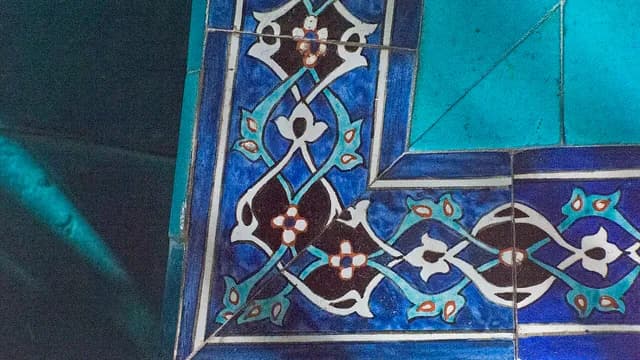
A 14th-century mosque commissioned by Çandarlı Kara Halil Hayreddin Paşa, a symbol of İznik with its tiled minaret.
 Machine translated — This content was machine-translated and may differ from the original Turkish text.
Tomb (türbe)
Yeşil Türbe (Green Tomb)
Yıldırım, Bursa
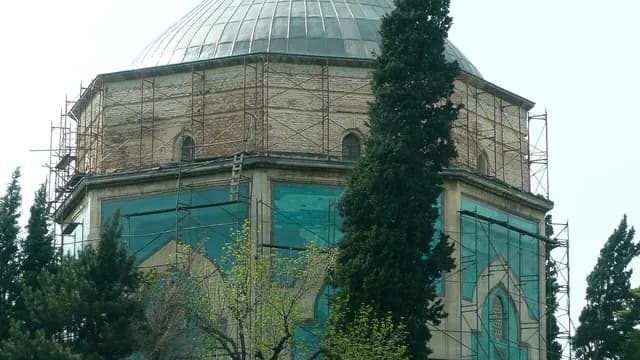
Çelebi Mehmed's tomb, a symbol of Bursa with its octagonal body clad in turquoise tiles.
 Machine translated — This content was machine-translated and may differ from the original Turkish text.
Madrasa and külliye (complex)
Yıldırım Bayezid Complex
Yıldırım, Bursa
A complex of a mosque, madrasa, hospital and tomb founded by Yıldırım Bayezid in the late 14th century.
Practical information
Machine translated — This content was machine-translated and may differ from the original Turkish text.- Note
- Most shops in the Kapalıçarşı and the Hans district are closed on Sundays
- Climate
- Mild Marmara climate on the plain; snowy, harsh winters on Uludağ
- City card
- BursaKart is used on public transport
- Best season
- April–June and September–November; December–March for skiing
- Museum pass
- Müzekart (Museum Pass) is valid at Ministry-run museums and archaeological sites
- Getting there
- Yenişehir Airport (~50 km from the center); sea buses and ferries from İstanbul to Mudanya; in the city, the BursaRay metro, tram and Uludağ cable car