Faith
104 places
Your location is only used in your browser to sort nearby places; it is never stored.
104 places listed
Church
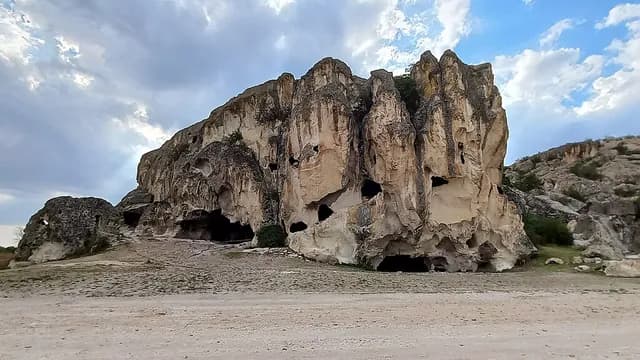
Ayazini Metropolis Church
İhsaniye, Afyonkarahisar
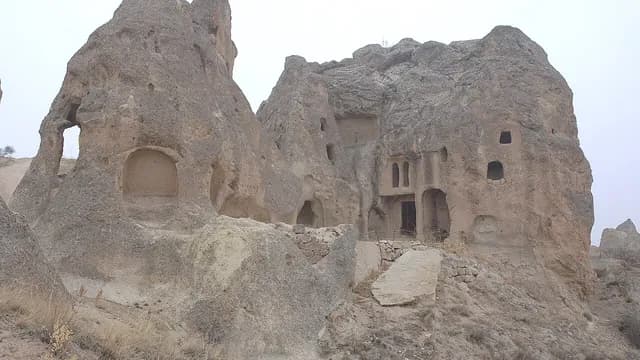
The symbol of Ayazini: a domed Byzantine church carved into tuff rock.
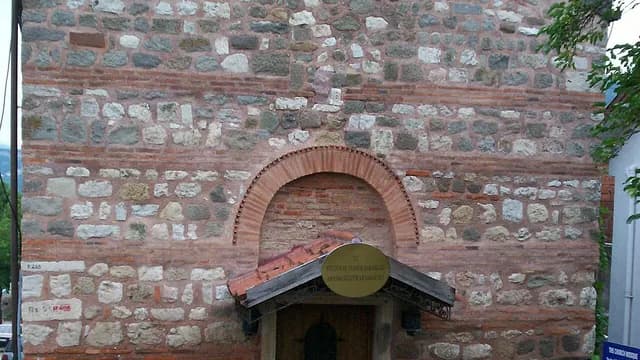
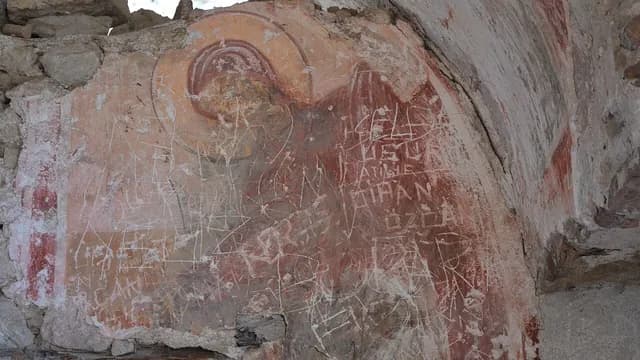
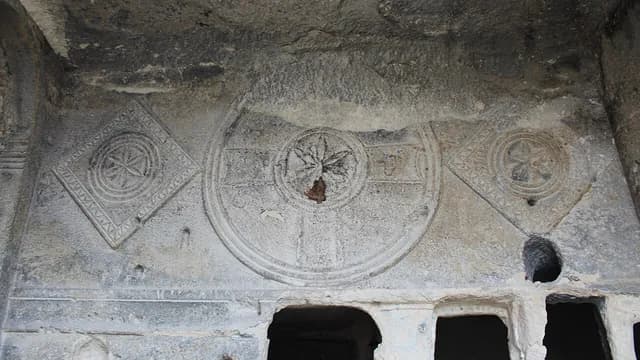
İbrahim İnleri Rock Church (Selimiye)
İscehisar, Afyonkarahisar
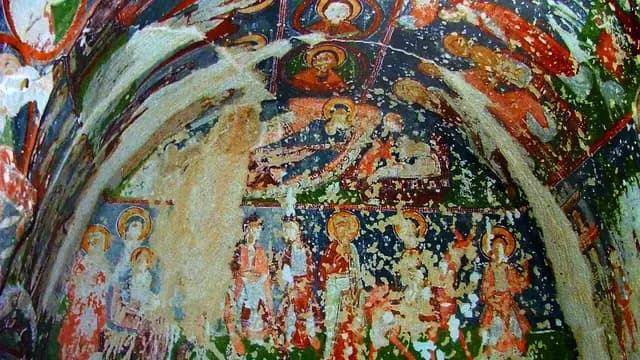
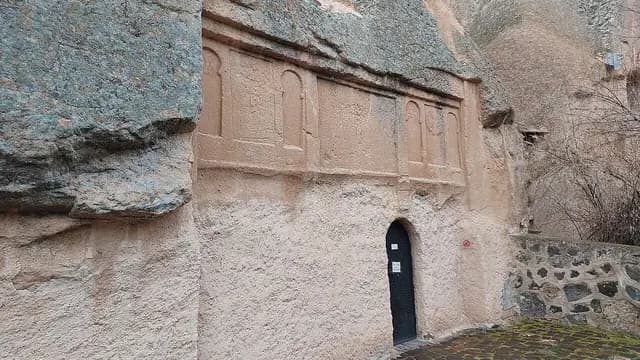
A three-nave Byzantine rock church with painted reliefs near Selimiye, dating to the 10th-11th century.
Aya Haralambos Church
Çeşme, İzmir
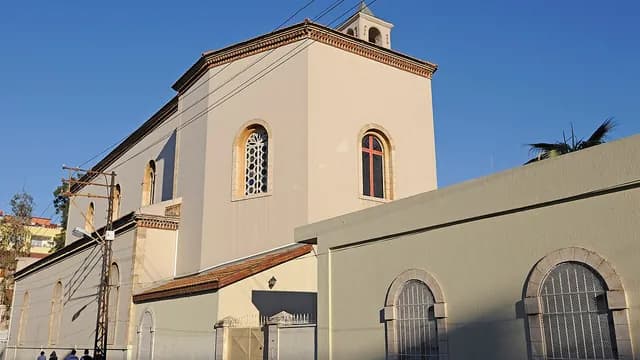
A 19th-century Greek Orthodox church in the Çeşme bazaar, now hosting arts and culture events.
Basilica of St. John
Selçuk, İzmir
The remains of a monumental basilica built under Emperor Justinian over the site believed to be the tomb of the Apostle John.
Church of St. Polycarp
Konak, İzmir
The city's oldest Catholic church, dedicated to Polycarp, İzmir's first bishop.
Santa Maria Catholic Church (Bornova)
Bornova, İzmir
A historic Catholic church that is part of Bornova's Levantine heritage.
Church of St. John (St. Jean)
Alaşehir, Manisa
A 6th-century basilica associated with the early Christian community of Philadelphia, with its massive brick piers still standing.
Barhal (Parhali) Church
Yusufeli, Artvin
A Georgian church in Altıparmak (Barhal) village, built in the 10th century under King David III, unique in the region for its domeless three-aisled basilica plan.
Dolishane (Doliskana) Church
Ardanuç, Artvin
A domed 10th-century Georgian church in Hamamlı village, known for its relief of a king presenting a model of the church and its rich stone carving.
Makriyali Church
Kemalpaşa, Artvin
The seaside remains of a medieval church in Kemalpaşa, where the Georgian King Bagrat V and the Trebizond princess Anna are said to have married in 1367.
Tbeti (Tibeti) Church
Şavşat, Artvin
The grand main church of the Tbeti Monastery in Cevizli village, built in the early 10th century under the Bagratid Ashot Kukhi; its dome collapsed in 1953.
Yeni Rabat (Akhaldaba) Church
A 10th–11th-century Georgian church in the Çamlık (Rabat) quarter of Bulanık village, notable for the triangular niches on its dome drum and its floral stone carving.
Aya Nikola Church
Merkez, Bartın
A church in central Bartın built by the Greek community, used for a time as a power station and converted into a culture house.
İçkale Masjid (Küçük Kilise / Small Church)
Amasra, Bartın
A small chapel in the Amasra Inner Castle, built in the 9th century of brick and stone, converted into a masjid in the 15th century, with surviving traces of frescoes.
Armutdüzü Church
Keşap, Giresun
The remains of a Greek church at the Kiliseyanı locality in the village of Armutdüzü, south of Keşap; the village is also known for Şahin Kayası, which resembles a natural map of Türkiye.
Cape Yason and Yason Church
Perşembe, Ordu
A peninsula associated with the legend of the Golden Fleece, with a church dated 1869 on it; a favorite coastal spot for sunrise and sunset.
Muzadere Church
Mesudiye, Ordu
A single-aisled church on the steep terrain of the Muzadere Highland in Mesudiye, dated to the mid-19th century and restored in 2020.
Taşbaşı Church (Taşbaşı Cultural Center)
Altınordu, Ordu
A three-aisled basilica built in 1853 as a Greek Orthodox church, used as a cultural center since 2000.
Yalı Church (Ünye)
Ünye, Ordu
A church built by Greeks in the second half of the 19th century, restored and converted into a culture and arts center.
Ayaklıalan Church
Asarcık, Samsun
A 19th-century church on a hill above the village of Ayaklıalan in Asarcık, its roof collapsed but colorful decoration still on its walls.
Mater Dolorosa Church
İlkadım, Samsun
A Catholic church built in 1846, named Mater Dolorosa since 1885, open for worship and visits.
Balatlar Church
Merkez, Sinop
A Byzantine-period church built within a Roman building complex, with frescoes and mosaics, where excavations are ongoing.
Aya Varvara Church
Maçka, Trabzon
A small church and monastery remains surrounded by a protective wall, right near Sümela Monastery.
Küçük Ayvasıl Church
Ortahisar, Trabzon
The three-naved Church of Saint Anne, considered one of Trabzon's oldest churches thanks to its repair inscription dated 884.
Rock Church (Çamlık)
Vakfıkebir, Trabzon
A historic rock-cut church in the Çamlık (formerly Petromida) neighborhood of Vakfıkebir, reported to contain depictions of Christ and the apostles.
Santa Maria Catholic Church
A three-naved Catholic church and guesthouse complex built in 1869–1874, still open for worship today.
Ağaçaltı Church
Güzelyurt, Aksaray
A cross-plan rock church at the foot of the Ihlara stairs, also called Daniel Pantonassa after its depiction of Saint Daniel among the lions.
Çanlı Church
Merkez, Aksaray
One of Cappadocia's rare cut-stone Byzantine churches, rising amid a rock-cut settlement between Akhisar and Çeltek.
Kilise Mosque (Church of Saint Gregorios)
A church believed to have been built in the 4th century in the name of the theologian Gregory of Nazianzus, born in Gelveri, repaired in 1835 and converted into a mosque after the population exchange.
Kızıl Kilise (Red Church)
A 5th–6th-century Byzantine church near the village of Sivrihisar, named for its reddish cut stone; on the World Monuments Fund watch list.
Kokar Church
A single-nave church in Ihlara Valley known for its well-preserved 11th-century frescoes and the large cross motif on its ceiling.
Pürenli Seki Church
A four-section rock church in Ihlara with 10th–12th-century frescoes depicting the childhood of Christ and the prophecies of the prophets.
Sümbüllü Church
A rock-cut church in Ihlara Valley, striking for its two-level monastic spaces and arched facade.
Yılanlı Church
A late-9th-century Ihlara church famous for its unusual Last Judgment scene in which sinners are punished by snakes.
Yüksek Church
A 19th-century church perched atop a steep rock 3 km from Güzelyurt, with views of Hasandağı and the lake.
Surp Yerrortutyun Armenian Church
Sivrihisar, Eskişehir
A three-aisled basilica rebuilt in 1881, referred to as one of the large Armenian churches of Anatolia.
Çeşmeli Church
Merkez, Karaman
The former Surp Asdvadzadzin Church of Karaman's Armenian community; ceiling frescoes were uncovered in the 2007 restoration, and today it is a culture and arts venue.
Kavaklı Village Mosque (Church of St. Basil)
Özvatan, Kayseri
A 19th-century church converted into a mosque in the village of Kavaklı in Özvatan, known for its monumental courtyard gate with a pediment and its bell tower with a marble bust of a woman.
Surp Krikor Lusavoriç Church
Melikgazi, Kayseri
An Armenian Apostolic church first recorded in 1191 and rebuilt in 1859, today the only church in Kayseri open for worship.
Taşlık Village Mosque (Church of St. George)
A basilica in the village of Taşlık in Özvatan that preserves its identity as a 19th-century church with its bell tower and columns with Corinthian capitals, now used as a mosque.
Üçayak Church
Merkez, Kırşehir
The remains of a 10th–11th-century Byzantine church with twin domes, built entirely of brick, rising in a deserted area north of Kırşehir.
Aya Elenia Church
Selçuklu, Konya
The symbol of Sille; the Church of the Archangel Michael, attributed by tradition to Empress Helena, whose present structure bears 19th-century repairs.
Church of St. Paul
Meram, Konya
The Catholic Church of St. Paul, southeast of Alâeddin Hill, built in 1910 and the only church still standing in Konya.
Çavuşin Old Village and Church of St. John the Baptist
Avanos, Nevşehir
The Church of St. John the Baptist, carved into a large rock slope at the top of Çavuşin's abandoned old village and counted among the oldest churches in Cappadocia.
Church of Saints Constantine and Helena
Ürgüp, Nevşehir
A church on Mustafapaşa square, built in 1729 and repaired again in 1850, one of the most important churches of Sinasos.
Church of St. Theodore Tyron (Derinkuyu)
Derinkuyu, Nevşehir
A building in Derinkuyu built in 1858 for the local Greek Orthodox community, also known as the 'Grape Church' because of the grape reliefs on its exterior.
Church of the Forty Martyrs (Şahinefendi)
An early-13th-century rock church near Şahinefendi village, known for its rich frescoes depicting the lives of the Forty Martyrs of Sebasteia.
El Nazar Church
Merkez, Nevşehir
A fresco-decorated 10th-century church carved into a rock cone in the small valley between the town of Göreme and the open-air museum.
Karşı Kilise (Church of St. John)
Gülşehir, Nevşehir
A two-level church carved into a conical rock mass at the entrance to Gülşehir, important for its 13th-century upper-level frescoes and dated inscription.
Pancarlık Church
A little-known small rock church near Ortahisar, hidden among orange-toned rock formations, with well-preserved frescoes.
Sarıca Church
A rock church in the Pancarlık Valley between Ortahisar and Mustafapaşa, unearthed in 1996 and brought back to life by an award-winning restoration.
Tokalı Church
Göreme's largest rock church, famous for its frescoes that tell the life of Christ in sequence, standing out with their lapis lazuli blue.
Andaval Church
Merkez, Niğde
The Byzantine-period basilica of the Andabalis station on the Istanbul–Cilicia road, at Aktaş; it is reported to have been dedicated to Helena, mother of Constantine.
Çataloluk Church
Suşehri, Sivas
The remains of a cross-plan church in the fields east of the town of Çataloluk, whose first phase is dated to the 10th century.
Akdağmadeni Church
Akdağmadeni, Yozgat
A three-aisled basilica-plan cut-stone church built in 1862 for the Greek population working in the lead mines.
Church of the Virgin Mary (Harput)
Merkez, Elazığ
A Syriac church built beneath the castle rock east of Harput Castle, whose inscription mentions the date AD 179.
Bana Cathedral (Penek Church)
Şenkaya, Erzurum
The remains of a medieval cathedral near the village of Penek, with a quatrefoil plan and a circular outer wall, scene of the coronation and wedding of Georgian Bagrationi kings.
Taoskari Church
Olur, Erzurum
A 9th-century Georgian church standing in a garden in the village of Çataksu (Taoskari) in Olur; one of the medieval buildings of the historic Tao region.
Koçanis (Mar Shalita) Church
Merkez, Hakkari
A plain stone church in the village of Konak (Koçanis), about 18–22 km from Hakkari, long the seat of the patriarchs of the Church of the East.
Çala Church
Arpaçay, Kars
A medieval Georgian church dedicated to the Virgin Mary in the middle of the village of Doğruyol (Çala) in Arpaçay, notable for its stone decoration and largely intact.
Çengilli Church
Kağızman, Kars
A cross-plan medieval church of black volcanic stone with Georgian inscriptions, rising among the village houses in the middle of the village of Çengilli in Kağızman.
Taşhoron Church (Taşhoron Culture and Arts Center)
Yeşilyurt, Malatya
A stone church in the Çavuşoğlu neighborhood, built in the second half of the 18th century and used as a culture and arts center after restoration.
Aya Yorgi Church (Osmaneli)
Osmaneli, Bilecik
A 19th-century Greek Orthodox church left from Osmaneli's multicultural past.
Kemerli Church (Tirilye)
Mudanya, Bursa
An old church known for its arched facade, reflecting Tirilye's Byzantine-period history.
Bozcaada Koimisis Theotokou Church
Bozcaada, Çanakkale
The Church of the Dormition of the Virgin Mary in the Greek quarter, still used by the island's Orthodox community.
Church of Sveti Konstantin and Elena
Merkez, Edirne
A Bulgarian church in Uzunkaldırım, built in 1869 in less than seven months and restored and reopened in 2008.
Enez Hagia Sophia (Fatih Mosque)
Enez, Edirne
The remains inside Enez Castle of a building constructed as a basilica in the 12th century and converted into a mosque after the conquest.
Sveti Georgi Bulgarian Church
A basilica-plan Bulgarian Orthodox church in the Kıyık quarter, built in 1880 and reopened after restoration in 2004.
Bulgarian Church of St. Stephen (Sveti Stefan)
Fatih, İstanbul
A 19th-century Bulgarian Orthodox church on the Golden Horn, built of prefabricated cast-iron parts.
Church of St. Anthony of Padua (Sent Antuan)
Beyoğlu, İstanbul
İstanbul's largest Catholic church, on İstiklal Caddesi, with a red-brick Neo-Gothic facade.
Church of St. George (Aya Yorgi), Yücetepe
Adalar, İstanbul
The Monastery and Church of St. George (Aya Yorgi) on Yücetepe, the highest hill of Büyükada, known for its wish-making tradition.
Church of St. Mary of the Spring (Balıklı Meryem Ana Rum Kilisesi)
Zeytinburnu, İstanbul
The Greek Orthodox Church of St. Mary of the Spring, of Byzantine origin, outside the land walls, known for its holy spring (ayazma).
Ecumenical Patriarchate (Fener Rum Patrikhanesi) and Church of St. George (Aya Yorgi)
The Ecumenical Patriarchate in Fener, historic center of the Orthodox world, and the Church of St. George within it.
Bebekli Church (Church of Saint Paul, Catholic)
Seyhan, Adana
A Catholic church popularly known as the "Bebekli Kilise" (Church with the Baby) because of the statue of the Virgin Mary atop its bell tower.
Church of St. Nicholas (Santa Claus)
Demre, Antalya
A Byzantine basilica housing the tomb of St. Nicholas, Bishop of Myra, who inspired the figure of Santa Claus; today a monument museum.
Antakya Catholic Church
Antakya, Hatay
A Catholic church set up in a traditional Antakya house near Kurtuluş Caddesi; affected by the earthquake.
Antakya Greek Orthodox (St. Paul) Church
The late 19th-century church of Antakya's Greek Orthodox community; largely destroyed in the 2023 earthquake, with reconstruction work on the agenda.
Church of St. Pierre (St. Peter's Cave Church)
A cave church carved into the slope of Mount Habib-i Neccar (Staurin), considered one of the oldest places of worship of Christianity; reopened to visitors after the earthquake.
İskenderun Cathedral of the Annunciation (Meryem Ana / Müjde Catholic Cathedral)
İskenderun, Hatay
The cathedral of the Apostolic Vicariate of Anatolia; largely destroyed in the 2023 earthquake.
Yayladağı Greek Orthodox Church
Yayladağı, Hatay
A historic Greek Orthodox church in central Yayladağı; visits require permission.
Aya Payana Church
Merkez, Isparta
A historic 18th-century church left by Isparta's Greek Orthodox community.
Church of St. Stephen (Aya Stefanos)
Eğirdir, Isparta
A three-aisled Greek Orthodox church on Yeşilada from the second half of the 19th century.
Ayatekla Archaeological Site
Silifke, Mersin
An underground church and basilica remains dedicated to St. Thecla, considered one of the first female martyrs of early Christianity.
Church of St. Paul (Tarsus)
Tarsus, Mersin
A church built in the 19th century, known for its ceiling frescoes and toured today as a memorial museum.
Mersin Orthodox Church
Akdeniz, Mersin
A church built in the 19th century for the city's Greek Orthodox community, known for its wooden iconostasis and still open for worship.
Saint Anthony Latin Catholic Church
A Catholic church built in the second half of the 19th century, whose bell tower is also known as the Mersin Clock Tower.
Mar Petyun Chaldean Church
Sur, Diyarbakır
A Chaldean Catholic church built in the 17th century, still in use in Diyarbakır by its small community.
Surp Giragos Armenian Church
A historic church considered one of the largest Armenian churches in the Middle East, reopened in 2022 after restoration.
Virgin Mary Ancient Syriac Church (Meryem Ana Süryani Kadim Kilisesi)
An active Syriac Orthodox church with two courtyards, believed to date back to the 3rd century.
Fevkani Church
Nizip, Gaziantep
A historic church in Nizip's Fevkani neighborhood, dated to the 12th century and restored thanks to a residents' petition campaign.
Ömer Ersoy Cultural Center (Church of St. Peter / Aziz Bedros)
Şahinbey, Gaziantep
A historic Armenian church reported to date from 1723, uncovered during road works in 2005 and converted into a cultural center.
Chaldean Church (Mar Hırmız)
Artuklu, Mardin
A church belonging to the Chaldean Catholic community, known for its domed structure, metropolitans' graves and a fireplace with a tughra dated 1902.
Church of the Virgin Mary, Anıtlı (Hah)
Midyat, Mardin
One of the most original churches of Tur Abdin, in the village of Anıtlı, with its square plan and central dome; in Syriac, Yoldath Aloho (Mother of God).
Derik Surp Kevork (Red) Church
Derik, Mardin
Built in 1650, the oldest church still standing in Derik, called the Red Church because of the red earth used in its construction.
Kıllıt (Dereiçi) Mor Yuhanon Church
Savur, Mardin
The only church open for worship in Kıllıt (Dereiçi), a largely emptied former Syriac village; restored in 2006.
Kırklar (Mor Behnam) Church (Church of the Forty Martyrs)
A historic church built in the 6th century in the name of Mor Behnam and his sister Saro, today the seat of the Syriac Orthodox Metropolitanate of Mardin.
Mor Barsavmo Church
A church in the Işıklar neighborhood, rebuilt in 1943 on 5th-century foundations, where the Syriac congregation continues to hold services.
Mor Mihail Church
A Syriac Orthodox church south of the old city, outside the walls, with a bell tower and vaulted burial chambers.
Mor Şimuni Church
An active Syriac Orthodox church in the Teker neighborhood, dated to the 6th century with a plan similar to the Kırklar Church.
Nusaybin Mor Yakup Church
Nusaybin, Mardin
One of the oldest churches of Upper Mesopotamia, built in the 4th century by Mor Yakup, bishop of Nusaybin; Mor Yakup's grave is inside.
Ömerli Mor Cercis (Gevergis) Church
Ömerli, Mardin
The Mor Cercis (Gevergis) Church in the Ömerli district center, left by the Syriacs, restored and reopened for worship.
Germuş Church
Haliliye, Şanlıurfa
A two-story historic Armenian church still standing in Dağeteği at the foot of Germuş Dağı, with a facade of three pointed arches.
Reji Church (Church of St. Peter and St. Paul)
Eyyübiye, Şanlıurfa
A church built in 1861 for the Syriac community, named 'Reji' because it was later used as a tobacco depot, and converted into a cultural center.
Church of the Virgin Mary (İdil)
İdil, Şırnak
A historic church in the district center of İdil (Syriac: Azakh), belonging to the Syriac Orthodox community and still open for worship today.