 Machine translated — This content was machine-translated and may differ from the original Turkish text.
Han and caravanserai
Ağzıkara Han
Merkez, Aksaray
A Seljuk caravanserai with rich stone decoration on the Aksaray–Nevşehir road; its covered section was completed in 1231 and its courtyard in 1240.
 Machine translated — This content was machine-translated and may differ from the original Turkish text.
Han and caravanserai
Akhan Caravanserai
Pamukkale, Denizli
A Seljuk caravanserai with a white stone facade on the Denizli-Afyonkarahisar road, completed in 1253-1254.
 Machine translated — This content was machine-translated and may differ from the original Turkish text.
Han and caravanserai
Alacahan Caravanserai
Kangal, Sivas
A stone caravanserai in the village of Alacahan on the Sivas–Malatya road, whose date is debated because it has no inscription.
 Machine translated — This content was machine-translated and may differ from the original Turkish text.
Han and caravanserai
Alara Han
Alanya, Antalya
A Seljuk caravanserai on the bank of the Alara Stream, built in 1231 as the first staging post on the Alanya–Konya caravan route.
 Machine translated — This content was machine-translated and may differ from the original Turkish text.
Han and caravanserai
Alay Han
Merkez, Aksaray
One of the earliest Seljuk caravanserais in Anatolia, on the Aksaray–Nevşehir road, dated to the reign of Kılıç Arslan II.
 Machine translated — This content was machine-translated and may differ from the original Turkish text.
Han and caravanserai
Amasya Taşhan
Merkez, Amasya
A two-story Ottoman city han with a courtyard, built in 1699 by Mutasarrıf Rahtuvan Hacı Mehmet Paşa.
- Machine translated — This content was machine-translated and may differ from the original Turkish text.
Han and caravanserai
Arapgir Millet Han
Arapgir, Malatya
A two-story historic han in the Arapgir bazaar, with a pool in its courtyard and shops around it, long a center of trade.
- Machine translated — This content was machine-translated and may differ from the original Turkish text.
Han and caravanserai
Atlas Han
Ayrancı, Karaman
A relatively well-preserved Seljuk han right beside the railway at Hüyükburun, built with spolia stones.
 Machine translated — This content was machine-translated and may differ from the original Turkish text.
Han and caravanserai
Behram Paşa Hanı
Merkez, Sivas
A two-story city han with a courtyard, commissioned in 1576 by Behram Paşa, governor of Sivas, known for the lion figures on its entrance gate.
- Machine translated — This content was machine-translated and may differ from the original Turkish text.
Han and caravanserai
Belbaşı Han
Akören, Konya
A ruined Seljuk han on the Konya–Seydişehir caravan road, still standing together with the stone cistern beside it.
- Machine translated — This content was machine-translated and may differ from the original Turkish text.
Han and caravanserai
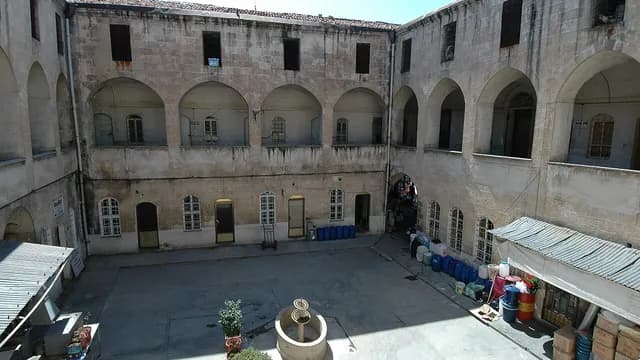
Belen Suleiman the Magnificent Caravanserai
Belen, Hatay
The caravanserai of the complex founded in the time of Suleiman the Magnificent to secure the Belen Pass.
 Machine translated — This content was machine-translated and may differ from the original Turkish text.
Han and caravanserai
Büdeyri Han
Şahinbey, Gaziantep
A 19th-century han whose han and soap-workshop sections are connected on the upper floor, regarded as unique in plan among Gaziantep's hans.
 Machine translated — This content was machine-translated and may differ from the original Turkish text.
Han and caravanserai
Çakırsaz Caravanserai
Altıntaş, Kütahya
A small 14th–15th-century caravanserai on the road between the Germiyan capital Kütahya and Afyonkarahisar.
 Machine translated — This content was machine-translated and may differ from the original Turkish text.
Han and caravanserai
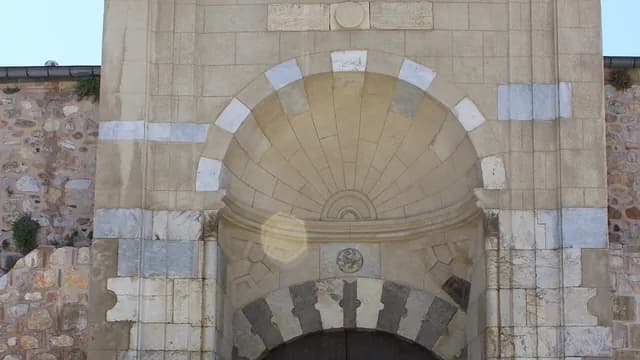
Çardak Han (Han-ı Âbâd)
Çardak, Denizli
A 13th-century Seljuk caravanserai commissioned by Esedüddin Ayaz in the reign of Sultan Alaeddin Keykubad I.
 Machine translated — This content was machine-translated and may differ from the original Turkish text.
Han and caravanserai
Çay Han (Taşhan)
Çay, Afyonkarahisar
A Seljuk caravanserai on the Konya road, commissioned in 1278 by the same patron as the Taş Medrese.
 Machine translated — This content was machine-translated and may differ from the original Turkish text.
Han and caravanserai
Cinci Hanı
Safranbolu, Karabük
A grand han commissioned in the 1640s in the center of the Safranbolu bazaar by Cinci Hoca, Kazasker of Rumelia, used today as a hotel.
- Machine translated — This content was machine-translated and may differ from the original Turkish text.
Han and caravanserai
Çınçınlı Sultan Hanı
Saraykent, Yozgat
A Seljuk caravanserai, ruined today, commissioned in 1240–1241 by Mahperi Hatun, wife of Sultan Alâeddin Keykubad I.
 Machine translated — This content was machine-translated and may differ from the original Turkish text.
Han and caravanserai
Döğer Caravanserai
İhsaniye, Afyonkarahisar
An Ottoman caravanserai in the town of Döğer at the entrance to the Phrygian Valley.
- Machine translated — This content was machine-translated and may differ from the original Turkish text.
Han and caravanserai
Durağan Han
Durağan, Sinop
A historic han on the old caravan route that gave its name to Durağan, founded where the Kızılırmak and the Gökırmak meet.
 Machine translated — This content was machine-translated and may differ from the original Turkish text.
Han and caravanserai
Eğirdir Han
Eğirdir, Isparta
The remains of a Seljuk-period caravanserai south of Eğirdir.
 Machine translated — This content was machine-translated and may differ from the original Turkish text.
Han and caravanserai
Ejder Caravanserai (Harmandöven Caravanserai)
Merkez, Iğdır
A stone caravanserai in the village of Harmandöven on the Batumi–Tabriz caravan route, named after Şerafeddin Ejder, emir of Sürmeli.
 Machine translated — This content was machine-translated and may differ from the original Turkish text.
Han and caravanserai
Ekmekçizade Ahmet Paşa Caravanserai
Merkez, Edirne
A monumental caravanserai south of the Selimiye, completed in 1610 and also known as Küpeli Han.
 Machine translated — This content was machine-translated and may differ from the original Turkish text.
Han and caravanserai
El-Aman Han (Rahva Caravanserai)
Merkez, Bitlis
One of Anatolia's large caravanserais, built in 1579 by Hüsrev Paşa, beylerbeyi of Van, on the Bitlis–Tatvan road on the Rahva plain.
 Machine translated — This content was machine-translated and may differ from the original Turkish text.
Han and caravanserai
Emir Han
Osmangazi, Bursa
One of Bursa's oldest hans, built as a source of income for the Orhan Gazi Complex, with an ablution fountain in its courtyard.
 Machine translated — This content was machine-translated and may differ from the original Turkish text.
Han and caravanserai
Ertokuş Han (Kudret Han)
Gelendost, Isparta
A Seljuk han on the eastern shore of Lake Eğirdir, commissioned by Atabeg Mübarizeddin Ertokuş in the early 13th century.
 Machine translated — This content was machine-translated and may differ from the original Turkish text.
Han and caravanserai
Evdir Han
Döşemealtı, Antalya
A Seljuk caravanserai on the Antalya–Isparta caravan route, built in the reign of İzzeddin Keykavus I.
- Machine translated — This content was machine-translated and may differ from the original Turkish text.
Han and caravanserai
Ezine Han
Merkez, Amasya
A Seljuk han in Ezinepazar village, built by Mahperi Hatun and restored and opened to visitors by the General Directorate of Foundations.
- Machine translated — This content was machine-translated and may differ from the original Turkish text.
Han and caravanserai
Gökçeağaç Han
Hanönü, Kastamonu
An old caravanserai building, claimed to be of church origin, which gave the district its name.
 Machine translated — This content was machine-translated and may differ from the original Turkish text.
Han and caravanserai
Gümrük Hanı and the Historic Covered Bazaar
Eyyübiye, Şanlıurfa
The city's liveliest meeting place, with its arcaded courtyard commissioned by Behram Paşa in the 16th century; together with the surrounding Kazzaz Pazarı and bedesten, the heart of the historic bazaar.
- Machine translated — This content was machine-translated and may differ from the original Turkish text.
Han and caravanserai
Hacı Gedik Han
Merkez, Uşak
A two-story stone han with shops on its ground floor, commissioned in 1893 at the Halıpazarı locality.
- Machine translated — This content was machine-translated and may differ from the original Turkish text.
Han and caravanserai
Hacı Murat Hanı
Koyulhisar, Sivas
The remains of a cut-stone caravanserai with standing walls in the Kelkit valley, on the old Suşehri–Niksar road.
- Machine translated — This content was machine-translated and may differ from the original Turkish text.
Han and caravanserai
Hafsa Sultan Caravanserai
Marmaris, Muğla
A small 16th-century caravanserai at the foot of Marmaris Castle, now used as a bazaar.
 Machine translated — This content was machine-translated and may differ from the original Turkish text.
Han and caravanserai
Han el-Ba'rur Caravanserai
Harran, Şanlıurfa
The remains of an Ayyubid-period caravanserai built in 1228–1229 on the old caravan road linking the Harran Plain to the Tektek Mountains.
 Machine translated — This content was machine-translated and may differ from the original Turkish text.
Han and caravanserai
Hasan Paşa Han
Sur, Diyarbakır
A two-story Ottoman han opposite the Ulu Mosque, built between 1572 and 1575 by Vezirzade Hasan Paşa.
- Machine translated — This content was machine-translated and may differ from the original Turkish text.
Han and caravanserai
Hekim Han (Taşhan)
Hekimhan, Malatya
A Seljuk caravanserai that gave the district its name, begun in 1218 and completed in the reign of Alâeddin Keykubad I, famous for its inscription in Arabic, Armenian and Syriac.
 Machine translated — This content was machine-translated and may differ from the original Turkish text.
Han and caravanserai
Horozlu Han
Selçuklu, Konya
The Seljuk caravanserai closest to the city on the old Konya–Akşehir road; commissioned in the mid-13th century by Emir Esedüddin Ruzbe.
 Machine translated — This content was machine-translated and may differ from the original Turkish text.
Han and caravanserai
İncir Han
Bucak, Burdur
A 13th-century Seljuk han known for its portal with an oyster-shell motif.
 Machine translated — This content was machine-translated and may differ from the original Turkish text.
Han and caravanserai
İshaklı (Sahip Ata) Caravanserai
Sultandağı, Afyonkarahisar
A Seljuk caravanserai on the Afyon-Konya road, commissioned in 1249 by the vizier Sahip Ata Fahreddin Ali.
 Machine translated — This content was machine-translated and may differ from the original Turkish text.
Han and caravanserai
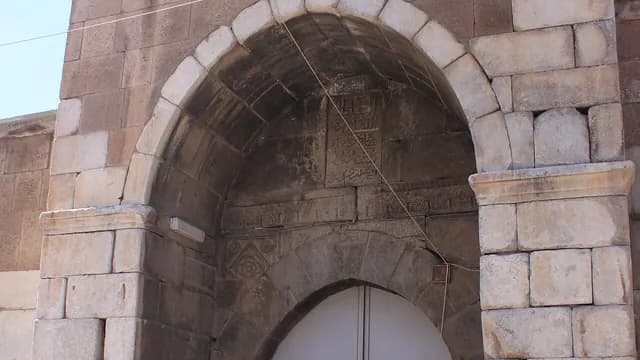
Issız Han
Karacabey, Bursa
An early Ottoman caravanserai standing alone in the open countryside near Karacabey.
 Machine translated — This content was machine-translated and may differ from the original Turkish text.
Han and caravanserai
Kadınhanı (Raziye Sultan Hanı)
Kadınhanı, Konya
A Seljuk caravanserai commissioned by Raziye Hatun in 1223, which gave the Kadınhanı district its name; today an exhibition hall.
 Machine translated — This content was machine-translated and may differ from the original Turkish text.
Han and caravanserai
Kara Mustafa Paşa Complex and Caravanserai
İncesu, Kayseri
A large Ottoman staging-post complex at İncesu consisting of a caravanserai, mosque, hamam and arasta, commissioned in 1660 by Merzifonlu Kara Mustafa Paşa.
 Machine translated — This content was machine-translated and may differ from the original Turkish text.
Han and caravanserai
Karatay Han
Bünyan, Kayseri
A two-part caravanserai with a masjid and hamam on the Kayseri–Malatya road, commissioned by the Seljuk vizier Celâleddin Karatay.
 Machine translated — This content was machine-translated and may differ from the original Turkish text.
Han and caravanserai
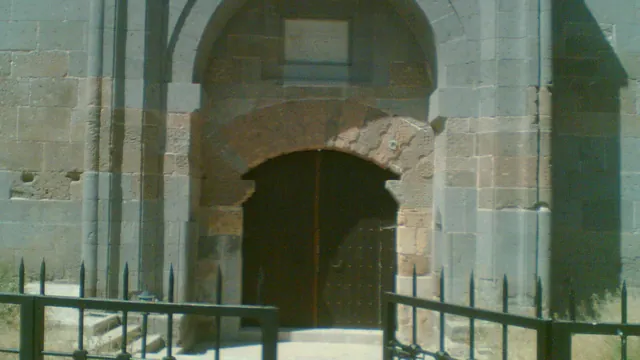
Kargı Han
Manavgat, Antalya
A historic caravanserai without an inscription in Beydiğin village, north of the Kargı Stream.
 Machine translated — This content was machine-translated and may differ from the original Turkish text.
Han and caravanserai
Kesikköprü Caravanserai (Cacabey Hanı)
Merkez, Kırşehir
A Seljuk caravanserai in the village of Kesikköprü, commissioned by Nureddin Caca, Emir of Kırşehir, notable for its portal built of two-colored stones.
 Machine translated — This content was machine-translated and may differ from the original Turkish text.
Han and caravanserai
Kırkgöz Han
Döşemealtı, Antalya
A Seljuk han built on the Antalya–Isparta road in the reign of Gıyaseddin Keyhüsrev II (1236–1246).
 Machine translated — This content was machine-translated and may differ from the original Turkish text.
Han and caravanserai
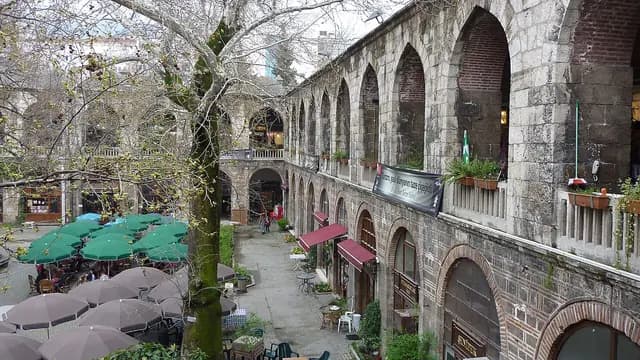
Kızlarağası Han
Konak, İzmir
Kemeraltı's most famous Ottoman han, built in 1744, with a two-story arcaded courtyard.
 Machine translated — This content was machine-translated and may differ from the original Turkish text.
Han and caravanserai
Koza Han
Osmangazi, Bursa
A han with a two-story courtyard and a small masjid at its center; for centuries the heart of the silk cocoon trade.
 Machine translated — This content was machine-translated and may differ from the original Turkish text.
Han and caravanserai
Kurşunlu Han
Şehzadeler, Manisa
A two-story Ottoman han with 74 rooms, built in 1488 as part of the Hatuniye Complex.
 Machine translated — This content was machine-translated and may differ from the original Turkish text.
Han and caravanserai
Kurtkulağı Caravanserai
Ceyhan, Adana
A cut-stone caravanserai built in the Ottoman period on the pilgrimage and trade route.
 Machine translated — This content was machine-translated and may differ from the original Turkish text.
Han and caravanserai
Kutu Han
Tire, İzmir
A two-story historic han with a courtyard from the 15th century, in the middle of the Tire bazaar.
 Machine translated — This content was machine-translated and may differ from the original Turkish text.
Han and caravanserai
Mahperi Hatun Caravanserai
Pazar, Tokat
A Seljuk caravanserai with a muqarnas portal in Pazar, commissioned by Mahperi Hatun in 1238.
 Machine translated — This content was machine-translated and may differ from the original Turkish text.
Han and caravanserai
Mama Hatun Caravanserai
Tercan, Erzincan
A 51x51-meter cut-stone caravanserai from the early 13th century on the Erzurum–Erzincan caravan route, commissioned by the Saltukid Melike Mama Hatun.
- Machine translated — This content was machine-translated and may differ from the original Turkish text.
Han and caravanserai
Mihal Bey Han and Mosque (Gölpazarı)
Gölpazarı, Bilecik
A han with alternating stone-and-brick masonry dating to the early Ottoman Beylik, and the mosque next to it, in Gölpazarı.
 Machine translated — This content was machine-translated and may differ from the original Turkish text.
Han and caravanserai
Mut Taşhan
Mut, Mersin
An 18th-century Ottoman han, used today as a market place for women producers.
 Machine translated — This content was machine-translated and may differ from the original Turkish text.
Han and caravanserai
Öküz Mehmet Paşa Caravanserai
Kuşadası, Aydın
A fortress-like caravanserai facing Kuşadası harbor, commissioned by Öküz Mehmet Paşa in the early 17th century.
 Machine translated — This content was machine-translated and may differ from the original Turkish text.
Han and caravanserai
Öresin Han
Merkez, Aksaray
A small Seljuk han on the Aksaray–Nevşehir road, also called 'Tepesi Delik Han' (Han with a Hole in the Top) for its courtyardless plan and the light opening at its top.
 Machine translated — This content was machine-translated and may differ from the original Turkish text.
Han and caravanserai
Payas Sokullu Mehmet Paşa Complex
Payas, Hatay
A 16th-century complex attributed to Mimar Sinan; with its caravanserai, arasta, hamam and mosque, it came through the earthquakes undamaged.
 Machine translated — This content was machine-translated and may differ from the original Turkish text.
Han and caravanserai
Rüstem Paşa Caravanserai
Merkez, Edirne
A large two-courtyard Ottoman caravanserai commissioned from Mimar Sinan by Grand Vizier Rüstem Paşa in 1554.
 Machine translated — This content was machine-translated and may differ from the original Turkish text.
Han and caravanserai
Şarapsa Han
Alanya, Antalya
A Seljuk caravanserai 15 km west of Alanya, built in the reign of Gıyaseddin Keyhüsrev II.
 Machine translated — This content was machine-translated and may differ from the original Turkish text.
Han and caravanserai
Sarıhan Caravanserai
Ürgüp, Nevşehir
A tuff-stone caravanserai on the Aksaray–Kayseri caravan route, built in 1249 and counted among the last examples of Seljuk sultan's hans.
 Machine translated — This content was machine-translated and may differ from the original Turkish text.
Han and caravanserai
Şebinkarahisar Taşhanlar (Stone Hans)
Şebinkarahisar, Giresun
The remains of masonry bedesten buildings in the Şebinkarahisar bazaar, commissioned in the 17th century by Taban Ahmet Ağa.
 Machine translated — This content was machine-translated and may differ from the original Turkish text.
Han and caravanserai
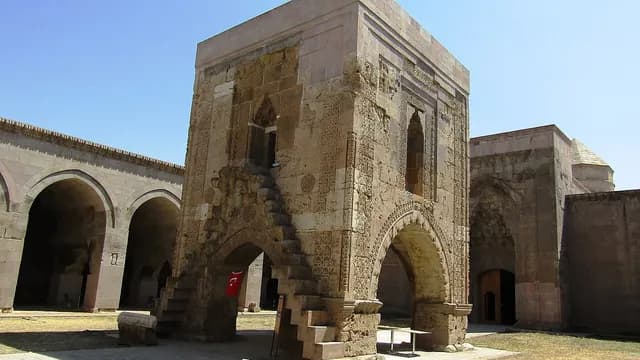
Silahtar Mustafa Paşa Caravanserai
Battalgazi, Malatya
A large Ottoman caravanserai with a courtyard and a covered section at the Alacakapı entrance to Old Malatya, built in 1637 by Mustafa Paşa, sword-bearer of Murad IV.
 Machine translated — This content was machine-translated and may differ from the original Turkish text.
Han and caravanserai
Sultan Hanı (Tuzhisar)
Bünyan, Kayseri
Türkiye's second-largest medieval caravanserai, commissioned in 1232–1237 by Alaeddin Keykubad I on the Kayseri–Sivas road.
 Machine translated — This content was machine-translated and may differ from the original Turkish text.
Han and caravanserai
Sultan Hanı Caravanserai
Sultanhanı, Aksaray
Built by Alâeddin Keykubad I in 1229, one of the largest Seljuk caravanserais in Anatolia, covering about 4,800 m².
 Machine translated — This content was machine-translated and may differ from the original Turkish text.
Han and caravanserai
Suluhan
Altındağ, Ankara
A historic Ankara han built in the early 16th century, with two courtyards and a small masjid in the middle.
 Machine translated — This content was machine-translated and may differ from the original Turkish text.
Han and caravanserai
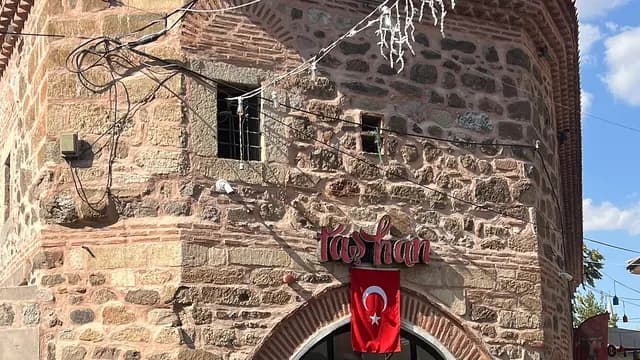
Susuz Han
Bucak, Burdur
A Seljuk caravanserai built in the reign of Gıyaseddin Keyhüsrev II, with a geometrically decorated portal.
 Machine translated — This content was machine-translated and may differ from the original Turkish text.
Han and caravanserai
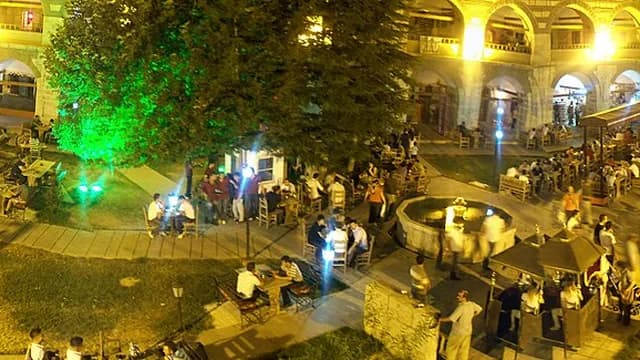
Taşhan (Hoca Üveys Han)
Merkez, Afyonkarahisar
An Ottoman-era stone han in the historic bazaar district of the city center.
 Machine translated — This content was machine-translated and may differ from the original Turkish text.
Han and caravanserai
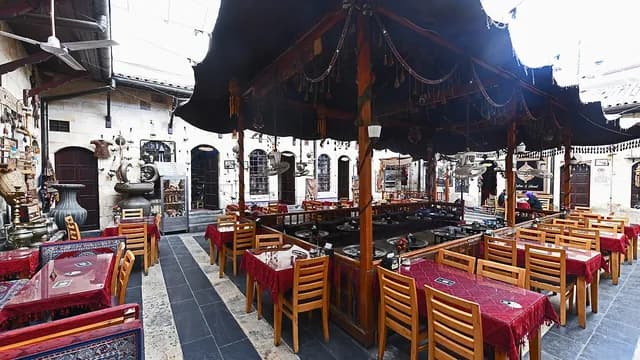
Taşhan (Voyvoda Hanı)
Merkez, Tokat
One of Anatolia's largest city hans, built in 1626–1632; today lively with handicraft and yazma shops.
 Machine translated — This content was machine-translated and may differ from the original Turkish text.
Han and caravanserai
Tütün Han (Tobacco Han)
Şahinbey, Gaziantep
A two-story, single-courtyard Ottoman han dated to the mid-18th century, notable for its black-and-white stonework.
- Machine translated — This content was machine-translated and may differ from the original Turkish text.
Han and caravanserai
Veli Paşa Hanı
Merkez, Çorum
A two-story wooden city han from the late 19th century; restored with its three-story kiosk known as the 'Anadolu Oteli' and reopened in 2022.
 Machine translated — This content was machine-translated and may differ from the original Turkish text.
Han and caravanserai
Vezirhan (Köprülü Mehmed Paşa Caravanserai)
Merkez, Bilecik
A staging complex of a han, mosque and hammam commissioned by Köprülü Mehmed Paşa in the 17th century; the building that gave the town its name.
 Machine translated — This content was machine-translated and may differ from the original Turkish text.
Han and caravanserai
Yukarı Taşhan (Upper Stone Han)
Merkez, Bolu
A stone han commissioned in 1804 by Hacı Abdullah Ağa, with a two-story arcaded courtyard, today home to booksellers and tradesmen's shops.
 Machine translated — This content was machine-translated and may differ from the original Turkish text.
Han and caravanserai
Zazadin Han
Selçuklu, Konya
A monumental Seljuk caravanserai on the Konya–Aksaray road, completed in 1236 according to its inscription, built with spolia stones.
- Machine translated — This content was machine-translated and may differ from the original Turkish text.
Han and caravanserai
Zıvarık Hanı
Altınekin, Konya
A restored caravanserai with a covered plan in central Altınekin, notable for the spolia stones in its portal.