Category
315 places
Your location is only used in your browser to sort nearby places; it is never stored.
315 places listed
Madrasa and külliye (complex)
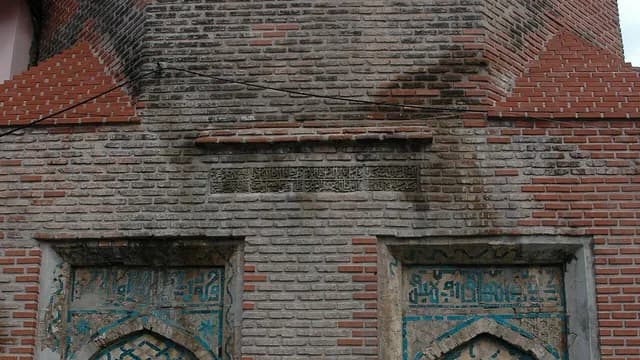
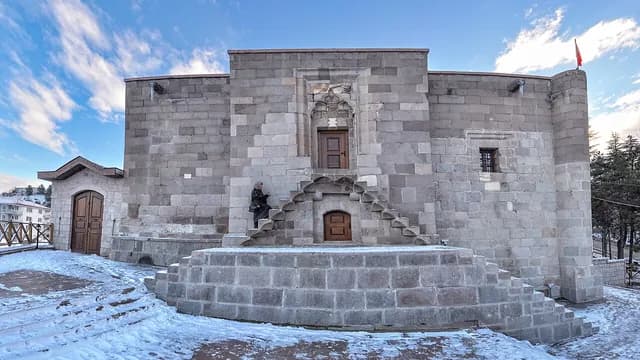
Çay Taş Medrese
Çay, Afyonkarahisar
A domed Seljuk madrasa with tile mosaics, commissioned by Yusuf bin Yakup in 1278-79; used as a mosque today.
Hammam (Turkish bath)
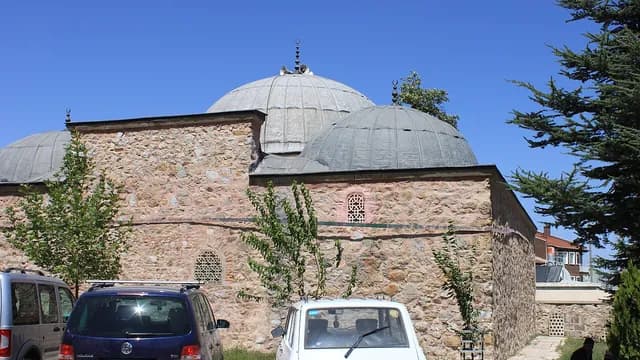
Gedik Ahmed Paşa (İmaret) Hammam
Merkez, Afyonkarahisar
The 15th-century double hammam of the Gedik Ahmed Paşa Complex, still used for bathing today.
Historic mansion
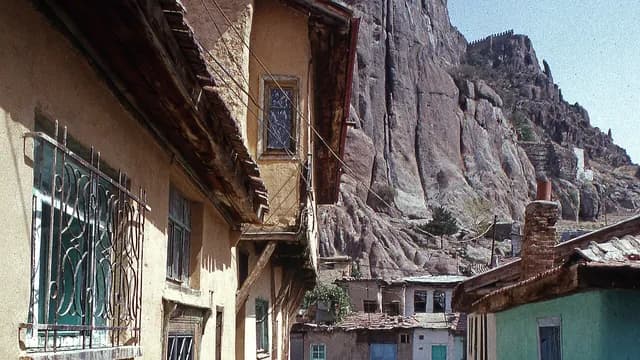
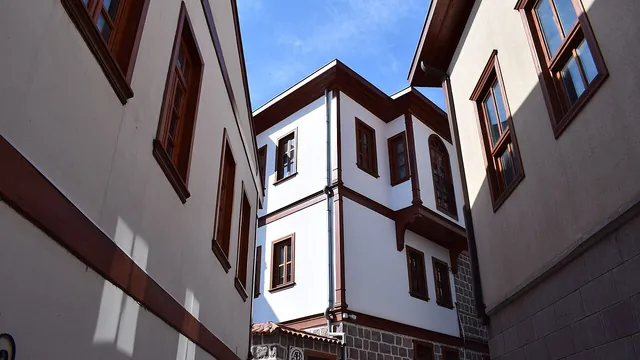
Historic Afyon Houses (Castle Foothills)
Traditional Afyon houses with bay windows and projecting wooden upper floors, lining the narrow streets at the foot of the castle.
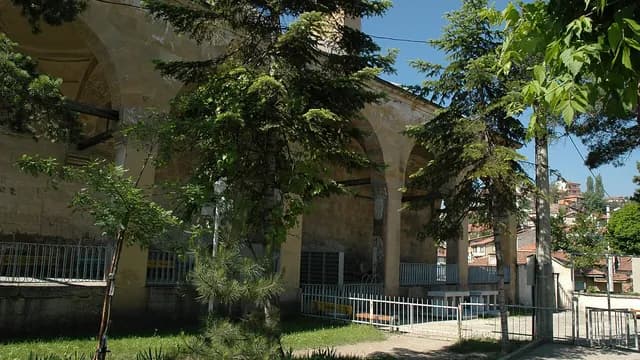
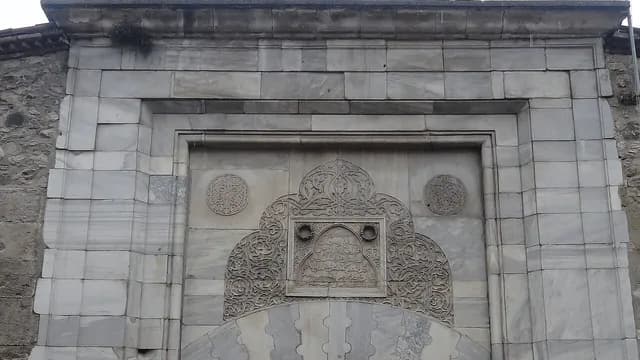
Taş Medrese (Gedik Ahmed Paşa Madrasa)
An Ottoman madrasa, part of the Gedik Ahmed Paşa Complex, popularly called Taş Medrese (Stone Madrasa).
Gümrükönü (Çifte) Hammam
Efeler, Aydın
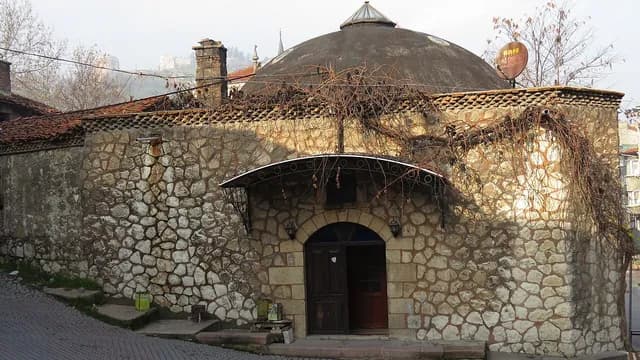
A 14th-15th-century double hammam in central Aydın, with women's and men's sections under separate domes.
Architecture
Kuşadası Kaleiçi
Kuşadası, Aydın
The core of old Kuşadası behind the caravanserai, with narrow streets, stone houses and the Kaleiçi Mosque.
Nasuh Paşa (Paşa) Hammam
A historic hammam in central Aydın, part of the complex commissioned by Nasuh Paşa in 1708, restored by the Foundations directorate.
Nazilli Calico Factory
Nazilli, Aydın
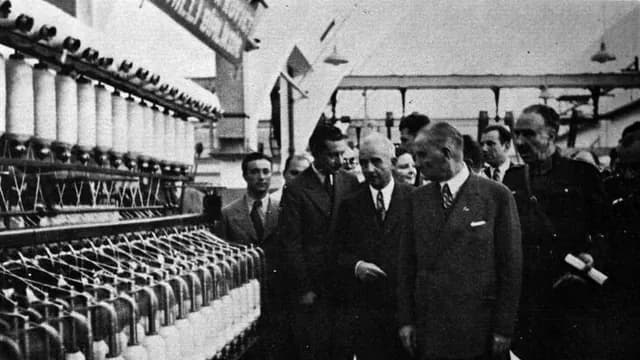
A 1937 Sümerbank calico factory opened by Atatürk; early Republican industrial heritage.
Babadağ Historic Houses
Babadağ, Denizli
A town declared a conservation area, with colorful houses stepped up the mountainside and a tailoring tradition.
Buldan Historic Houses and Weaving Bazaar
Buldan, Denizli
A district center on a mountainside known for its old houses with bay windows and the geographically indicated Buldan cloth woven on looms.
Germiyanoğlu (Vakıflar) Hammam
Merkezefendi, Denizli
A double hammam in Bayramyeri, right next to the Atatürk and Ethnography Museum, regarded as one of Denizli's oldest surviving buildings.
Bazaar and arasta
Kaleiçi Bazaar
Denizli's oldest settlement core and historic bazaar, which grew up among traces of Seljuk-era walls.
Alaçatı
Çeşme, İzmir
The best-known town on the Çeşme peninsula, with stone houses, windmills, narrow streets and a windsurfing bay.
Çakırağa Mansion
Ödemiş, İzmir
An 18th-century Ottoman mansion in Birgi, famous for the painted views of Istanbul and İzmir on its walls.
Forbes Mansion and the Levantine Mansions of Buca
Buca, İzmir
The best known of the garden mansions used as summer homes by İzmir's Levantine merchant families in the 19th century.
Historic Elevator (Asansör)
Konak, İzmir
An elevator and terrace built in 1907 in Karataş to overcome a 58-meter height difference between two streets.
Clock tower
İzmir Clock Tower and Konak Square
The Ottoman clock tower built in 1901, symbol of İzmir, in the middle of Konak Square.
Kemeraltı Bazaar
İzmir's historic bazaar stretching from Konak to the foot of Kadifekale, with hans, mosques, synagogues and craftsmen's streets.
Konak Pier
A pier building constructed in the 19th century as a customs house, with a design attributed to Gustave Eiffel.
Namazgâh Hammam
A historic domed Ottoman hammam with a double-hammam plan, right next to the Agora of Smyrna.
Necip Paşa Library
Tire, İzmir
Founded in 1827 by Gürcü Necip Paşa, one of the first freestanding libraries opened outside Istanbul.
Ödemiş Arasta
A historic bazaar that grew up among three mosques and seventeen hans, bearing traces of the old craft guilds.
Lighthouse
Sarpıncık Lighthouse
Karaburun, İzmir
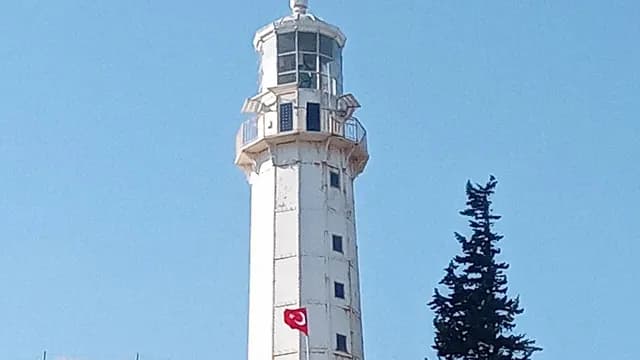
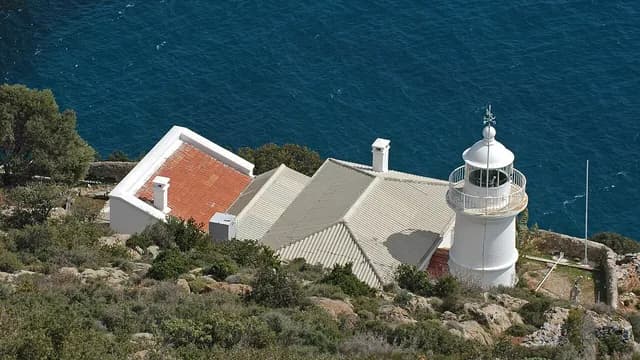
A lighthouse at the northwestern tip of the Karaburun Peninsula, lit since 1938.
Yavukluoğlu (Yoğurtçuoğlu) Complex
A well-preserved Ottoman complex built in 1492, consisting of a mosque, madrasa, primary school and observatory.
Eğdemir Hammam (Elvan Bey Hammam)
Merkez, Kütahya
A historic bazaar hammam from the Germiyanoğulları period with a classic plan and a four-iwan hot room.
Historic street and neighborhood
Germiyan Sokağı (Germiyan Street)
A historic cobbled street in the Pirler neighborhood where 18th-century Kütahya houses are preserved as an ensemble.
Kütahya Clock Tower
A tower converted from a church bell tower, demolished in the 1970s and faithfully rebuilt in 2005–2006.
Lala Hüseyin Paşa Hammam
An Ottoman hammam built by Lala Hüseyin Paşa opposite his mosque to provide it with income.
Rüstem Paşa Madrasa
A madrasa commissioned by Grand Vizier Rüstem Paşa in 1550, partly demolished in the 1930s and rebuilt.
Çukur Hamam (İshak Çelebi Hammam)
Şehzadeler, Manisa
A half-buried 14th-century hammam commissioned by the Saruhanoğulları Bey İshak Çelebi for the Ulu Mosque complex.
Hafsa Sultan Hammam (Sultan Hammam)
A 16th-century double hammam added to the Sultan Complex in the name of Hafsa Sultan, mother of Süleyman the Magnificent.
Hafsa Sultan Hospital (Museum of the History of Medicine)
An Ottoman hospital added to the Sultan Complex in 1539, now used as Manisa Celal Bayar University's museum of the history of medicine.
Halime Hatun Complex
Gölmarmara, Manisa
A complex founded at the end of the 16th century in the name of Halime Hatun, wet nurse of Mehmed III; its mosque, madrasa, soup kitchen remains and double hammam survive.
Historic Kula Houses
Kula, Manisa
Kula's old neighborhoods, called a 'living museum' for their well-preserved residential fabric bearing Ottoman and Germiyan traces.
Historic fountain
Kaval Fountain
Yunusemre, Manisa
One of Manisa's oldest dated fountains, commissioned in 1480-1481 according to its inscription.
Kula Yeni Hamam (Sungur Bey Hammam)
An Ottoman hammam within Kula's historic bazaar fabric, completed in 1502-1503 according to its inscription.
Manisa Clock Tower
The tower in front of the Ulu Mosque's north gate; the clock added here in 1672 is considered one of Türkiye's first clock towers.
Sasa Bey Hammam (City Hammam)
Akhisar, Manisa
A historic city hammam in Akhisar commissioned by Sasa Bey in the 15th century, whose men's section still serves bathers.
Turgutlu Clock Tower
Turgutlu, Manisa
A three-story clock tower in Turgutlu's Atatürk Park, a meeting point in the district center.
Zeynelzade Library
A historic building commissioned in 1797 that once held 995 manuscripts and is now a children's library.
Ahmet Gazi Madrasa (Beçin)
Milas, Muğla
A madrasa with its inscription preserved, commissioned by Ahmet Gazi in 1375 in Beçin, capital of the Menteşe Beylik.
Deveboynu Lighthouse
Datça, Muğla
A lighthouse built in 1931 on Cape Deveboynu, west of Knidos, where the Aegean meets the Mediterranean.
Hüseyin Burnu Lighthouse (Akyarlar)
Bodrum, Muğla
A stone lighthouse built in 1931 rising on Hüseyin Burnu in Akyarlar, at the southwestern tip of the Bodrum Peninsula.
Kadırga Burnu Lighthouse
Marmaris, Muğla
A point on Kadırga Burnu at the western entrance of the Bay of Marmaris, a lighthouse station since 1886.
Kızılada Lighthouse
Fethiye, Muğla
A lighthouse built by the French in 1910 on Kızılada, at the entrance to the Gulf of Fethiye.
Muğla Arasta
Menteşe, Muğla
A bazaar of tradespeople and craftspeople among historic Muğla houses.
Muğla Clock Tower (Saatli Kule)
A historic clock tower in the center of old Muğla, where Saatli Kule Caddesi meets Şeyh Camii Sokağı.
Paspatur Bazaar
A bazaar carrying Fethiye's old town fabric, known for its narrow streets, historic hammam and small shops.
Saburhane and Historic Muğla Houses
Saburhane, the heart of Muğla's urban conservation area with about 400 registered houses, with its chimneyed houses, narrow streets and old hans.
Cimcim Fountain
Merkez, Uşak
Built of cut stone in 1896, one of the emblematic fountains of the city center with its decorated facade.
Historic Uşak Houses
Two-story Ottoman and early Republican houses in the Kurtuluş and Işık neighborhoods, protected by the Ministry of Culture.
Historic Uşak Station and Atatürk Monument
The station building built by the French in the 1890s and, in front of it, Gürdal Duyar's caped Atatürk statue.
Uşak Bedesten
A two-story stone building commissioned from an Italian architect in 1901, later turned into the Money Changers' Bazaar.
Amasya Clock Tower
Merkez, Amasya
The city clock tower at the head of the Hükümet Bridge, built in 1865 and faithfully rebuilt in 2002.
Çelebi Sultan Mehmed Madrasa and Merzifon Clock Tower
Merzifon, Amasya
The four-iwan madrasa built by Çelebi Mehmed in 1414–1417 and the brick clock tower at its entrance; the symbol of Merzifon.
Gümüşhacıköy Bedesten and Clock Tower
Gümüşhacıköy, Amasya
The bedesten with an open passage built by Köprülü Mehmet Paşa in 1660, and the clock tower dated 1900 to its east.
Kapı Ağa (Büyük Ağa) Madrasa
The Büyük Ağa Madrasa, built in 1488, where the octagonal plan was used for the first time among Ottoman madrasas.
Merzifon Bedesten
A 17th-century bedesten belonging to the Kara Mustafa Paşa Complex, with nine domes and outward-facing shops.
Sultan II. Bayezid Complex
Amasya's largest Ottoman complex, built in 1485–1486 on the banks of the Yeşilırmak, with a mosque, madrasa, imaret and ablution fountain.
Yalıboyu Houses
Ottoman houses with bay windows lined up on the old city wall on the north bank of the Yeşilırmak; Amasya's postcard view.
Amasra Lighthouse
Amasra, Bartın
A lighthouse in the Boztepe neighborhood that has lit the Amasra coast since 1863, 78 meters above the sea.
Çekiciler Bazaar
A historic bazaar street where masters of 'çekicilik', Amasra's wood-carving craft dating back to the 17th century, sell their work.
Historic Bartın Houses (Orta Mahalle)
Merkez, Bartın
Historic Bartın houses in Orta Mahalle with Western-influenced post-Tanzimat decoration, sash windows and gardens with 'daraba' fences.
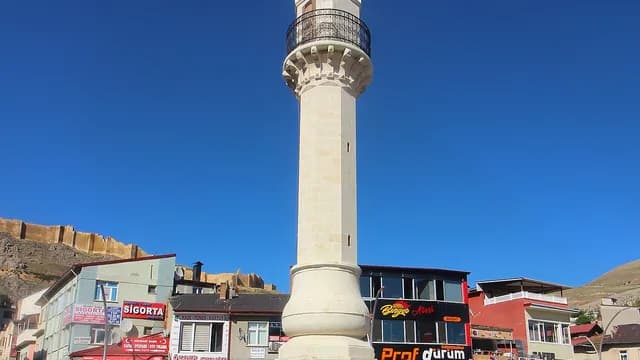
Bayburt Clock Tower
Merkez, Bayburt
An octagonal stone clock tower at the foot of the castle, built in the early years of the Republic by İbrahim Usta from Rize.
Ferahşad Bey Mosque and Madrasa
Demirözü, Bayburt
A single-domed mosque commissioned in 1517 by the Akkoyunlu Hacı Ferahşad Bey in the village of Gökçedere (Pulur), and the madrasa beside it.
Taşhan Bedesten
A square-plan historic bedesten near the Ulu Mosque, built of cut stone and brick and covered with four domes.
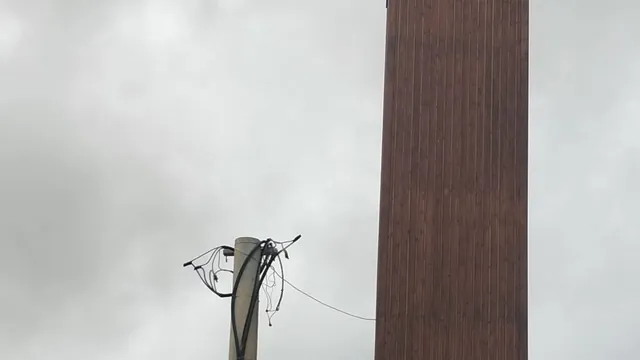
Gerede Clock Tower
Gerede, Bolu
A 12-meter historic clock tower made of pine wood in 1882, in Gerede's Cumhuriyet Square.
Göynük Historic Town Fabric
Göynük, Bolu
An Ottoman town that is an urban protected site with 137 registered houses, mosques, a hamam and tombs, and a member of the Cittaslow (Slow City) network.
Göynük Victory Tower (Zafer Kulesi)
A three-story wooden clock tower on a hill overlooking the town, commissioned by District Governor Hurşit Bey in memory of the victories of the War of Independence.
Mudurnu Clock Tower
Mudurnu, Bolu
A 12-meter wood-clad clock tower with a tiled roof rising on the slope east of the town; all of Mudurnu can be seen from around it.
Mudurnu Historic Town Fabric
An Ottoman town that grew on the Silk Road, preserved with more than two hundred registered mansions, its bazaar and the Ahi prayer kept for centuries.
Çorum Clock Tower
Merkez, Çorum
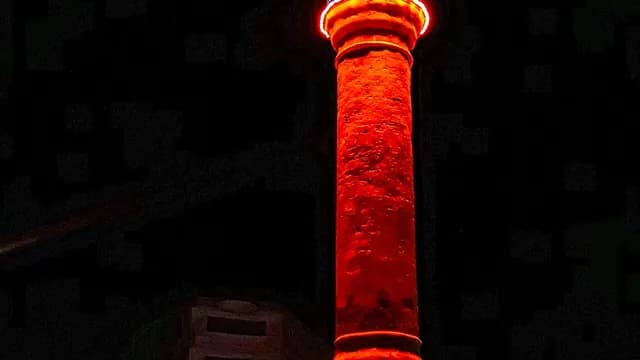
A minaret-shaped cut-stone clock tower 27.5 meters high, commissioned in 1894 by Yedi Sekiz Hasan Paşa; the symbol of the city.
Sungurlu Clock Tower
Sungurlu, Çorum
A 19-meter tower built in 1891 by Şakir Usta of Yozgat, said to have been a model for the Yozgat and Çorum clock towers.
Düzce Clock Tower
Merkez, Düzce
A tower rising in Anıtpark Square in 2009, keeping alive the memory of the old clock tower built in 1901 and destroyed in the 1925 fire.
Selamlar Fountain (Atatürk Fountain)
Gümüşova, Düzce
A village fountain where Atatürk stopped in 1934 and drank ayran, where a commemoration festival is held every year on 18 July.
Hacı Abdullah Halife Complex
Yağlıdere, Giresun
The Sarı Halife Complex in Tekkeköy, Yağlıdere, founded in the 15th century, with a tekke, a mosque and endowment documents.
Sarıçiçek Village Rooms (Köy Odaları)
Merkez, Gümüşhane
Historic village rooms in the village of Sarıçiçek, with their Baroque- and Rococo-influenced wooden decoration preserved.
Süleymaniye Neighborhood (Old Gümüşhane)
A historic neighborhood founded near silver deposits in the time of Suleiman the Magnificent, carrying the city's old settlement fabric with the remains of mosques, churches, hamams and mansions.
Cinci Hamamı
Safranbolu, Karabük
A historic hamam commissioned by Cinci Hoca within the bazaar, also known in Safranbolu as the 'Yeni Hamam', still in operation.
Karabük Clock Tower
Merkez, Karabük
A clock tower erected in honor of the 50th anniversary of Kardemir's founding and completed in 1987, symbolizing Karabük's iron and steel identity.
Safranbolu Clock Tower
One of the oldest clock towers that can be climbed and is still working, commissioned in 1794–1797 by Grand Vizier İzzet Mehmet Paşa.
Safranbolu Historic Bazaar and Arasta
The heart of UNESCO World Heritage Safranbolu; the Çarşı area lined with the arasta, hans, mosques and traditional mansions.
Balabanağa Mansion
Daday, Kastamonu
An Ottoman mansion in the village of İnciğez near Daday, known for its 17th-century woodwork.
Cumhuriyet Square and Government House
Merkez, Kastamonu
A city square surrounded by the Government House by the architect Vedat Tek and historic public buildings, with the Atatürk and Şerife Bacı Monument.
İnebolu Lighthouse
İnebolu, Kastamonu
A historic lighthouse in İnebolu's Camikebir neighborhood, guiding the way to the harbor since 1863.
İnebolu Türk Ocağı Building
The building, restored in 2006, where Atatürk gave his historic speech on the Hat and Clothing Reform on 27 August 1925.
İsmail Bey Complex
The principality's largest complex, consisting of a mosque, imaret, madrasa, tomb and han, commissioned on the Şehinşahkayası hill by the Candarid İsmail Bey in 1454.
Kastamonu Clock Tower
A clock tower built in 1885 on the slope east of the city, one of the favorite viewpoints of Kastamonu thanks to its position facing the castle.
Kerempe Lighthouse
Cide, Kastamonu
A historic lighthouse built in 1885 on a cliff 82 meters above the sea in the village of Aydıncık in Cide.
Yakup Ağa Complex
The Yakup Ağa Complex of the classical Ottoman period, with mosque and madrasa sections, in the old neighborhoods at the foot of the castle.
Cevat Bey Mansion
Çamaş, Ordu
One of Ordu's largest mansions, with 18 rooms, built in Çamaş in 1909 by Hacı Alizade Osman Ağa.
Ünye Saray Hamamı (Palace Bath)
Ünye, Ordu
A four-iwan hamam thought to have been built before 1808 as part of the Süleyman Paşa Palace, restored and reopened in 2020.
Çukurluhoca Madrasa
Çayeli, Rize
A two-story village madrasa in the village of Çukurluhoca, dated to around 1870, with a cut-stone lower floor and a wooden upper floor.
Historic Şifa Hamam
İlkadım, Samsun
A historic building near Saathane Meydanı, dated to the 15th century, operating as a hamam again after its 2021 restoration.
Vezirköprü Clock Tower
Vezirköprü, Samsun
A clock tower in the Vezirköprü bazaar, built in 1908 and re-erected true to the original in 1959 after the 1943 earthquake.
Gerze Köşk Burnu Lighthouse
Gerze, Sinop
A small lighthouse built in 1943 on Gerze's Köşk Burnu, and the coastal walk around it.
İnceburun Lighthouse
Merkez, Sinop
A lighthouse at İnceburun, Türkiye's northernmost tip, operating since 1863 and maintained by the same family for generations.
Pervane Madrasa
A madrasa with a monumental portal commissioned in 1265 by the Seljuk vizier Muînüddin Süleyman Pervâne, today with handicraft shops and a tea garden in its courtyard.
Gök Medrese
Merkez, Tokat
A two-story Seljuk madrasa commissioned by Muineddin Pervane in 1277, famous for its aubergine-purple, navy and turquoise tiles.
Hatuniye Mosque and Complex
A complex consisting of a mosque, madrasa and imaret built in 1485 in the name of Gülbahar Hatun, mother of Bayezid II.
Niksar Yağıbasan Madrasa
Niksar, Tokat
Dated 1158, the oldest surviving madrasa in Anatolia according to Ministry sources; at the foot of Niksar Castle.
Sulusokak and Bey Sokağı
Tokat's old city center: the historic Sulusokak, lined with the Yağıbasan Madrasa, the Ali Tûsî Tomb, hans and the bedesten, and the nearby Bey Sokağı.
Tokat Clock Tower
A 33-meter cut-stone clock tower built in 1902 and raised to four stories in 1915.
Yağıbasan (Çukur) Madrasa
The Çukur Madrasa, with a dome 14 meters in diameter, commissioned in the 12th century by the Danishmendid Nizameddin Yağıbasan.
Çakıroğlu İsmail Ağa Mansion
Of, Trabzon
An ağa's mansion on a hill overlooking the sea, built of pink cut stone in the early 19th century and cited as the Black Sea's largest stone mansion.
Trabzon Bedesten
Ortahisar, Trabzon
An Ottoman bedesten in the part of the historic bazaar sloping down to the coast, restored and now home to shops selling local products.
Yoroz (Işıklı) Lighthouse
Çarşıbaşı, Trabzon
A historic lighthouse built in 1886 on Yoroz Burnu in Çarşıbaşı, protected together with the buildings around it.
Zonguldak Lighthouse
Merkez, Zonguldak
A lighthouse in the city's Fener area that has guided ships into the harbor since 1908, with its surroundings protected as national heritage.
Eğri Minare (Leaning Minaret)
Merkez, Aksaray
A Seljuk-era minaret of red brick whose shaft has tilted over time, making it a symbol of Aksaray.
Zinciriye Madrasa
A four-iwan madrasa built by Karamanoğlu Sultan Halil in 1336, resembling a fortress with its crenellated walls.
Beypazarı Historic Town
Beypazarı, Ankara
Ankara's most visited historic district center, with hundreds of restored Ottoman houses and its blacksmiths' and coppersmiths' bazaar.
Hamamönü Historic Houses
Altındağ, Ankara
The living street fabric of old Ankara, with restored traditional Ankara houses, craft shops and tea gardens.
Hasanoğlan Higher Village Institute
Elmadağ, Ankara
The historic campus of the Hasanoğlan Higher Village Institute, which trained teachers and inspectors between 1941 and 1947 and whose buildings were built by students through collective work.
Buğday Pazarı Madrasa
Merkez, Çankırı
A 17th-century madrasa restored by the municipality and turned into an art house exhibiting local crafts and culture.
Çankırı Clock Tower
A four-sided historic clock tower from the late Ottoman period on the hill in the Mimar Sinan neighborhood.
Çarşı Hammam (Bath)
The best-known example of Ottoman-era Çankırı hammams, adjoining the Ali Bey Mosque, with a cross-plan double-bath layout.
Çivitçioğlu Madrasa
A madrasa commissioned in 1754 by Çivitçioğlu Mehmet Efendi, largely preserving its two-story layout and used today for arts and culture.
Taş Mektep (Stone School)
A historic school opened in 1893 as an İdadi School, where the room in which Atatürk spent the night of 31 August 1925 is preserved as the 'Atatürk Room'.
Taş Mescit (Cemaleddin Ferruh Darülhadis)
Taş Mescit, the surviving part of the hospital and hadith school complex commissioned by Atabey Cemaleddin Ferruh in the Seljuk period.
Atlıhan Handicrafts Bazaar
Odunpazarı, Eskişehir
A han bazaar with a courtyard in Odunpazarı, where meerschaum craftsmen and jewelry and handicraft shops are gathered.
Historic Houses of Odunpazarı
Eskişehir's old town core with its Ottoman houses with bay windows and colorful facades and narrow streets; on the UNESCO World Heritage Tentative List.
Kurşunlu Mosque and Complex
An Ottoman complex in Odunpazarı completed by Çoban Mustafa Paşa in 1525, consisting of a mosque, imaret, tekke and caravanserais.
Seyyid Battal Gazi Complex
Seyitgazi, Eskişehir
A complex that grew around the tomb and mosque commissioned in 1207–1208 by Ümmühan Hatun in the name of the epic hero Battal Gazi.
Sivrihisar Clock Tower
Sivrihisar, Eskişehir
A 12-meter stone clock tower built in 1900; the symbol of the Sivrihisar bazaar.
Hatuniye Madrasa
Merkez, Karaman
A madrasa of the Principalities period commissioned in 1382 by Nefise Sultan, wife of the Karamanid Alâeddin Bey, with Karaman's most elegant portal.
Hürrem Dayı House
An example of Ottoman civil architecture about three centuries old with hand-carved woodwork; a house museum donated to the municipality.
Tartan Mansion (Tartan Konağı)
A two-story Karaman mansion with a central hall, built in 1810 by Tartanzade Hacı Ahmet Efendi; after restoration it can be toured with its period furnishings.
Tol Medrese (Tol Madrasa)
Ermenek, Karaman
Ermenek's historic madrasa, commissioned in 1339 by the Karamanid Emir Musa Bey, where astronomy and mathematics were also taught.
Hunat Hatun Complex
Melikgazi, Kayseri
A Seljuk complex consisting of a mosque, madrasa, double hamam and tomb, commissioned in 1238 by Mahperi Hunat Hatun, wife of Sultan Alaeddin Keykubad I.
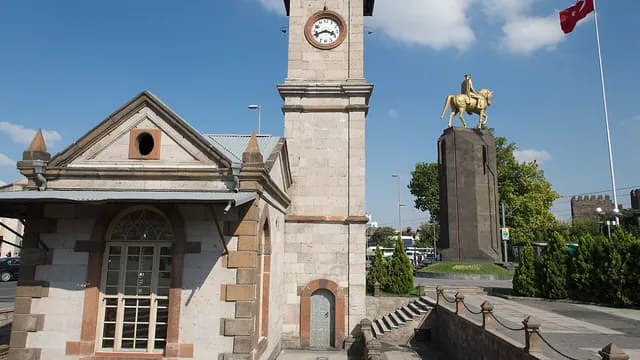
Kayseri Clock Tower
Kocasinan, Kayseri
A 15-meter cut-stone clock tower in Cumhuriyet Square, built in 1906 by order of Abdülhamid II.
Kayseri Covered Bazaar, Bedesten and Vezir Hanı
One of Türkiye's largest covered bazaars, consisting of the Bedesten dated 1497, the Vezir Hanı dated 1727 and the Covered Bazaar rebuilt in the 19th century.
Sahabiye Madrasa
A madrasa commissioned in 1267–68 by the Seljuk vizier Sahib Ata Fahreddin Ali, notable for its muqarnas portal and lion-headed gargoyles.
Çerikli Clock Tower
Delice, Kırıkkale
A clock tower built in 1991, modeled on the İzmir Clock Tower, in the square of the town of Çerikli attached to Delice.
Cacabey Madrasa (Astronomy Madrasa)
Merkez, Kırşehir
A madrasa commissioned in 1272 by Nureddin Cibril bin Caca, Emir of Kırşehir, where astronomy was taught and which is thought to have been used as an observatory through the opening in its dome.
Beyşehir Bedesten
Beyşehir, Konya
A domed historic market building with shops opposite the Eşrefoğlu Mosque, commissioned at the end of the 13th century by Eşrefoğlu Süleyman Bey.
Historic Bedesten Bazaar
Karatay, Konya
Konya's historic bazaar area between Mevlânâ Square and the Kapı Mosque, with coppersmiths', yemeni makers' and spice shops.
İnce Minareli Medrese Museum of Stone and Wood Works
Selçuklu, Konya
A madrasa commissioned by Sahip Ata in 1264, famous for its carved portal and tiled minaret; the Museum of Stone and Wood Works.
Karatay Madrasa Museum of Tile Works
A Seljuk madrasa dated 1251 at the foot of Alâeddin Hill, famous for the starry tile decoration of its dome; today the Museum of Tile Works.
Lala Mustafa Paşa Complex
Ilgın, Konya
An Ottoman staging-post complex in the middle of the Ilgın bazaar, consisting of a mosque, han, imaret and arasta dated 1576.
Sahip Ata Complex and Foundation Museum
Meram, Konya
A complex consisting of a mosque, tomb, hanikah and hamam commissioned by the vizier Sahip Ata in the 13th century; the hanikah section is now the Foundation Museum.
Sırçalı Madrasa
A two-story Seljuk madrasa with an open courtyard built in 1242, named after the glazed tiles inside; a display of gravestones.
Taş Medrese (Akşehir Museum of Stone Works)
Akşehir, Konya
A Seljuk madrasa commissioned by Sahip Ata in 1250; after restoration it has served as the Museum of Stone Works since 2020.
Avanos Old Bazaar and the Kızılırmak Riverside
Avanos, Nevşehir
The historic center of Avanos, spread on both banks of the Kızılırmak, with a pottery tradition continuing since the Hittite period, stone houses and a riverside walk.
Damat İbrahim Paşa Complex (Kurşunlu Mosque)
Merkez, Nevşehir
A complex with a mosque, madrasa and library built in 1726 by the Tulip Era grand vizier Nevşehirli Damat İbrahim Paşa to turn his native village into a city.
Karavezir Seyyid Mehmed Paşa Complex
Gülşehir, Nevşehir
A complex with a mosque, madrasa and fountain built by the Gülşehir-born grand vizier Karavezir Seyyid Mehmed Paşa to turn his native village of Arapsun into a town.
Mehmet Şakir Paşa Madrasa
Ürgüp, Nevşehir
A two-story madrasa in central Mustafapaşa, commissioned by the Egyptian Mehmet Şakir Paşa in 1899; its portal is considered a masterpiece of local stonework.
Ak Medrese (White Madrasa)
Merkez, Niğde
A two-story madrasa commissioned in 1409–1410 by the Karamanid Sultan Alaeddin Ali II, with a marble portal and twin windows with ogee arches on the upper floor.
Niğde Clock Tower
The symbol of Niğde, built in 1901–1902 on a ruined castle bastion on Alaeddin Hill, with a ten-sided shaft resembling a minaret.
Öküz Mehmet Paşa Complex
Ulukışla, Niğde
A staging-post complex consisting of a caravanserai, mosque, hamam and arasta, commissioned in 1616 by Grand Vizier Öküz Mehmet Paşa, which gave Ulukışla its name.
Buruciye Madrasa
Merkez, Sivas
A madrasa with an open courtyard commissioned in 1271 by Muzafferüddin Burucirdi, notable for its carved portal and tiled tomb chamber.
Çifte Minareli Medrese (Twin-Minaret Madrasa)
The magnificent facade with two brick-and-tile minarets surviving from the madrasa commissioned in 1271 by the Ilkhanid vizier Şemseddin Cüveynî.
Divriği Great Mosque and Hospital (Ulu Camii ve Darüşşifası)
Divriği, Sivas
A mosque and hospital unique for their stonework, commissioned in 1228–1229 by the Mengujekid Ahmed Şah and his wife Turan Melek; a UNESCO World Heritage Site since 1985.
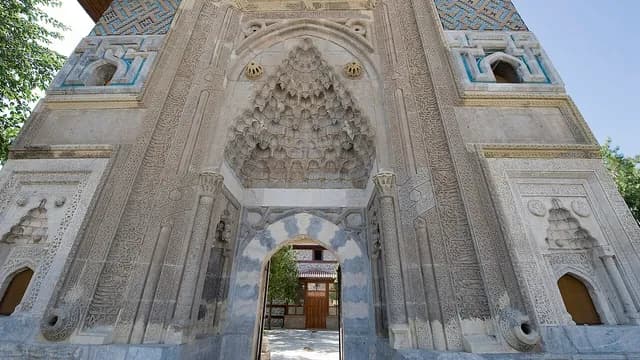
A Seljuk madrasa commissioned in 1271 by the vizier Sahip Ata Fahreddin Ali, famous for its twin-minaret marble portal and turquoise tiles.
Kurşunlu Hamamı
A double Ottoman hamam commissioned by Behram Paşa in 1576, with a large domed cold section and a four-iwan hot section.
Şifaiye Madrasa (Darüşşifa of İzzeddin Keykavus I)
Anatolia's largest Seljuk hospital, commissioned as a darüşşifa in 1217 by Sultan İzzeddin Keykavus I, containing his own tomb.
Basilica Therma (Kral Kızı Hamamı)
Sarıkaya, Yozgat
A Roman bath built in the 2nd century whose geothermal water still flows; the symbol of Sarıkaya and on the UNESCO Tentative List.
Hamidiye Clock Fountain
Merkez, Yozgat
A square fountain of white cut stone with a clock on it, built in 1900 for the 25th anniversary of Abdülhamid II's accession.
Yozgat Clock Tower
The symbol of Cumhuriyet Square, a clock tower built in 1908 with a seven-story shaft and a single ornate balcony.
İshak Paşa Palace
Doğubayazıt, Ağrı
An Ottoman-era palace complex built between 1685 and 1784 on a rocky ridge overlooking the Doğubayazıt plain, combining the Seljuk tradition with Western-style stone decoration.
İhlasiye Madrasa
Merkez, Bitlis
A madrasa that took its present form under Şerefhan V, bey of Bitlis, notable for its corner towers and ornate portal, with tombs of the beys in its garden.
Şerefiye Complex and Mosque
A complex built in the 16th century by Şerefhan IV, bey of Bitlis, consisting of a mosque, madrasa, public kitchen and tomb, known for its ornate portal.
Historic Town of Harput
Merkez, Elazığ
An old town built on a plateau 8 km north of Elazığ, explored like an open-air museum with its mosques, tombs, church and baths; added to the UNESCO Tentative List in 2018.
Maden Historic Government House and Clock Tower
Maden, Elazığ
A government house built in 1762 in the reign of Mustafa III and referred to as Türkiye's oldest civil administration building, with the 1898 clock tower beside it.
Kemaliye (Eğin) Historic Town
Kemaliye, Erzincan
A historic town added to the UNESCO World Heritage Tentative List in 2021, with stone-and-timber houses leaning against the steep slope of the Karasu valley like an amphitheater, stepped stone streets and terraced gardens.
Çifte Minareli Madrasa (Double Minaret Madrasa)
Yakutiye, Erzurum
A Seljuk-period madrasa, symbol of Erzurum with its tile-decorated twin minarets, regarded as the largest example in Anatolia of open-courtyard madrasas.
Rüstem Paşa Bedesten (Taşhan)
A two-story courtyard han built in the 16th century in the name of Grand Vizier Rüstem Paşa; today the city's Oltu stone bazaar, with the workshops and shops of Oltu stone craftsmen.
Meydan Madrasa
Merkez, Hakkari
A courtyard, two-story Ottoman madrasa in central Hakkari, built according to its inscription in 1700–1701; it receives visitors after restoration.
Zeynel Bey Madrasa
The city's oldest madrasa, built in the 16th century by Zeynel Bey, bey of Hakkari; restored through excavation and restoration, it is planned to open as a museum.
Baltic Architecture Streets (Yusufpaşa–Ortakapı)
Merkez, Kars
The streets of the Yusufpaşa, Ortakapı and Cumhuriyet neighborhoods, laid out on a grid plan during Russian rule in 1878–1918, full of stone-fronted Baltic-style buildings.
Kars Railway Station
A historic station built in 1899 in the Russian period for the Transcaucasian Railway, now the last stop of the Doğu Ekspresi and the Turistik Doğu Ekspresi.
Somuncu Baba Complex
Darende, Malatya
Darende's most visited place of faith and culture, on the edge of the Tohma Canyon, with the tomb of Somuncu Baba, its mosque and its fish pool.
Mollakent Madrasa and Mosque
Bulanık, Muş
A historic site in Mollakent, attached to Bulanık, consisting of a madrasa, mosque, tomb and cemetery bearing traces of a scholarly tradition going back to the early 14th century.
Hüsrev Paşa Mosque and Complex
İpekyolu, Van
A restored Ottoman complex in Old Van City, commissioned in 1567-68 by Hüsrev Paşa, Beylerbeyi of Van, and attributed to Mimar Sinan.
Ayvalık Historic Town Center
Ayvalık, Balıkesir
A historic center that preserves the fabric of a 19th-century Aegean port town with its stone houses, old churches and narrow streets.
Balıkesir Clock Tower
Altıeylül, Balıkesir
A five-story clock tower likened to the Galata Tower, built in 1827 and faithfully rebuilt in 1901.
Lazlar Hammam
Karesi, Balıkesir
A classic Turkish bath in Hisariçi, dated to the 18th century and still in use.
Bilecik Clock Tower
Merkez, Bilecik
A stone clock tower in the city center, built in the early 20th century and regarded as one of Bilecik's symbols.
Kasım Paşa Mosque and Caravanserai (Bozüyük)
Bozüyük, Bilecik
A complex of a mosque, madrasa and caravanserai in central Bozüyük, commissioned by Kasım Paşa in the 16th century.
Osmaneli Historic Houses
Osmaneli, Bilecik
Streets of restored 19th-century Ottoman mansions in the old town of Lefke on the banks of the Sakarya River.
Bursa Bedesten and Kapalıçarşı (Covered Bazaar)
Osmangazi, Bursa
A covered bazaar that grew over the centuries around the bedesten built by Yıldırım Bayezid, full of silk, towel and knife shops.
Hüdavendigâr (Murad I) Complex
A two-story building in Çekirge, unique in Ottoman architecture, designed with a mosque below and a madrasa above.
Muradiye Complex
A peaceful complex known as the 'Ottoman dynastic cemetery', with Murad II's mosque and twelve tombs in its garden.
Tophane Clock Tower
A six-story clock tower from the reign of Abdülhamid II, looking down over the Bursa plain and the city center.
Yıldırım Bayezid Complex
Yıldırım, Bursa
A complex of a mosque, madrasa, hospital and tomb founded by Yıldırım Bayezid in the late 14th century.
Aynalı Çarşı (Mirrored Bazaar)
Merkez, Çanakkale
A historic covered bazaar built in 1890 and celebrated in folk songs; lively today with souvenir and local produce shops.
Çanakkale Clock Tower
A five-story stone clock tower on the pier square, built in the late 19th century; the city's meeting point.
Polente Lighthouse
Bozcaada, Çanakkale
A lighthouse at the western tip of the island, where the sunset is watched among wind turbines.
Ali Paşa Bazaar
Merkez, Edirne
A long covered bazaar built by Mimar Sinan for Semiz Ali Paşa, with six gates and red-and-white arches.
Edirne Bedesten
Edirne's oldest covered bazaar, with fourteen domes, commissioned by Çelebi Mehmed to provide income for the Eski Mosque.
Havsa Sokullu Mehmed Paşa Complex
Havsa, Edirne
The Havsa staging complex commissioned from Mimar Sinan by Sokullu Mehmed Paşa in the name of his son Kasım Paşa.
Lausanne Monument and Karaağaç Station Building
A monument and museum in Karaağaç commemorating the Treaty of Lausanne, beside an elegant historic railway station.
Selimiye Arasta
A historic bazaar along a single arched street at the western foot of the Selimiye, its revenues assigned to the mosque.
Anadolufeneri
Beykoz, İstanbul
A viewpoint at the Black Sea entrance on the Asian side of the Bosphorus, with a lighthouse and a fishing village.
Aynalıkavak Pavilion
Beyoğlu, İstanbul
An 18th-century pavilion left from the old Tersane Palace on the Golden Horn, home to an exhibition of Turkish musical instruments.
Beyazıt Tower
Fatih, İstanbul
A masonry tower rising in the garden of İstanbul University, built in 1828 as a fire watchtower.
Beykoz Pavilion (Mecidiye Köşkü)
A pavilion in Beykoz from the mid-19th century, associated with the Khedival family of Egypt and known to have been presented to the sultan.
Beylerbeyi Palace
Üsküdar, İstanbul
A marble palace on the Asian shore of the Bosphorus, built as a summer and guest palace in the reign of Sultan Abdülaziz.
Büyükada Greek Orphanage (Rum Yetimhanesi)
Adalar, İstanbul
An abandoned former orphanage on Büyükada's Hristos Hill, known as one of the largest wooden buildings in Europe.
Çiçek Pasajı (Flower Passage)
A historic arcade on İstiklal Caddesi, in the glass-roofed courtyard of the Cité de Péra building dated 1876.
Dolmabahçe Clock Tower
Beşiktaş, İstanbul
A four-sided Neo-Baroque clock tower built in the 1890s in front of Dolmabahçe Palace.
Dolmabahçe Palace
The late Ottoman seat of government on the Bosphorus, known for the giant chandelier of the Ceremonial Hall and the room where Atatürk died.
Florya Atatürk Sea Pavilion (Deniz Köşkü)
Bakırköy, İstanbul
Atatürk's summer pavilion on the Florya shore, connected to land by a wooden pier on piles driven into the sea.
Galata Tower
A landmark tower from the Genoese period, with a viewing terrace overlooking the Historic Peninsula, the Golden Horn and the Bosphorus.
Haseki Hürrem Sultan Hammam
A double hammam between Hagia Sophia and the Sultanahmet Mosque, built by Mimar Sinan for Hürrem Sultan.
Haydarpaşa Station
Kadıköy, İstanbul
A Neo-Renaissance station building on the Kadıköy shore, opened in 1908 as the gateway to the Anatolian railways; a long-term restoration is ongoing.
Hekimbaşı Hunting Lodge
Ümraniye, İstanbul
A 19th-century hunting lodge in Hekimbaşı, Ümraniye, said to be the work of Sarkis Balyan, notable for its 20-meter stair tower.
Historic Balat and Fener
A historic district reflecting the multicultural past of the Golden Horn, with colorful bay-windowed houses, churches and synagogues.
Ihlamur Pavilion (Ihlamur Kasrı)
Two small Abdülmecid-era pavilions in a garden surrounded by linden trees, in the valley behind Beşiktaş.
İstiklal Caddesi
İstanbul's best-known pedestrian street, running from Taksim to Tünel, with 19th-century Pera buildings, arcades and a nostalgic tram.
Kadıköy Historic Market
A historic neighborhood market behind the Kadıköy pier, full of fishmongers, delicatessens and spice sellers.
Kamondo Stairs
Curving stone stairs in Galata with Art Nouveau influences, built by the Camondo family in the 19th century.
Kapalıçarşı (Grand Bazaar)
One of the world's oldest covered bazaars, made up of dozens of streets and thousands of shops, where trade has continued since the 15th century.
Khedive's Pavilion (Hidiv Kasrı)
An Art Nouveau pavilion on the Çubuklu heights, commissioned by Khedive Abbas Hilmi Paşa of Egypt, with a grove and rose garden.
Köse Bahir Mustafa Paşa Fountain
Bayrampaşa, İstanbul
A cut-stone square fountain in Bayrampaşa on the Rami–Edirnekapı axis, built in 1752 by Grand Vizier Köse Bahir Mustafa Paşa.
Küçüksu Pavilion (Küçüksu Kasrı)
A hunting and resting pavilion with an elegant Baroque facade on the Bosphorus shore, between the Göksu and Küçüksu streams.
Kuzguncuk
A small Bosphorus neighborhood with colorful wooden houses, where a mosque, a church and a synagogue stand side by side.
Maiden's Tower (Kız Kulesi)
A tower rising on a small islet off Üsküdar, famous for its legends, reopened as a museum in 2023.
Mısır Çarşısı (Spice Bazaar)
A 17th-century L-shaped historic covered bazaar full of spices, lokum, dried fruit and herbalist products.
Otağ-ı Hümâyun (Davutpaşa Imperial Pavilion)
Esenler, İstanbul
A stone pavilion on YTÜ's Davutpaşa Campus, with origins in the 15th century, from which the sultan saw off the army leaving on campaign; now a cultural center.
Rumelifeneri and Lighthouse
Sarıyer, İstanbul
A small coastal village where the Bosphorus opens onto the Black Sea, with a lighthouse, Genoese castle remains and a fishing harbor.
Sahaflar Çarşısı (Old Book Bazaar)
A small courtyard bazaar between the Grand Bazaar and the Beyazıt Mosque, where booksellers have bought and sold books for centuries.
Şile Lighthouse
Şile, İstanbul
An octagonal stone lighthouse on the Şile coast, first lit in 1859 as one of the largest lighthouses in Türkiye.
Sirkeci Station
A historic railway station with an Orientalist facade, opened in 1890 as the final stop of the Orient Express.
Siyavuşpaşa Pavilion
Bahçelievler, İstanbul
A pavilion with a pool in Bahçelievler reflecting 16th-century Ottoman civil architecture, commissioned by Siyavuş Paşa, three times grand vizier.
Yeldeğirmeni
A historic neighborhood behind Haydarpaşa Station, with late-19th–early-20th-century apartment buildings, churches and murals.
Yıldız Şale Pavilion (Şale Köşkü)
A pavilion in the gardens of Yıldız Palace, enlarged to host foreign heads of state and known for its grand halls.
Babaeski (Fatih) Hammam
Babaeski, Kırklareli
The surviving men's section of a double hammam opposite the Fatih Mosque, thought to have been built in the 1560s in the time of Semiz Ali Paşa.
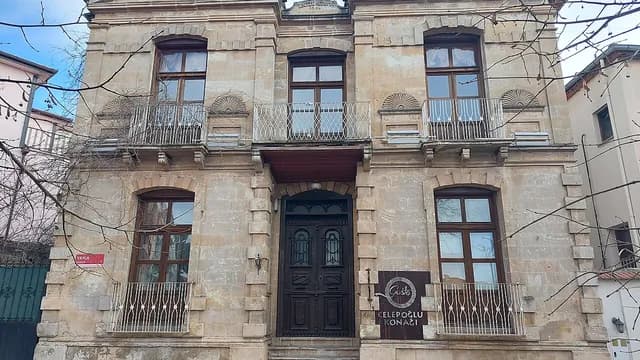
Doktor Celepoğlu Mansion
Merkez, Kırklareli
A Greek mansion dated 1908 with a neoclassical facade; a fine example of Kırklareli's late Ottoman architecture.
Doktor Hacı Yanaki Mansion
A registered two-story mansion around Yayla Meydanı, commissioned in the late 19th century by the Greek physician Hacı Yanaki.
Four-Sided Fountain (Babaeski)
A domed, four-sided cut-stone square fountain in the Babaeski bazaar.
Hızırbey Arasta and Hammam
The still-functioning arasta and double hammam of the Hızırbey Complex; the historic shopping street of central Kırklareli.
Hızırbey Mosque and Complex
The mosque of the complex founded in the late 14th century by Köse Mihaloğlu Hızır Bey, in the heart of Kırklareli.
İğneada (Limanköy) Lighthouse
Demirköy, Kırklareli
The westernmost lighthouse on the Black Sea; the Limanköy Lighthouse built in 1866 by the Frenchman Mişel Paşa.
Lüleburgaz Sokollu Mehmed Paşa Hammam
Lüleburgaz, Kırklareli
The double hammam by Mimar Sinan of the Sokollu Mehmed Paşa Complex; the municipal council building after restoration.
Sokollu Mehmed Paşa Complex
A staging complex with an arasta and prayer dome, commissioned from Mimar Sinan by Sokollu Mehmed Paşa.
Çoban Mustafa Paşa Complex
Gebze, Kocaeli
A complex with colored marble decoration founded in Gebze in the 16th century by Çoban Mustafa Paşa, one of the viziers of Süleyman's reign.
Hereke Kaiser Wilhelm Pavilion and Carpet Factory
Körfez, Kocaeli
The palace factory where the world-famous silk Hereke carpets were born, and the pavilion prepared for the visit of German Emperor Wilhelm II.
Hunting Lodge (Kasr-ı Hümâyun) Palace Museum
İzmit, Kocaeli
A wooden hunting lodge built for Sultan Abdülaziz in the 19th century, where Atatürk also stayed.
İzmit Clock Tower
An elegant clock tower designed by the architect Vedat, built in 1901 for the 25th anniversary of Abdülhamid II's accession.
Saatçi Ali Efendi Mansion
A 19th-century mansion preserved with traditional timber architecture in İzmit's old neighborhoods.
Yelkenkaya Lighthouse
Darıca, Kocaeli
A historic lighthouse in Darıca, 20 meters high from the ground, built in 1896 by Mişel Paşa, of French origin.
Taraklı Historic Houses and Bazaar
Taraklı, Sakarya
Streets of wooden Ottoman mansions, handicraft shops and a historic bazaar in Taraklı, a member of the Cittaslow network.
Hora Lighthouse (Hoşköy)
Şarköy, Tekirdağ
A 20-meter route lighthouse in Hoşköy, built from cast-iron parts brought from France and in operation since 1861.
Marmaraereğlisi Lighthouse
Marmaraereğlisi, Tekirdağ
A 26-meter lighthouse at the southern tip of Marmaraereğlisi bay, built in 1861 by Mişel Paşa.
Rüstem Paşa Bedesten
Süleymanpaşa, Tekirdağ
A bedesten with domed and vaulted shops, built in the 1550s as part of the Rüstem Paşa Complex.
Bozburun Lighthouse
Armutlu, Yalova
A lighthouse at Bozburun, at the western tip of the Armutlu Peninsula, marking the entrance to the Gulf of Gemlik.
Adana Bedesten
Seyhan, Adana
The "Eight-Gated Bazaar", built in the 16th century as part of the Ulu Mosque complex.
Büyük Saat Kulesi (Great Clock Tower)
Built in the 1880s and about 32 meters tall, one of the tallest clock towers in Türkiye.
An old Adana hammam within the historic bazaar district near the Büyük Saat Kulesi (Great Clock Tower).
Irmak Hammam (Bath)
One of Adana's oldest baths, built in 1494 in the Ramazanoğulları period.
Kazancılar Bazaar
A historic bazaar lined with coppersmiths' and tradesmen's shops around the Büyük Saat (Great Clock Tower).
Mestan Hammam (Bath)
One of Adana's historic baths, around 5 Ocak Square.
Piri Paşa Hammam (Bath)
Yumurtalık, Adana
An old bath building around the historic port of Ayas in Yumurtalık.
Ramazanoğlu Madrasa
A historic madrasa that is part of the Ramazanoğulları group of buildings around the Ulu Mosque.
Ramazanoğlu Mansion
The surviving stone building of the late-15th-century mansion of the Ramazanoğlu beys; one of the oldest civil residences in Anatolia.
Alanya Lighthouse
Alanya, Antalya
A lighthouse on the bastions of Alanya Castle, built in 1880, 209 m above the sea.
Antalya Clock Tower
Muratpaşa, Antalya
An Ottoman-era clock tower on Kalekapısı Square, built on top of an old wall tower.
Antalya Karatay Madrasa
A 13th-century Seljuk madrasa in Kaleiçi, notable for its carved portal.
Çaybaşı Hammam (Bath)
Korkuteli, Antalya
A historic Seljuk hammam in Korkuteli dated to the 13th century.
Gelidonya Lighthouse and Cape Gelidonya
Kumluca, Antalya
The highest lighthouse on Turkey's coasts, at the southern tip of the Teke Peninsula overlooking the Beş Adalar.
Kaleiçi
Antalya's walled historic core and its most visited quarter, with narrow streets, bay-windowed houses and slopes leading down to the ancient harbor.
Patara Lighthouse
Kaş, Antalya
A Roman lighthouse built under Nero (AD 64), one of the few from antiquity that could be faithfully restored.
Sefa Hammam (Bath)
A historic hammam in the narrow streets of Kaleiçi, dating to the Seljuk period.
Seljuk Hunting Lodge
Kemer, Antalya
One of the three known Seljuk hunting lodges, in the forest at the entrance to Kemer, dated to 1230–1248.
Ağlasun Seljuk Hammam (Bath)
Ağlasun, Burdur
A Seljuk-period hammam in Ağlasun at the foot of Sagalassos.
Baki Bey Mansion
Merkez, Burdur
A 17th-century Ottoman mansion known for its showy main room.
Burdur Clock Tower
A city landmark built of cut stone in 1936, with clock faces in four directions.
Grand Vizier Derviş Mehmet Paşa Library
An elegant Ottoman library building commissioned in 1816 by Grand Vizier Derviş Mehmet Paşa.
Hocabali Hammam (Bath)
A historic hammam dated 1582, in the classical 16th-century Turkish bath plan.
Muzafferiye Madrasa
A historic madrasa building near the Burdur Ulu Mosque.
Tabak Hammam (Bath)
An old hammam in Burdur's historic bazaar area, named after the tannery tradition.
Taş Oda (Koca Oda) Mansion
A two-story mansion with a courtyard, one of the finest examples of 17th-century classical Ottoman civil architecture.
Akıncı Burnu Lighthouse
Arsuz, Hatay
A lighthouse at the southern entrance to the Gulf of İskenderun, built in 1933.
Antakya Uzun Çarşı (Long Bazaar)
Antakya, Hatay
A historic bazaar with origins going back to the 16th century, divided into streets according to the guild system; being rebuilt after the earthquake, with tradespeople in temporary bazaars.
Hatay State Parliament Building
The parliament building of the Hatay State, which joined Türkiye in 1939; destroyed in the earthquake, with reconstruction work on site on the agenda.
Kurtuluş Caddesi
A historic axis tracing the colonnaded main street of ancient Antakya; heavily damaged in the earthquake, with EU-supported restoration ongoing.
Meydan Hamamı (Meydan Bath)
A historic hamam near the Uzun Çarşı, around the Meydan Mosque.
Saka Hamamı (Saka Bath)
One of Antakya's historic hamams, near the Habib-i Neccar Mosque.
Dalboyunoğlu Hammam
Merkez, Isparta
A historic hammam in Isparta's bazaar, dated to the late 17th century.
Dündar Bey Hammam
Eğirdir, Isparta
A historic hammam in Eğirdir bearing the name of Dündar Bey of the Hamidids.
Dündar Bey Madrasa
Built as a Seljuk han and converted into a madrasa in 1301 by Dündar Bey of the Hamidids.
Firdevs Bey Bedesten and Historic Üzüm Pazarı
A 16th-century historic covered bazaar made up of a bedesten and its associated shops.
Gazi Ertokuş Madrasa
Atabey, Isparta
A Seljuk-period madrasa dated 1224, in the center of the Atabey district.
Karabey Hammam
Uluborlu, Isparta
A hammam in the historic center of Uluborlu, near the Alaaddin Mosque.
Acar (Kale) Hamamı
Onikişubat, Kahramanmaraş
A 16th-century hamam at the start of the castle road, said to have been built for the workers on the castle repair in the time of Suleiman the Magnificent.
Covered Bazaar and Suk-i Maraş Arasta
Dulkadiroğlu, Kahramanmaraş
Maraş's traditional craft bazaar, with coppersmiths, saddlers and spice sellers.
Çukur Hamam
One of the historic hamams of Maraş, around the Ulu Mosque and the Taş Medrese.
Taş Medrese (Stone Madrasa)
A historic stone madrasa building near the Ulu Mosque and the castle.
Anamur Lighthouse
Anamur, Mersin
A lighthouse built in 1911 on Cape Anamur, the southern tip of Anatolia.
Historic Tarsus Houses (Old Tarsus)
Tarsus, Mersin
A historic neighborhood fabric of restored 19th-century stone houses around St. Paul's Well.
Kırkkaşık Bedesten
A covered market built in the 16th century to provide income for the Ulu Mosque, used today as a handicrafts bazaar.
Mersin Lighthouse
Yenişehir, Mersin
An octagonal lighthouse tower from 1880 at the mouth of the Efrenk Çayı, and a seaside promenade.
Şahmaran Hamamı (Şahmaran Bath)
Tarsus's historic hamam, referred to as the place where the Şahmaran legend takes place.
Tarsus Clock Tower
A stone clock tower dated to the late 19th century, rising right next to the Ulu Mosque.
Düziçi Historic Hamam
Düziçi, Osmaniye
A historic hamam in the Düziçi district center, remaining from the old settlement of Haruniye.
Artuqid Hammam (Artuklu Hamamı)
Hasankeyf, Batman
A medieval hammam moved in one piece, with its body of about 1,500 tons, from old Hasankeyf and placed in the Archaeopark.
Gazi Pavilion (Gazi Köşkü)
Yenişehir, Diyarbakır
An Akkoyunlu-period pavilion among the gardens of the Tigris valley, used by Atatürk as his headquarters in 1916–1917.
Coppersmiths' Bazaar (Bakırcılar Çarşısı)
Şahinbey, Gaziantep
A historic bazaar at the foot of the castle where Gaziantep's centuries-old copperwork is still carried on in the shops.
Naib Hammam
A historic hammam just north of the castle, built in 1640 and restored in 2009 as part of the Culture Route Project.
Zincirli Bedesten
A domed bedesten in the heart of the historic bazaar area; repairs to the building, damaged in the earthquake, were completed in 2025.
Canbolat Paşa Complex (Tekye Mosque)
Merkez, Kilis
A classical Ottoman complex based on the 1553 endowment deed of Canbolat Bey, sanjak governor of Kilis, with its central-plan mosque, madrasa and tomb.
Paşa Hammam
A historic Ottoman hammam north of the Canbolat Paşa Complex, built in the second half of the 16th century and still used as a hammam.
Dargeçit Historic (Syriac) Bazaar
Dargeçit, Mardin
A historic bazaar reflecting the ancient Syriac past of Dargeçit (Kerburan) with its stone buildings and narrow streets.
Emineddin Complex (Külliye)
Artuklu, Mardin
A group of buildings attributed to the Artuqid Sultan Necmeddin İlgazi and his brother Emineddin, one of the earliest known külliyes in Anatolia, with Mardin's oldest hamam.
Emir Hamamı (Emir Bath)
A historic hamam south of the main street in old Mardin, whose plan resembles Roman-period baths, still in use.
Hatuniye (Sitti Radviyye) Madrasa
An Artuqid madrasa built in the last quarter of the 12th century, considered a pioneering example of iwan madrasas and known for a footprint attributed to the Prophet Muhammad.
Kasımiye Madrasa
One of Mardin's largest buildings, begun in the Artuqid period and completed in the time of the Akkoyunlu ruler Kasım, with a courtyard with a pool and a facade opening onto the plain.
Mardin's Abbaras and Stone Streets
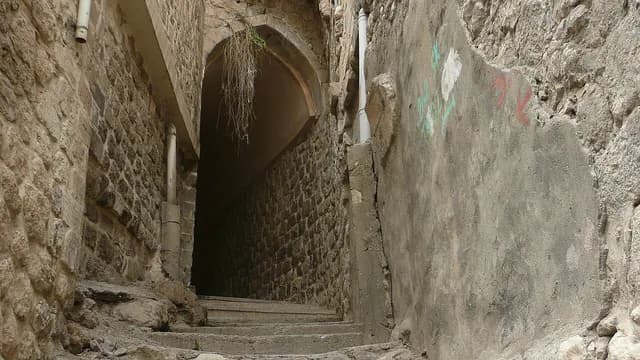
The most original street fabric of old Mardin, with vaulted passages beneath houses (abbaras) and terraced stone houses.
Midyat Guesthouse (Midyat Konukevi)
Midyat, Mardin
A three-story mansion built in 1850 at the highest point of Midyat, also used as a TV series location, with stonework and a city view from its terrace.
Revaklı Çarşı (Arcaded Bazaar; Sipahiler / Tellallar Bazaar)
A 17th-century bazaar in old Mardin, with porticoes on both sides of the street and deep shops behind them.
Zinciriye (Sultan İsa) Madrasa
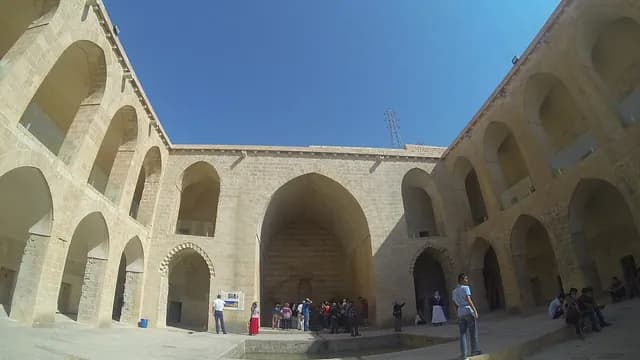
A madrasa with a monumental portal, commissioned in 1385 by the last Artuqid sultan Melik Necmeddin İsa, overlooking the Mesopotamian Plain from the foot of the castle.
Harran Beehive Houses (Kümbet Evleri)
Harran, Şanlıurfa
Traditional houses unique to Harran, made of fired-clay brick, adapted to the hot, arid climate with their conical domes.
Old Halfeti (Sunken Town)
Halfeti, Şanlıurfa
The most famous town on the Euphrates, partly submerged by the waters of the Birecik Dam, with its stone houses and boat tours.
Siirt Clock Tower
Merkez, Siirt
A 1975 tower of two-colored cut stone in the park in front of the governorship, carrying a century-old clock brought from the Ulu Mosque.
Kızıl Madrasa (Red Madrasa)
Cizre, Şırnak
A madrasa-masjid-tomb complex from the Cizre Principality period, named after its red bricks, where Melayê Cizîrî is thought to have taught and which houses his tomb.